
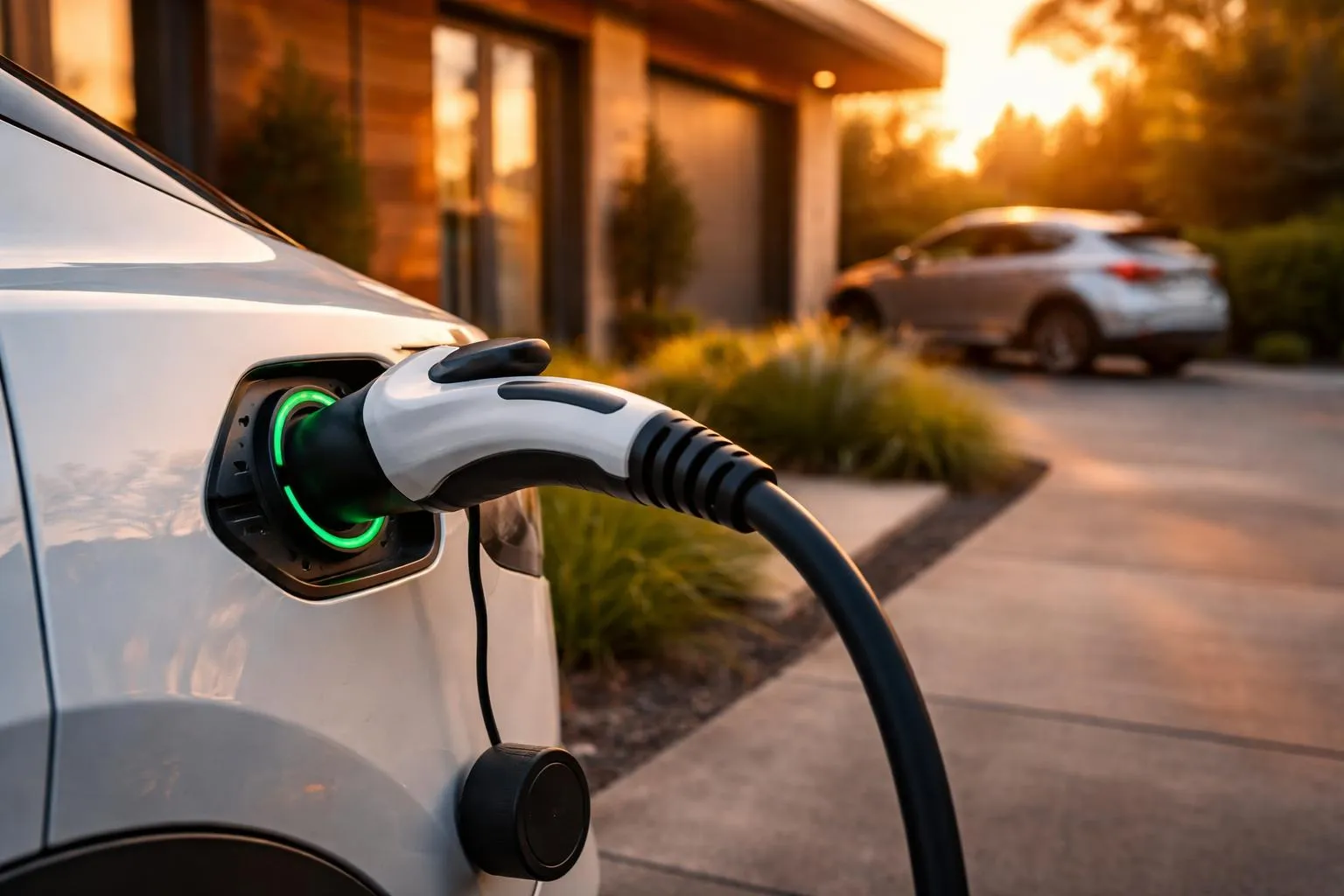
A lot of people buy an EV expecting the maintenance story to be simple: no oil changes, fewer moving parts, done. That part is true. The part that gets missed is this: simpler does not mean maintenance-free.
EVs still need regular care, just in different places. Tires wear faster. Brakes can corrode even when pads last longer. Battery habits matter. And the charging setup at home matters more than many drivers realize.
If you want steady range, reliable charging, and fewer expensive problems later, a basic EV maintenance checklist goes a long way.
The biggest myth around EV ownership is that the car will mostly take care of itself. I get why people think that. Compared with gas vehicles, there is less routine mechanical work. But the parts that do need attention have a direct effect on safety, efficiency, and battery life.
A neglected tire can cut range. A dirty or damaged charging connector can slow charging. Outdated software can affect battery management. A weak home charging setup can turn into nuisance breaker trips, or worse, overheating.
For homeowners and businesses, that last point matters a lot. If you rely on overnight charging or fleet charging, your car and your electrical system need to work together properly.
You do not need a complicated spreadsheet for this. A simple schedule is enough for most drivers.
Check tire pressure. EVs are heavy, and even a small drop in pressure can hurt range and handling.
Do a quick visual inspection of:
the charging port
charging cables and connectors
the body and underbody for obvious damage
wiper blades and washer fluid
Look for cracked insulation, dirt buildup, moisture, or signs of heat around charging equipment.
Rotate the tires. EVs put a lot of stress on tires because of vehicle weight and instant torque. If you skip rotations, wear can get uneven fast.
Have the brakes inspected and check tire condition more closely. Look at tread depth, sidewall damage, and uneven wear.
This is especially important in wet coastal areas where moisture can speed up brake corrosion.
Book a professional inspection for:
system diagnostics
software updates
battery cooling components
charging equipment
electrical connections related to charging
A yearly check is also a smart time to review whether your home charging setup still matches your needs.
Replace brake fluid if your manufacturer recommends it in that window. Inspect or replace battery coolant if required.
These items are easy to forget because there is no obvious symptom until something starts going wrong.
If I had to pick the maintenance item people underestimate most, it would be tires.
EVs are heavier than many gas vehicles, and the instant torque is fun, but it is hard on rubber. That means tires affect more than comfort. They affect braking distance, ride stability, road noise, and range.
A few habits help:
Check pressure monthly and inflate to the manufacturer’s recommended level.
Rotate tires every 8,000 to 12,000 km.
Replace worn tires before tread becomes borderline.
Consider EV-rated or low-rolling-resistance tires when it is time for a new set.
Underinflated tires are one of the easiest ways to lose efficiency. It sounds minor. It is not. If your range feels slightly worse and you cannot explain why, tires are one of the first things worth checking.
Regenerative braking changes the usual brake wear story. Because the vehicle often slows itself by recovering energy, the brake pads may last longer than you expect.
That sounds like a win, and it is. But there is a catch.
When friction brakes are used less often, parts can corrode, especially in rainy or coastal climates. Rotors can rust. Components can seize. Wear can become uneven.
For drivers in the Lower Mainland, this is not theoretical. Moisture sticks around. Salt and grime do not help.
A proper brake inspection should check for:
rust buildup
seized calipers or sliders
uneven pad wear
brake fluid condition
Brake fluid also absorbs moisture over time. When that happens, braking performance can suffer. Replacing it every few years, based on manufacturer guidance, is simple preventive maintenance.
The battery is the most expensive part of an EV, so this is where small habits pay off.
You do not need to obsess over every charge session, but a few rules are worth keeping in mind:
Charging to 100 percent now and then is fine when you need the range. Doing it every day is harder on the battery than keeping the charge window lower.
Fast charging is useful. It is also more stressful on the battery than slower charging. For regular daily use, home charging is usually the better routine.
Battery management is controlled by software. Updates can improve charging behavior, thermal control, and overall efficiency. Some drivers ignore update prompts for weeks or months. I would not. They matter more than they seem.
Heat and cold both affect battery performance. Cooling systems help protect the pack, especially in warmer weather or during repeated charging sessions. If coolant levels, pumps, or related components are not working properly, the battery can suffer over time.
This is where the car meets the building, and it is one of the most overlooked parts of EV ownership.
A lot of drivers focus on vehicle maintenance and forget that EV charger installation is only the start. The charger, panel, breakers, wiring, and grounding should all remain in good condition.
Check regularly for:
loose connections
cracked cables
discolored outlets
warm plugs or connectors
charging interruptions
breaker trips
If lights flicker when the car starts charging, that is not something to shrug off. If a receptacle feels warm, stop using it and get it checked.
For homeowners, this falls under smart residential electrical services. For property managers or workplaces with multiple chargers, it becomes part of commercial electrical services and load planning.
A properly installed charger usually works quietly in the background. When it does not, the issue may be the charger itself, the circuit, the panel capacity, or the way the load is distributed in the building.
That is why periodic inspections by a licensed electrician matter. If you are booking Vancouver electrical services for an EV setup, ask about panel capacity, grounding, and whether the charging equipment still fits your current usage. An insured electrician gives you a second layer of confidence when the work involves high-load circuits.
People tend to think of software as a convenience feature. In an EV, it is tied to real-world performance.
Software helps manage:
battery charging limits
thermal systems
safety systems
energy use
fault detection
A diagnostic scan can catch early trouble before it becomes obvious in daily driving. Maybe charging has slowed a bit. Maybe a sensor is acting up. Maybe a cooling issue has started but has not triggered a serious warning yet.
Annual diagnostics are worth it for that reason alone.
EV maintenance is less about engine fluids and more about support systems, but the boring stuff is still part of the picture.
Keep an eye on:
brake fluid
battery coolant, where applicable
cabin air filter
washer fluid
wiper blades
A clogged cabin air filter makes HVAC work harder and makes the cabin less comfortable. Worn wipers are easy to put off until the first ugly rainstorm. Most of us have done that once. Usually once is enough.
Local climate changes what deserves extra attention.
Cold weather reduces battery efficiency, so some range loss is normal. Keep the charging port clean and dry, and check tire tread before the season gets messy. If road conditions call for winter tires, do not wait too long.
Heat puts more stress on battery cooling systems. If charging seems slower than usual during hot weather, or battery temperature warnings appear, get the system checked.
Moisture is hard on both brakes and electrical components. Corrosion prevention matters. So does keeping charging connectors clean and protected.
Some problems are small. Some are not. A few warning signs should move you from “I’ll keep an eye on it” to “book the inspection.”
Watch for:
frequent breaker trips during charging
slow or inconsistent charging
warm or discolored outlets
frayed charging cables
visible overheating
flickering household lights when charging starts
These are not normal EV quirks. They point to issues with equipment, wiring, or electrical capacity.
This is also where a renovation electrician can be useful if your home has changed since the charger was installed. Added loads such as air conditioning, a suite upgrade, hot tub electrical work, or sauna electrical additions can change how much strain your panel is under.
Yes. The maintenance points are different from gas vehicles, but they are still real: tires, brakes, battery systems, software, and charging equipment all need routine care.
Monthly tire and visual checks are a good baseline. Brake and tire inspections every six months make sense. A yearly diagnostic and charging system review is a smart habit.
Battery health is probably the biggest one. Good charging habits, software updates, and proper thermal management protect both range and long-term value.
Absolutely. Safe charging depends on the charger, wiring, breakers, grounding, and panel capacity. That is part of the ownership picture.
Yes. Underinflated tires, battery inefficiencies, software issues, and charging problems can all chip away at performance.
EV maintenance is not complicated, but it does need consistency. Check tires. Inspect brakes. Treat the battery well. Keep software current. Pay attention to the charging setup at home or work.
That last one deserves emphasis. A reliable EV depends on reliable electrical infrastructure. If you need EV charger installation, a charging inspection, or broader residential electrical services or commercial electrical services, bring in a licensed electrician who understands EV loads, panel capacity, and safe long-term operation.
That is how you protect range, safety, and the part nobody likes talking about until it fails: your budget.


Eagle Power delivers professional electrical services for residential and commercial properties, ensuring safety and excellence with licensed experts.
.png)

