
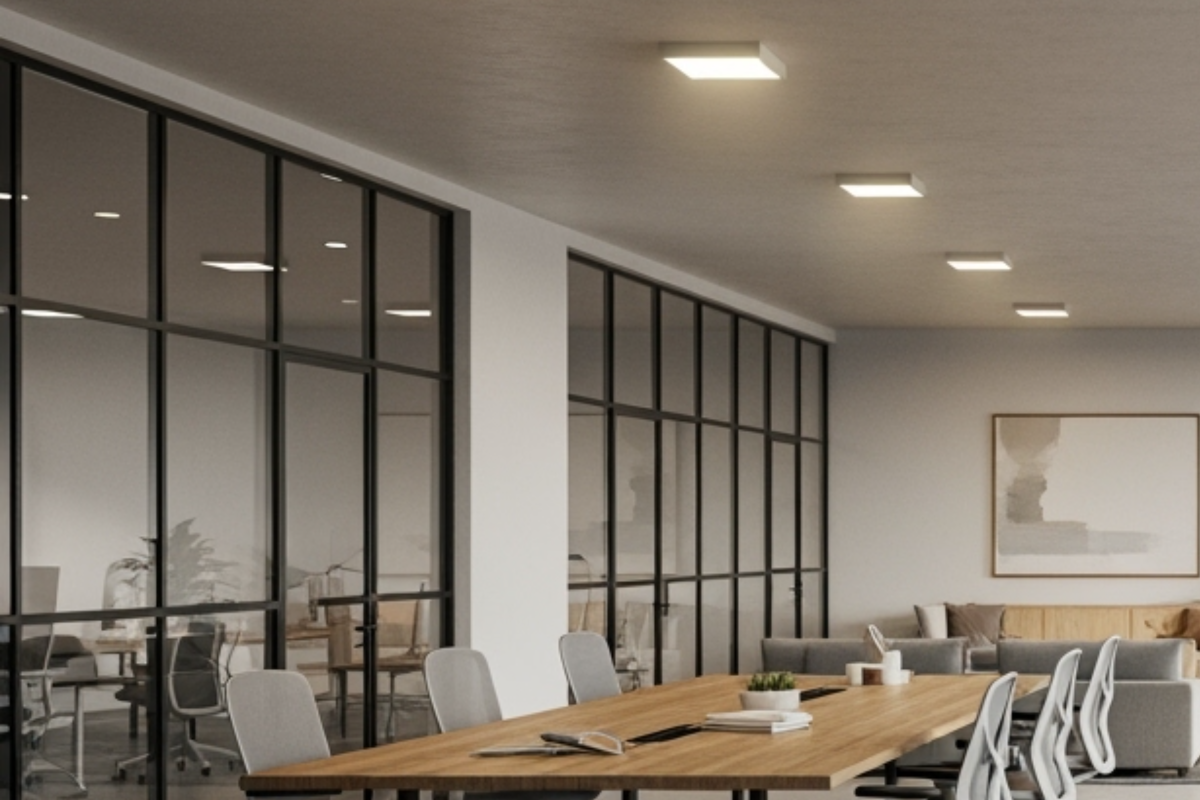
Recessed pot lights, often referred to as downlights, have become the go-to solution for modern office lighting. Their minimalist design means the fixtures themselves almost disappear into the ceiling, freeing up visual space and contributing to a clean, contemporary look. This is especially beneficial in open-concept offices or spaces with exposed ceilings, where cluttered overhead lighting can disrupt the desired aesthetic.
Beyond style, the core functional advantage of recessed pot lights is their ability to produce an even layer of light across a workspace. When properly spaced and aimed, they effectively reduce shadows and minimize glare, making it easier for employees to focus on their tasks without constantly adjusting for uneven lighting. This even distribution is key for maintaining visual comfort, particularly in areas where screens and paperwork are common.
LED pot lights take these benefits even further. They use significantly less energy than traditional halogen or incandescent options, generate less heat, and can last upwards of 25,000 hours. This not only results in operational cost savings but also aligns with commercial standards for workplace health and efficiency. Altogether, when thoughtfully planned and installed, recessed pot lights create an environment that is both modern in appearance and highly functional, promoting productivity and well-being in any Vancouver office.
A successful office lighting plan hinges on more than just fixture selection; layout and spacing are critical to achieving the best results. The general guideline for spacing recessed pot lights is to place them 4 to 6 feet apart. To avoid dark perimeters, the first row of fixtures should be installed at half that spacing from the nearest wall. For example, if your chosen interval between lights is five feet, the first row should be about 2.5 feet from the wall.
Ceiling height also plays a crucial role. A common rule of thumb is to use a spacing distance equal to half the ceiling height in feet. So, for an office with an 8-foot ceiling, fixtures would be about 4 feet apart. Small offices, such as a 10x12 foot room, typically require four to six recessed pot lights, especially when using standard 4- or 6-inch housings.
Equally important is achieving the right light level for productivity. According to guidelines from the Illuminating Engineering Society of North America (IESNA), commercial workspaces should provide 50 to 75 foot-candles of illumination at desk level. This helps to reduce eye strain and ensures that employees have sufficient light for detail-oriented tasks. In certain areas, integrating dimmable or tunable-white LEDs adds flexibility, allowing for adjustments based on time of day, natural light, or specific tasks.
Lastly, remember to combine ambient recessed lighting with targeted task lights, such as desk lamps or under-cabinet fixtures, especially in areas requiring focused illumination. This layered approach prevents over-lighting, reduces energy consumption, and ensures every zone in your office supports both comfort and productivity.
Selecting the proper LED pot lights is foundational to achieving a high-performing office lighting system. LEDs have a clear advantage over older halogen options, offering operational lifespans that often exceed 25,000 hours, while consuming a fraction of the energy and producing much less heat. This not only supports sustainability efforts but also reduces the frequency and cost of bulb replacements and maintenance.
Color temperature is another vital consideration. For most office settings, a range between 3000 and 4000 Kelvin is ideal. This spectrum produces a bright yet comfortable white light that supports alertness and reduces eye fatigue during extended desk work. In meeting rooms or creative spaces, consider tunable-white or dimmable LEDs that allow for quick adjustments to suit various activities, moods, or presentation needs.
If you're upgrading an existing office space, LED retrofit inserts can transform old halogen or incandescent pot light housings without the need for full fixture replacement. This approach cuts down on both installation time and costs, making it a smart solution for renovations or phased upgrades.
Be sure to select pot light housings and trims that are suitable for your ceiling type—whether drywall or drop (acoustic tile)—and check for appropriate insulation contact (IC) ratings, especially in areas with ceiling insulation. Finally, integrating dimmers, motion sensors, or smart lighting controls can further boost energy savings and offer convenient, customizable lighting schemes that adapt to real-time occupancy and daylight conditions.
Upgrading office lighting is not just a matter of style and productivity—it’s also a matter of safety and legal compliance. In Vancouver and most surrounding areas, commercial electrical work, especially major upgrades like installing or retrofitting recessed pot lights, requires obtaining permits and passing government-mandated inspections.
A qualified commercial electrician brings essential expertise to the table. They will assess your ceiling type—whether it’s conventional drywall or drop/acoustic tile—and select mounting methods and hardware that preserve fire ratings and structural integrity. They also review your electrical panel’s capacity and design dedicated lighting circuits to prevent overloading, which is crucial for both safety and long-term reliability.
Attempting a DIY installation in a commercial space introduces significant risks. Common pitfalls include violating electrical codes, creating fire hazards, voiding warranties, and facing insurance claim denials if work does not pass inspection. Licensed electricians handle all aspects of regulatory compliance, including filing for permits, coordinating with the Electrical Safety Authority (ESA), and arranging for post-installation inspections.
When vetting contractors, look for those with up-to-date licensing, proper insurance, and relevant commercial project experience. Ask for transparent, itemized quotes that cover hardware, labor, permits, and inspections. Reputable professionals will also be able to provide local references, proof of ESA clearance, and clear warranty terms. This comprehensive approach ensures a safe, compliant, and durable lighting installation—protecting your business and your investment.
Investing in a well-designed recessed lighting system pays dividends far beyond immediate practicality. From a productivity standpoint, consistent and glare-free lighting reduces eye strain, enabling employees to sustain focus and comfort throughout the workday. Offices with thoughtfully implemented lighting often see improvements in job satisfaction and overall morale—factors that contribute to better performance and retention.
Aesthetically, pot lights support modern design trends, lending offices a streamlined and uncluttered look. They work especially well with exposed ceilings and open work areas, providing a professional finish that enhances the perceived value of your space to both staff and visitors.
LED pot lights also drive significant long-term savings. Their low energy consumption directly reduces your utility bills, while their durability minimizes maintenance interruptions and associated costs. Introducing smart controls—such as dimmers, programmable zones, and motion sensors—allows lighting to adapt to actual occupancy and daylight levels, reducing waste and potentially lowering energy use by up to 30% annually.
Embracing advanced lighting solutions is not only an operational smart move but also an environmentally responsible one. By prioritizing energy-efficient technology and expert installation, Vancouver businesses can build workspaces that are comfortable, visually appealing, and sustainable for years to come.


Eagle Power delivers professional electrical services for residential and commercial properties, ensuring safety and excellence with licensed experts.
.png)

