
Aluminum Wiring in Older North Vancouver Homes: Repair or Rewire?
Aluminum wiring in older North Vancouver homes may need repairs, not a full rewire. Learn the warning signs and what an inspection can reveal before you decide.
October 7, 2026
A 1960s or 1970s home in North Vancouver can have plenty of life left in it, including in parts of its electrical system. But if it has aluminum branch-circuit wiring, that system deserves a closer look. The question is rarely as simple as “Is aluminum wiring safe?” or “Do we need to replace everything?”
The connections matter. An aluminum conductor attached to an incompatible receptacle or connector can develop a high-resistance connection. That connection can heat up, damage insulation, or arc. Yet aluminum wiring in the walls does not, by itself, mean a whole-home copper rewire is necessary. The sensible choice depends on what an inspection finds, how much of the system can be assessed and repaired, and what you plan to do with the house.
Here is how to think through the two main options: repairing the existing aluminum branch circuits with approved methods or replacing them with copper wiring.
Start with the warning signs, not the renovation plan
If an outlet or switch is hot, discolored, buzzing, or giving off a burning smell, stop using it. Repeated breaker trips, visible melting, smoke, and sparking also call for prompt attention. If you can safely stop using the affected circuit, do so, but do not remove device covers or open the panel to investigate. If there is smoke or a suspected fire, leave the area and call emergency services.
Those symptoms are not a reason to wait for a planned kitchen renovation or to compare quotes at leisure. A qualified electrician needs to identify the fault and make the area safe.
An absence of symptoms is useful information, but it is not proof that every connection is sound. A loose termination can be hidden inside a box. Previous work may have joined aluminum and copper using a connector that was never approved for that combination. An assessment begins with identifying the wiring and examining its connections, not with choosing a repair based on the home’s age alone.
What an electrical inspection should establish
Homes built or renovated in the 1960s and 1970s may contain aluminum branch-circuit wiring on some circuits, all of them, or none. Later renovations can leave a mix of aluminum and copper. Before discussing home rewiring, a qualified electrical professional should establish where each wiring type is present and what condition it is in.
The inspection may involve the panel, representative switches and receptacles, accessible junction boxes, and areas affected by planned work. The electrician should look for damaged insulation, signs of heat, loose or unsuitable terminations, and aluminum-to-copper transitions. They should also assess the devices and connectors used, circuit loading, breaker protection, and relevant grounding and bonding conditions.
Previous repairs deserve particular attention. A newer receptacle does not prove the connection behind it was repaired correctly. Nor does a clean-looking panel show what is happening at a junction box elsewhere in the house. Ask what was opened and examined, what could not be accessed, and which findings justify the recommended scope. If the first inspection raises concerns, additional boxes or selected wall areas may need to be opened.
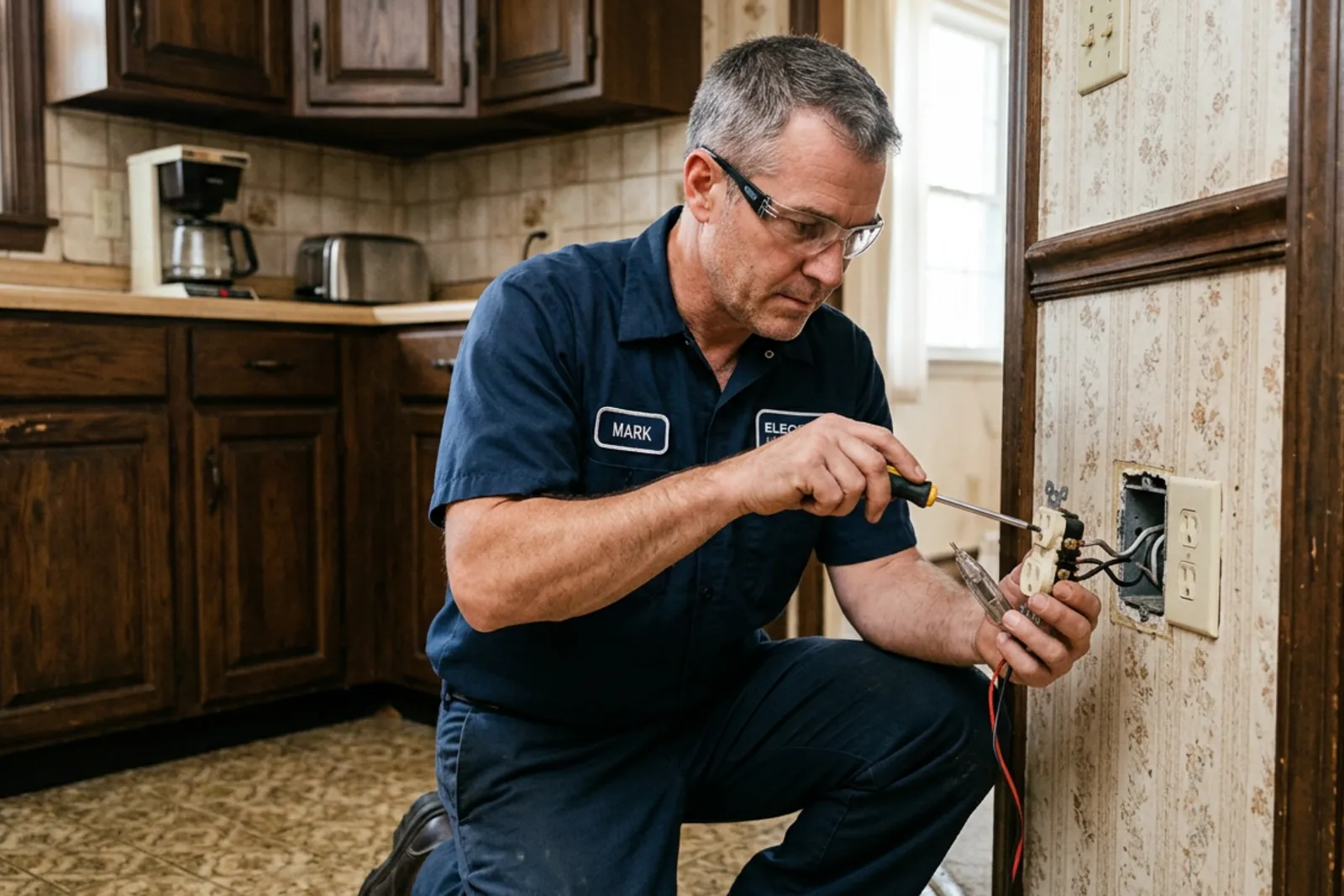
This is a job for licensed electricians familiar with the applicable electrical requirements, not a do-it-yourself outlet swap. The details of an approved repair depend on the conductor, device, connector, and manufacturer’s instructions. A component cannot be assumed compatible because it fits in the box.
When repairing the existing wiring makes sense
Localized remediation can be a reasonable choice when the aluminum conductors are generally in sound condition and the main problems are at connections. A qualified electrician may be able to correct terminations using devices or connector systems approved for the application, with the conductors prepared and installed according to the required method.
The appeal is easy to understand. Work concentrated at boxes and accessible junctions usually disturbs fewer finished surfaces than pulling new wiring throughout a home. It may cost less at the outset, and it preserves conductors that remain serviceable.
But “localized” should describe a carefully defined project, not a handful of visibly troublesome outlets. Connections that have not yet shown symptoms may have the same unsuitable devices or poor workmanship. The electrician needs to determine how far the issue extends and whether affected locations can be found and corrected reliably.
That becomes harder when splices are concealed, earlier alterations are poorly documented, or damage appears in many places. Repairing accessible connections while leaving uncertain work hidden behind finished walls may provide a false sense of completion. A written scope should say which circuits and connection points were inspected, which were repaired, and what remains outside the work.
Properly remediated aluminum wiring can remain in service when the conductors are sound and the connections are compatible and correctly installed. It will still be an aluminum-wired system, however. Future electricians and homeowners need records so later renovations do not introduce incompatible devices or unverified splices.
When a copper rewire is the better fit
A whole-home rewire replaces the aluminum branch-circuit conductors within an agreed scope. It may be justified when heat damage or deterioration is widespread, when many connections need correction, or when the existing system has been altered so extensively that reliable repair is difficult. It can also make practical sense during a major renovation, when walls and ceilings are already open.
New wiring can address more than the existing connections. A household may need additional circuits, a different electrical layout, or capacity for planned loads. For example, a renovation that adds kitchen equipment or a Level 2 charger may prompt a broader review of circuit design and panel capacity. Whether those changes require panel upgrades or service upgrades depends on the home’s existing system and the proposed loads.
Still, a copper rewire is not a magic reset button. Replacing branch-circuit wiring does not automatically resolve an aging panel, inadequate grounding or bonding, poor circuit design, or other defects outside the contract. Those items must be evaluated and included where necessary.
The disruption is real, too. Running new cable may require access through walls, ceilings, floors, cabinetry, or finished spaces. The amount of opening depends partly on the home’s layout and available attic, crawlspace, or basement access. Electrical work is only one part of the project; drywall, trim, insulation, painting, and other restoration can take time and money.
This is why the scope matters more than the label “whole-home rewire.” A quote should make clear whether every branch circuit is included, whether some areas remain untouched, and who is responsible for closing and refinishing access openings.
Compare the options on more than the first estimate
The immediate aim is to reduce fire risk. Approved connection repairs can substantially reduce risks tied to incompatible or deteriorated terminations when the affected connections are identified and corrected. Rewiring removes risks associated with the aluminum branch circuits that are actually replaced. Neither approach compensates for defects left elsewhere in the system or for poor workmanship during the project.
Cost deserves the same careful reading. A repair estimate can grow if the electrician finds more damaged connections, difficult-to-reach junctions, or unapproved past repairs. A rewire estimate may not include permits, panel work, restoration, or work needed to maintain power during construction. Compare the total likely project cost, including access and finishing, rather than the electrical labor line alone.
Timing can change the calculation. If you expect to open walls for a major renovation soon, repeating that work later may be wasteful. On the other hand, tearing into finished rooms solely to replace sound, repairable conductors may not be warranted. There is no universal cost threshold that settles the decision for every house.
Service life is also less certain than it can sound in a sales conversation. Sound aluminum conductors with correctly repaired connections may remain serviceable. New copper wiring can provide a long-lasting system. Both depend on installation quality, circuit loading, environmental conditions, and what happens during later alterations or water damage. Neither choice eliminates the need to investigate new warning signs.
A practical path from inspection to decision
You do not need to decide “repair or rewire” before anyone has identified the circuits. Use the inspection to narrow the choice:
Identify the wiring and any urgent hazards. Confirm where aluminum branch-circuit wiring is present. Treat smoke, sparking, burning odors, hot devices, or visible melting as urgent faults, not routine upgrade decisions.
Assess the connections and previous work. Determine whether devices, connectors, and aluminum-to-copper transitions are approved for their use and in good condition. Establish whether questionable work is isolated or repeated throughout the home.
Test whether repair is practical. Localized remediation is more plausible when conductors are sound, affected locations can be accessed, approved methods can be applied consistently, and the home does not need extensive circuit changes.
Consider the case for rewiring. Broad deterioration, repeated heat damage, inaccessible or inconsistent repairs, and major planned renovations can all support a wider replacement scope.
Get the scope in writing. The proposal should identify the circuits and areas included, the repair or replacement method, any panel or related safety work, required permits and inspections, and responsibility for restoration.
This sequence leaves room for a mixed result. An inspection might support remediation in most rooms but replacement of damaged wiring in one area. It might also reveal that a planned addition changes the best approach. The aim is a defensible scope based on the house you have, not an automatic answer based on the decade it was built.
Permits, insurance, and records are part of the job
Before work begins, confirm the permit and inspection requirements with the electrician and the authority responsible for the work. Requirements depend on the location and scope. Ask how completion will be documented, particularly if electrical repairs will be covered by new finishes.
Contact your insurer as well. Insurers can differ in what they request for homes with aluminum wiring. One may want an inspection report and details of an accepted remediation method; another may ask for permit and inspection records after rewiring. Get any requirements in writing before committing to a project, then confirm what documentation the insurer needs when the work is finished.
Keep the inspection findings, written scope, permits, inspection results, invoices, photographs, and details of installed devices or connectors together. These records help the next electrician understand what was done. They can also make future renovations, property transactions, and insurance conversations less dependent on guesswork.
The safest answer is specific to the house
Finding aluminum branch-circuit wiring should lead to a qualified assessment, not panic and not dismissal. In one home, sound conductors and accessible, correctable connections may support a focused repair. In another, widespread damage or a major renovation may make a copper rewire the more reliable choice.
Pay particular attention to what the inspection cannot yet establish. Hidden connections, uncertain past work, and gaps in the proposed scope are reasons to ask more questions before closing walls or declaring the job complete. A good decision addresses the actual hazards, defines what has been corrected, and leaves a clear record for whoever works on the electrical system next.
Need a licensed electrician?
Free consultations across Greater Vancouver — and 24/7 emergency service.
Get a Free Quote