
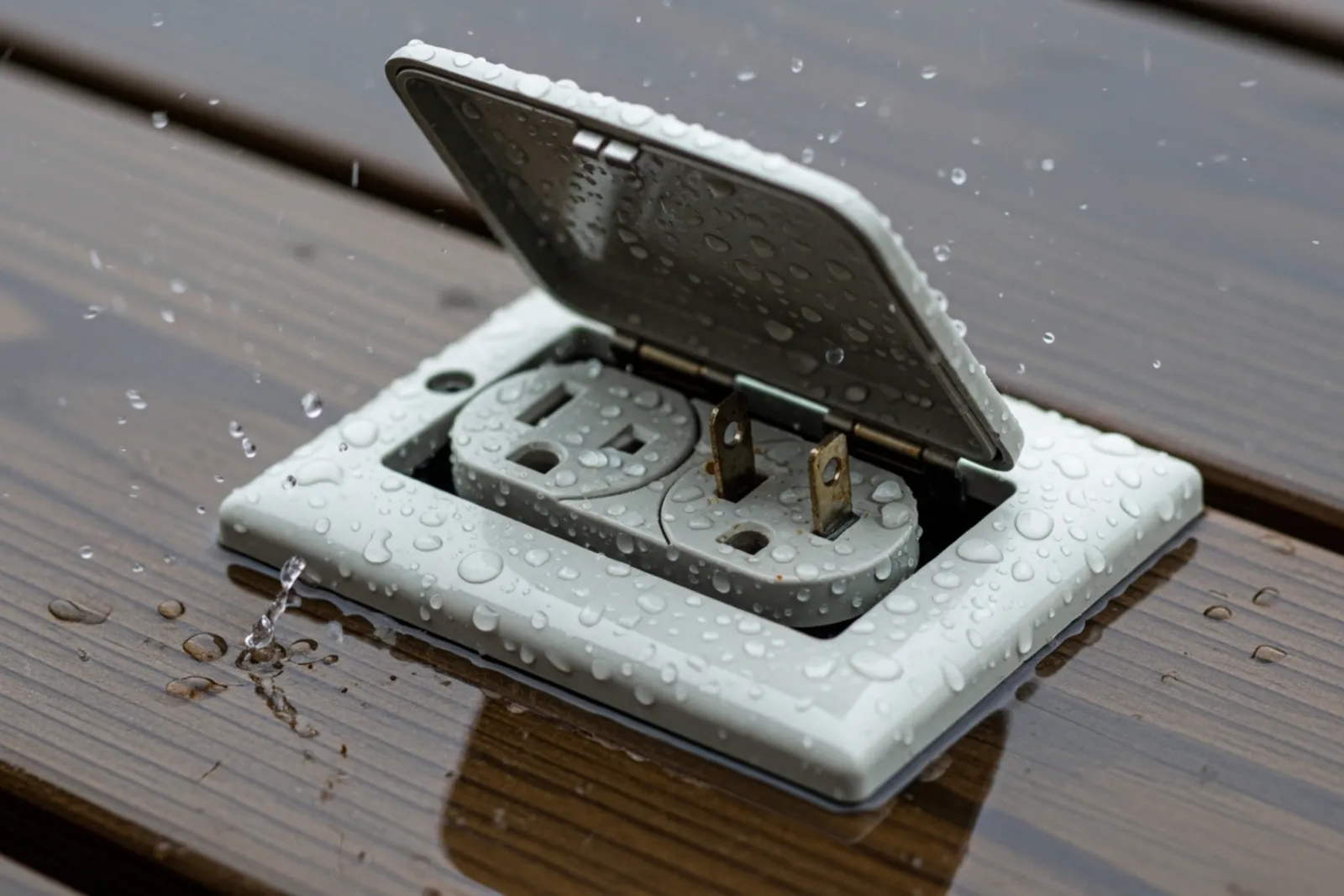
Basic Outdoor Electrical Troubleshooting and Safety
Learn basic outdoor electrical troubleshooting and safety tips. Spot common issues safely and know when to call a licensed electrician.
September 23, 2026
Outdoor electrical problems often look minor at first. A patio outlet stops working. Holiday lights go dark. A deck receptacle trips after rain. It is easy to think, "I'll just reset it and see what happens."
Sometimes that works. Sometimes it is the moment people get too close to water, damaged wiring, or a failing device.
This guide sticks to the safe side of the line. It covers practical checks you can do without opening anything, removing receptacles, or touching wiring. If the issue goes beyond that, the right move is simple: stop and call a licensed electrician.
That matters even more in wet places like Greater Vancouver and North Vancouver, where long stretches of rain, damp air, and temperature swings can slowly wear down outdoor outlets, covers, plugs, and fixtures.
Why outdoor electrical issues are different
Indoor outlets live easy lives compared with outdoor ones. Outside, electrical equipment has to deal with rain, snow, humidity, dirt, lawn debris, and constant temperature changes. Even a properly installed outdoor receptacle can develop problems over time if moisture keeps finding its way in.
A few common causes show up again and again:
Moisture intrusion
Water is the big one. It can enter through a cracked cover, a missing gasket, a loose plug connection, or an old receptacle that no longer seals well. Sometimes the outlet itself stays dry enough to work for a while, then starts tripping only during wet weather. That pattern usually tells you something is getting in where it should not.
Corrosion
Moisture does not have to cause an immediate short to create trouble. Slow corrosion on contacts and terminals can lead to poor connections, nuisance tripping, and unreliable power. You might see rust, greenish residue, white mineral buildup, or discoloration around the device.
Damaged weatherproof covers
Outdoor receptacles should have weather-rated protection. If the cover is cracked, missing, or does not close properly, the outlet is exposed even when nothing is plugged in. If the outlet is used often, an in-use cover, sometimes called a bubble cover, helps protect cords and plugs while they are connected.
Temporary loads and worn cords
Extension cords, yard tools, string lights, space heaters for a shed, and seasonal decorations put real stress on outdoor circuits. Old cords, indoor-rated cords used outside, or too many loads on one circuit can trip a GFCI or breaker fast. Sometimes the outlet is fine and the cord is the real problem.
Start with safety, not curiosity
This is the part people tend to rush. Do not.
Before you check anything, pause and make the area safe.
If the outlet, plug, cover, or surrounding surface is wet, do not touch it with bare hands. Wear rubber-soled shoes. Dry gloves help if you have them. Keep children and pets away from the area if water is present.
If there is standing water around the outlet, fixture, or extension cord connection, stop using it immediately. If you can safely shut off the circuit at the breaker, do that. If not, leave it alone and get professional help.
Also, and this is worth saying plainly, do not remove outlet covers, open junction boxes, or pull receptacles out of the wall to "have a quick look." Outdoor electrical repairs cross into real risk very quickly. Safe troubleshooting is external only.
Step 1: Unplug everything and inspect the obvious
If an outdoor outlet has stopped working, unplug every device connected to it. That includes extension cords, lights, power tools, chargers, bug zappers, fountain pumps, anything.
This first step does two things. It removes the load from the circuit, and it lets you check whether the problem is really the outlet or just something plugged into it.
Take a careful look at each cord and plug. You are checking for visible damage only:
cuts or cracks in the insulation
frayed sections
bent blades on the plug
burn marks
moisture inside the plug end
taped repairs, which are a bad sign outdoors
If a cord is damaged, do not keep using it. The same goes for indoor-rated extension cords being used outside. They may work for a while, but wet weather finds weak points fast.
If you see moisture on a plug or connector, dry conditions are needed before you try the outlet again. Plugging wet equipment back in just muddies the diagnosis and can make the problem worse.
Step 2: Check the GFCI, and know where it might be
A lot of people assume the outdoor outlet itself must have the reset buttons. Sometimes it does. Sometimes it does not.
Outdoor receptacles are often protected by a GFCI located somewhere else in the home, such as:
a garage
a basement
a bathroom
a kitchen
near the electrical panel
This confuses people all the time. The dead outlet on the deck may be controlled by a GFCI inside the garage.
A GFCI, short for ground fault circuit interrupter, is designed to shut off power fast when it detects current going where it should not. Around water, that protection matters a lot.
How to do a safe GFCI check
If the area is dry and safe to touch, find the GFCI device and press the reset button firmly.
If it clicks and stays reset, test the outdoor outlet with a known-good device, like a lamp or a small tool that you know works properly.
If the GFCI trips again right away, or the reset button will not stay in, stop there. Do not keep pushing it over and over. Repeated trips usually mean a real fault exists, possibly moisture, damaged equipment, or a wiring issue upstream or downstream.
Do not attempt to reset a GFCI if the device itself is wet, cracked, visibly corroded, or missing its proper cover. At that point, you are no longer doing simple troubleshooting. You are staring at a likely electrical repair.
Step 3: Check the breaker panel
If the GFCI is not the problem, or if you cannot find one, the next safe check is the main electrical panel.
Look for a breaker that is in the middle position or does not sit fully in the "on" position. A tripped breaker does not always look dramatic. Sometimes it is only slightly out of place.
How to reset a breaker safely
To reset a tripped breaker:
Move it fully to the "off" position.
Then switch it back to "on."
That full off-then-on motion matters. If you skip it, the breaker may not reset properly.
If the breaker trips again immediately, leave it off. If it trips when you reconnect outdoor devices, unplug them again and stop using that circuit until it is checked.
The same logic applies to breakers marked GFCI or AFCI. If they will not hold after a reset, or trip repeatedly, that is your sign to stop troubleshooting.
I think this is where people get themselves into trouble. A breaker resets once, so they treat the problem like a nuisance instead of a warning. Repeated tripping is the electrical system telling you something is wrong.
Step 4: Do a visual inspection, but only from the outside
At this point, you have checked the load, the GFCI, and the breaker. Now look closely at the outlet and anything visible around it without taking anything apart.
What to look for
Check the weatherproof cover. Does it close properly? Is it cracked? Missing? Warped? If it is an in-use cover, does it still seal around the cord opening?
Look at the receptacle face and surrounding area. Watch for:
standing water
rust
white or green deposits
discolored plastic
signs of melting
cracking
loose mounting
exposed conductors
These details matter. Corrosion and mineral deposits often mean water has been getting inside for a while, even if the outlet still worked off and on.
If you notice any sign of heat, scorching, or charring, stop immediately. That is no longer a "maybe." That is an urgent safety issue.
When you should stop and call a licensed electrician
There is a pretty clear line between basic troubleshooting and work that belongs to licensed electricians. If any of the situations below apply, you are past the point of safe DIY checks:
Stop right away if you notice any of these
a burning smell
buzzing or crackling
visible arcing or sparks
scorch marks or melted plastic
cracked receptacles or broken covers
moisture inside the outlet or cover
corrosion on the device
exposed wires or conductors
a GFCI that will not reset
a breaker that trips again immediately
repeated tripping during normal use
You should also stop if the problem involves anything inside an enclosure, the service panel interior, a junction box, a meter base, or hardwired outdoor equipment.
That includes circuits feeding landscape lighting transformers, hot tub wiring, sauna wiring, or outdoor heating equipment. Those setups often look simple from the outside, but they are not casual projects.
If you feel unsure at any point, that is reason enough to stop. Uncertainty is a good safety signal.
What to do while waiting for service
Sometimes you know there is a problem, but help is not arriving in the next ten minutes. In that gap, your job is not to fix it. Your job is to keep the situation from getting worse.
If it is safe to access the panel, turn off the breaker for the affected circuit.
Keep the outlet dry. Do not drape tarps, towels, or improvised coverings over electrical equipment unless you can do so without touching the device itself. Often the safest move is simply to leave it alone and keep people away.
Do not reuse the damaged cord, plug, or fixture that may have caused the trip.
If you need temporary power, use a known-safe indoor circuit that has GFCI protection. Avoid running power through questionable outdoor connections just because "it sort of works."
If the issue affects something important or urgent, such as refrigeration in an outdoor kitchen, sump-related equipment, or a hardwired exterior device, this may be the point where emergency electrical service makes sense. That decision is less about convenience and more about whether the electrical fault creates a safety risk or disrupts something essential.
Preventing the same problem next season
Outdoor electrical trouble has a habit of repeating itself if the underlying cause is not addressed. A reset might restore power today, but prevention is what saves frustration later.
Keep weatherproof covers in good shape
Outdoor receptacles need proper covers, and those covers need to actually seal. This sounds obvious, but many do not. Hinges break. Gaskets flatten. Covers get left open. Replacing a worn cover is simple maintenance, and it matters.
Use outdoor-rated equipment
Use cords, plugs, and fixtures rated for outdoor use. Indoor products fail faster outside, especially in a rainy climate. Holiday lighting is a classic example. A string light may survive one season, then start tripping circuits the next year because moisture finally found a weak spot.
Test GFCIs periodically
Monthly testing is a common recommendation, and it is a good habit. Press the test button, confirm the power shuts off, then press reset. If the device does not respond properly, it needs attention.
Replace aging or corroded devices promptly
An outlet with visible corrosion is not something to keep nursing along. The same goes for cracked receptacles, brittle plastic, or loose devices. Outdoor components do not age gracefully.
Make sure the setup is code compliant
Outdoor circuits should have proper GFCI protection and weather-rated equipment. If your home has older receptacles, recent additions, or a history of nuisance trips, it may be time for an inspection. In some homes, the real fix ends up being broader maintenance, service upgrades, or panel upgrades, especially when several outdoor loads share circuits that were never designed for today's usage.
Wet-climate realities in Greater Vancouver
In Greater Vancouver, long damp seasons change the picture. Outdoor electrical systems here simply face more moisture exposure than those in drier regions.
Deck outlets are especially vulnerable because they are often low to the ground and close to surfaces that stay wet. The same goes for garden receptacles, exterior plugs near hose bibs, and temporary holiday lighting connections tucked under eaves or along fences.
North Vancouver homes often deal with a mix of rain, tree cover, shade, and slower drying times. That combination can leave exterior covers and plugs damp for days, not hours. A setup that seems fine during summer may start tripping regularly once fall weather settles in.
I do not think homeowners need to be paranoid about every outdoor outlet. But I do think outdoor electrical maintenance gets ignored because the problems are literally outside, out of sight, until something stops working.
The bottom line
Basic outdoor electrical troubleshooting should stay simple. Unplug devices. Check cords. Reset a dry GFCI if it is safe. Reset a tripped breaker once. Look for visible moisture, corrosion, or damage from the outside only.
Then stop.
Do not open covers beyond normal access, remove receptacles, or attempt rewiring. If there is water, corrosion, burning, repeated tripping, or anything that feels off, bring in a licensed electrician.
A dead outdoor outlet is annoying. A dangerous one is something else entirely. Safe habits, regular maintenance, and a little restraint go a long way.
Need a licensed electrician?
Free consultations across Greater Vancouver — and 24/7 emergency service.
Get a Free Quote