
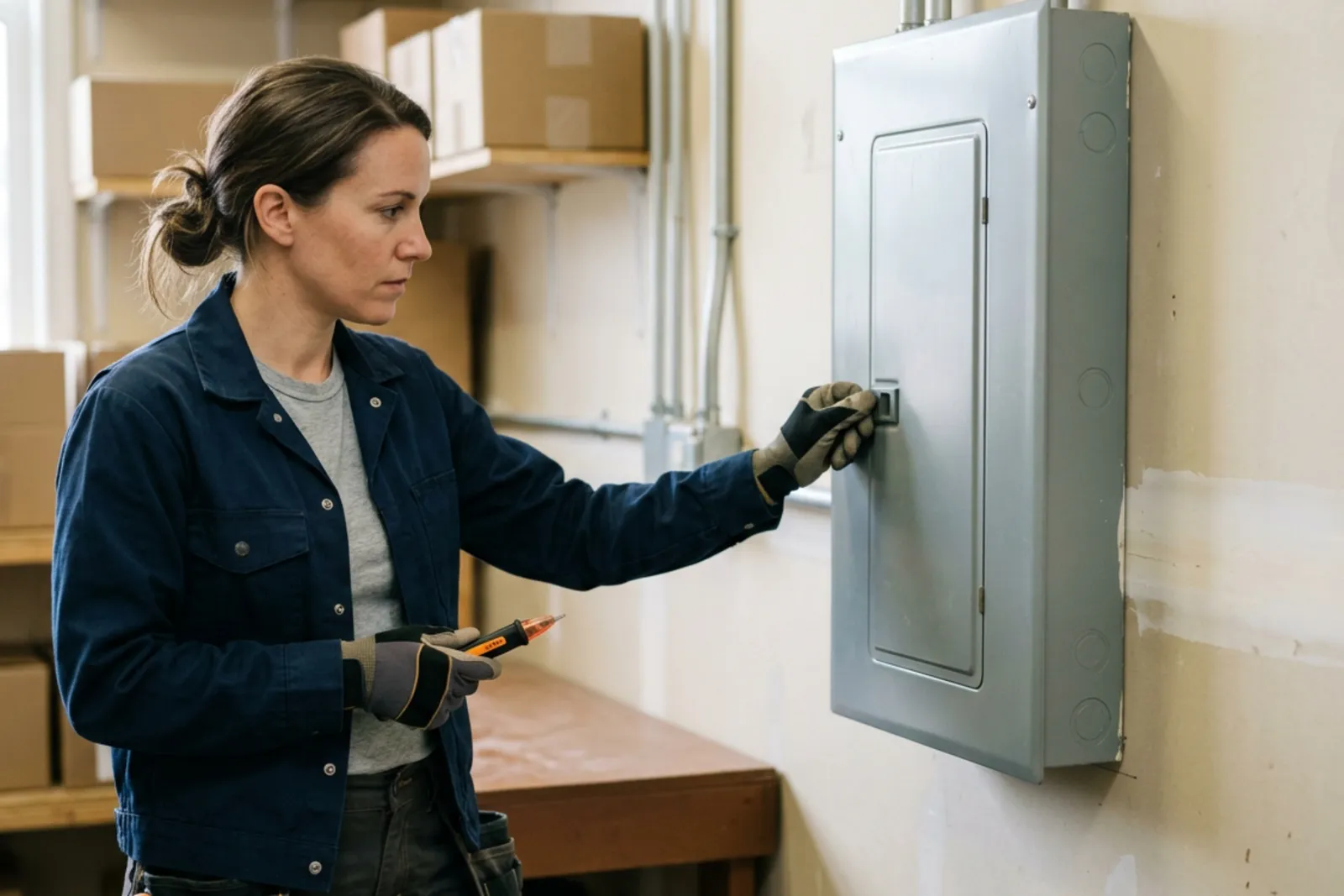
BC Electrical Code: What the Current Edition Means for Electrical Upgrades
Learn how the 2024 BC Electrical Code affects electrical upgrades, permits, and inspections. Plan your project with confidence and know what to check before work starts.
November 13, 2026
An electrical upgrade often starts with a practical need: a new EV charger, more kitchen circuits, a hot tub, or a panel that can support a renovation. Behind each project is a safety question: what requirements must the installation meet?
In British Columbia, the BC Electrical Code establishes minimum requirements for electrical installations and equipment. It affects how wiring is installed, how circuits are protected, and how equipment is connected safely. These requirements apply to residential and commercial work, although the details vary by property and project.
The 2024 BC Electrical Code took effect on March 4, 2025. Understanding which edition applies, who oversees the work, and what needs to be checked before construction can help you avoid expensive changes later.
You do not need to interpret the entire code yourself. You do need a clear plan, qualified electrical professionals, and confirmation of the permit and inspection requirements for your project.
What Is the BC Electrical Code?
British Columbia’s Electrical Safety Regulation adopts the Canadian Electrical Code, Part I, as the provincial electrical code, with provincial changes to certain definitions.
Those changes connect the national document to British Columbia’s regulatory language. They include references to a “licensed electrical contractor,” the “BC Building Code,” and the “BC Fire Code.”
The code establishes minimum safety requirements. That distinction matters. A code-compliant installation must meet the applicable safety rules, but those rules do not necessarily address every preference you might have for convenience, future capacity, or lighting design.
For example, an electrical renovation can satisfy minimum requirements while still leaving a homeowner wishing they had installed more conveniently located receptacles. A well-planned project considers both compliance and how people will actually use the space.
The electrical code also works alongside other requirements. Building regulations, fire safety rules, utility connection requirements, and equipment installation instructions may affect the same project. Meeting one set of requirements does not remove the need to meet the others.
Which BC Electrical Code Edition Applies?
The 2024 BC Electrical Code adopts the Canadian Electrical Code, Part I, 26th Edition. It took effect on March 4, 2025, and applies to projects for which electrical work permit applications were submitted after that date, subject to the applicable adoption and transition requirements.
The permit application date matters more than when you first discussed the project or purchased equipment.
Suppose a homeowner started planning an EV charger installation before the new edition took effect but applied for the electrical permit afterward. The earlier planning date does not, by itself, establish which code edition governs the work.
Projects with earlier permits need separate consideration. Do not assume an older permit automatically covers a revised design, expanded scope, or a later phase of construction. The enforcing authority should confirm how the applicable requirements affect those changes.
For an active project, establish:
The electrical permit application date and permit status.
The scope of work covered by that permit.
The applicable code edition and any relevant transition directions.
Whether design changes require an amendment or another permit.
The adopted code is available in print and digital formats through the Canadian Standards Association. Technical Safety BC also provides information about the adoption. General articles are useful for orientation, but project decisions should be checked against the actual requirements.
What Does the Code Cover?
The BC Electrical Code addresses much more than the wires behind a wall. It covers the installation and protection of electrical systems, including equipment used in demanding environments.
Wiring methods and installation standards
Wiring needs suitable materials, routing, support, and protection. Requirements depend on factors such as the location, the equipment supplied, and the conditions the wiring will encounter.
A dry interior wall, an outdoor installation, and a location exposed to physical damage present different risks. A cable or wiring method appropriate for one setting may be unsuitable for another.
Installation requirements also address matters such as connections, enclosures, and access to equipment. Work can look tidy and still have problems that are not obvious without technical knowledge.
Grounding, bonding, and overcurrent protection
Grounding and bonding are related but have different purposes. Grounding connects a system to earth where required. Bonding connects conductive parts to help establish an effective fault-current path so protective devices can operate.
Circuit breakers and fuses provide overcurrent protection. They must be appropriate for the conductors, equipment, and application.
A breaker that repeatedly trips needs investigation. Replacing it with a larger breaker without assessing the circuit can leave wiring inadequately protected. The trip may be frustrating, but bypassing the protection is not a repair.
Hazardous locations and renewable energy systems
Some commercial and industrial spaces may contain flammable gases, vapors, combustible dust, or other conditions that require specialized electrical installations. These locations need careful assessment and suitable equipment.
Renewable energy installations also introduce requirements beyond those of a conventional branch circuit. Solar generation and associated equipment can involve multiple power sources, disconnecting arrangements, labeling, and utility coordination. Battery energy storage may introduce further requirements.
These systems should be assessed as a complete installation rather than a collection of separately purchased products.
Who Enforces Electrical Safety Requirements in BC?
Technical Safety BC enforces electrical safety requirements under the Electrical Safety Regulation in the areas it administers. Some municipalities administer electrical permits and inspections within their own jurisdictions.
This distinction is particularly relevant in Greater Vancouver, where the responsible authority can vary by property location. Confirm the authority having jurisdiction for the actual address rather than assuming the same process applies throughout the region.
The enforcing authority can clarify permit procedures, inspection stages, and local administrative requirements. A licensed electrical contractor should understand how those requirements affect the proposed work.
Permits and inspections have different roles. A permit authorizes work within its scope. An inspection assesses the installation at the required stage. Obtaining a permit is not the same as receiving approval for completed work.
Before construction starts, ask who will obtain the permit, arrange inspections, and address any deficiencies. This prevents confusion when several trades are involved.
How the Code Affects Common Electrical Upgrades
The same safety framework applies across many projects, but each upgrade raises different questions. Equipment selection should follow an assessment of the existing electrical system, not replace one.
Panel upgrades and service upgrades
A panel upgrade and a service upgrade are not necessarily the same project.
Replacing a panel may provide different circuit arrangements or address equipment concerns without increasing the electrical supply available to the building. A service upgrade changes the available service capacity and may require utility coordination and changes to other components.
Before recommending either option, an electrical professional should assess the existing installation and calculate the proposed demand using the applicable rules.
An empty breaker space does not prove there is enough capacity for a new load. Likewise, a full panel does not automatically mean the property needs a larger service. The answer requires an assessment.
EV charger installation and home charging
A Level 2 charger can add a substantial load to a home’s electrical system. Planning should account for charging requirements, existing demand, equipment location, circuit design, and protection.
Some properties may be suitable for an approved load-management approach instead of an immediate service upgrade. Whether that is appropriate depends on the equipment, installation, and applicable requirements.
For a strata property, electrical capacity is only part of the process. Approvals, shared infrastructure, billing arrangements, and routing through common property may also need attention.
Choose charging equipment after these constraints are understood. Buying the highest-powered unit first can create avoidable installation costs.
Hot tub wiring and sauna wiring
Electrical equipment near water or in high-temperature conditions needs particular care. Hot tub wiring may involve ground-fault protection, bonding, disconnecting means, and location requirements.
Sauna wiring presents its own considerations, including temperature exposure, heater demand, control placement, and manufacturer instructions. A detail that is acceptable for a hot tub should not automatically be carried over to a sauna.
Give the electrical contractor the exact equipment model and installation documentation before work begins. Product-specific requirements can affect the circuit and layout.
Electrical renovations and home rewiring
A renovation can reveal concealed wiring defects or equipment that no longer suits the intended use. New appliances, relocated walls, and changes to room functions may affect circuit requirements.
Existing installations do not automatically require complete replacement whenever the code changes. However, alterations, unsafe conditions, or the scope of new work can trigger requirements that need professional review.
A renovations electrician should identify these issues before walls are closed. Discovering a required change after drywall and cabinetry are installed is an expensive way to resolve a planning question.
Choosing Qualified Electrical Professionals
Hiring qualified people is part of managing electrical risk, but credentials should be understood accurately.
An electrical contractor’s license, an individual worker’s qualifications, insurance coverage, and responsibility for regulatory compliance are different matters. One label does not establish all of them.
For example, a “Master Electrician” designation should not be treated as a substitute for checking the contractor’s authorization to perform the work in British Columbia. Similarly, insured electricians still need the appropriate qualifications and regulatory arrangements for the project.
Where a Field Safety Representative, or FSR, is required, confirm who holds that responsibility. Ask for a plain-language explanation of who is responsible for permits, supervision, and compliance.
Useful questions include:
Are you licensed and authorized for this type of work?
What assessment is needed before you finalize the scope?
Which permits and inspections are required, and who arranges them?
Does the quote include likely utility coordination or service changes?
What documentation will I receive when the work is complete?
Clear answers are more useful than broad assurances that everything will be “up to code.”
Plan for Inspections Before Work Is Hidden
Electrical inspections need to fit the construction sequence. Depending on the project, the authority may need to assess work before it is concealed and again at a later stage.
That affects scheduling. Insulation, drywall, or other finishes should not cover work that still needs inspection or authorization to proceed.
For residential electrical services, this often requires coordination between the homeowner, electrical contractor, and general contractor. Commercial electrical services may require further coordination with tenants, building management, designers, and other trades.
Keep permit records, inspection documentation, equipment information, and relevant drawings together. These records can help with future maintenance, troubleshooting, renovations, and property transactions.
If the installation changes during construction, have the electrical contractor review the change before it is carried out. Moving equipment can affect wiring routes, environmental protection, clearances, or access.
What If an Electrical Problem Cannot Wait?
Burning smells, smoke, sparking, damaged service equipment, or electric shock require prompt attention. Keep people away from the affected area. If there is smoke or fire, leave the building and call emergency services.
Do not touch damaged electrical equipment or approach fallen power lines. For other urgent faults, seek a qualified emergency electrical service and follow the relevant utility or emergency responder’s instructions.
Urgency does not eliminate safety or regulatory requirements. Immediate work may make a situation safe, while permanent electrical repairs may still require permits, inspections, or utility involvement.
The aim is to remove the immediate danger and establish what must happen next.
Start With the Requirements, Then Choose the Equipment
The BC Electrical Code gives electrical work a minimum safety standard. Its practical value comes through proper design, suitable equipment, careful installation, and the required oversight.
Before committing to panel upgrades, home charging, or electrical renovations, confirm the applicable code edition and enforcing authority. Have the existing system assessed, define the permitted scope, and plan inspections before construction gets ahead of the electrical work.
That preparation helps avoid unsafe assumptions and unnecessary rework. More importantly, it gives you a sound basis for deciding what your property actually needs.
Need a licensed electrician?
Free consultations across Greater Vancouver — and 24/7 emergency service.
Get a Free Quote