
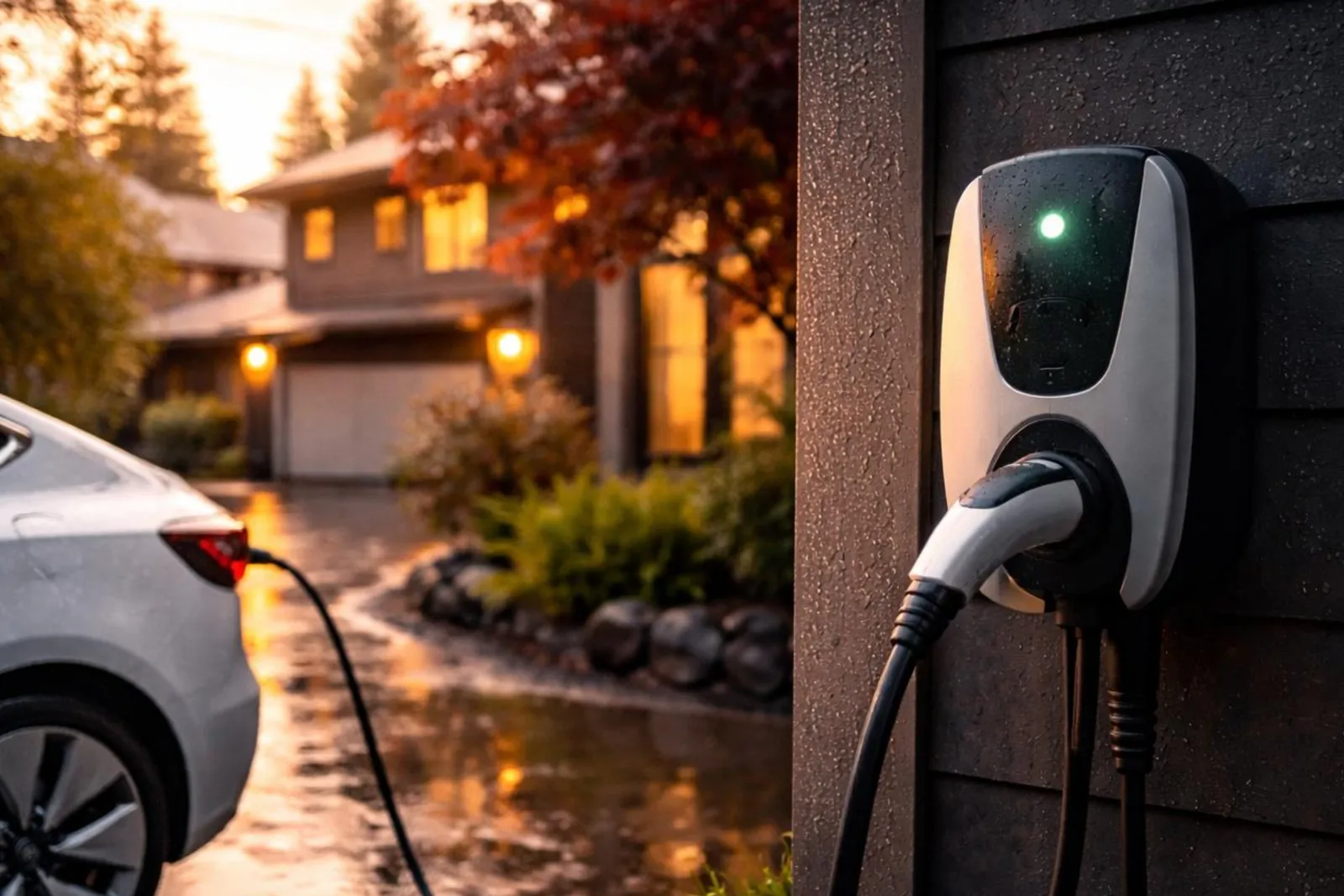
How to Choose a Rebate-Eligible EV Charger in BC Without Missing the Fine Print
Learn how to choose a rebate-eligible EV charger in BC, compare Level 2 options, and avoid costly rebate mistakes before you buy. Contact Eagle Power.
September 23, 2026
Buying an EV charger in British Columbia sounds simple until you hit the rebate question.
You find a model with good reviews. The price looks reasonable. It promises fast home charging. Then you learn one annoying fact: if the charger is not on the provincial approved list, your rebate may disappear.
That detail changes the whole purchase.
For people in Greater Vancouver, and especially for homeowners, condo owners, strata councils, and employers planning EV charger installation, the charger itself is only one piece of the job. Rebate eligibility, electrical capacity, permits, metering, billing, and installation rules matter just as much. Sometimes more.
This guide walks through what the BC rebate-eligible charger list really means, how it fits into the wider rebate system, and what to compare before you buy a Level 2 charger for a house, condo, or workplace.
Why the approved charger list matters so much
In BC, charger rebates are tied to approved equipment. That means the province and utility programs do not treat every Level 2 charger as interchangeable.
A popular model sold in the U.S. may be perfectly usable in Canada and still fail the rebate test. That catches people off guard. They assume “Level 2” is the only requirement. It is not.
The approved list works like a filter. It helps program administrators confirm that participating chargers meet the technical and safety requirements attached to the rebate stream. If your goal is to reduce upfront cost, checking the list before purchase is not a minor step. It is the step.
This is where people often make the expensive mistake. They start by comparing price, cable length, app features, or brand familiarity. Those are normal things to care about, but rebate status needs to be checked first. Otherwise, you can spend time comparing chargers that were never eligible in the first place.
For buyers in North Vancouver, Vancouver, Burnaby, Surrey, and the rest of Greater Vancouver, it also helps to remember that local top-up rebates may depend on the same approved-equipment logic. A provincial rebate and a municipal top-up often fit together, but only when the base requirements are met.
The BC rebate system is bigger than one charger list
The approved-model page is really just the front door. Behind it sits a broader system with different pathways depending on where the charger will be installed.
The main rebate categories usually fall into these buckets:
Single-family home chargers
Multi-unit residential building chargers
Workplace chargers
Local top-up rebates that add to the provincial amount
That separation matters because a charger that makes sense for a detached house may not be the right choice for a condo parkade or a workplace lot. The electrical setup, approval process, billing approach, and installation method can be very different.
A detached home usually has the simplest path. One vehicle, one owner, one electrical panel. Even then, you still need to check whether the home can support a dedicated circuit, whether a plug-in or hardwired unit is allowed under the rebate rules, and whether a panel upgrade or service upgrade is needed.
Multi-unit residential buildings are another story. Condo and strata projects often involve common property, shared power, approval votes, load calculations, metering decisions, and contractor coordination. Workplace charging adds another layer because employers may want access control, usage tracking, or separate billing for staff and fleet vehicles.
So yes, the charger list matters. But it only makes sense when read alongside the installation and rebate program pages that explain how the equipment can be used.
What to compare first when looking at rebate-eligible models
Once you confirm a charger is rebate eligible, the real comparison starts. I would focus on four practical questions before anything else.
1. Will it work with your vehicle in Canada?
This sounds obvious, but connector language still trips people up.
For AC home charging in Canada, most non-Tesla vehicles have historically used the J1772 connector, also called Type 1. Many Tesla vehicles use NACS, and adapters are common. Type 2 is the European AC standard, so it usually is not the main format BC homeowners are shopping for when buying a North American home charger.
That means you should check two things:
What connector comes on the charger
Whether your vehicle needs an adapter to use it
An adapter is not automatically a problem. Plenty of drivers use them without issue. But it is one more piece to manage, and not everyone wants that in a daily home charging routine. If the charger is for a shared garage, workplace, or mixed-vehicle household, compatibility becomes even more important.
2. Is plug-in or hardwired the better fit?
This is one of the biggest practical choices in EV charger installation.
A plug-in charger connects to a suitable receptacle, often a 240V outlet. A hardwired charger is permanently connected to the electrical system. Hardwired units usually involve a cleaner installation, fewer points of failure, and stronger alignment with long-term use. They also are common where rebate rules, building rules, or local conditions favor permanent installation.
A plug-in model can make sense if flexibility matters. Some homeowners like the option to take the charger with them when they move. But that flexibility can come with extra conditions. The outlet must be the correct type, the circuit must be sized properly, and the installation still needs to be code compliant.
In some situations, the rebate program or the building may effectively push you toward hardwiring. That happens often in condos, shared garages, and commercial settings.
3. Can it handle outdoor use in BC weather?
This point is easy to underestimate in the Lower Mainland.
A charger mounted outdoors in Greater Vancouver gets a lot of wet weather. In coastal areas, you also need to think about temperature swings, moisture, and how the unit holds up over time. Outdoor durability is not glamorous, but it matters more than flashy app screenshots.
Look closely at the enclosure rating and whether the charger is approved for outdoor installation in exposed conditions. A unit that looks sleek on a product page may not be ideal for a driveway, side yard, or open parking pad.
Cable performance matters too. A thick charging cable that feels fine in summer can become annoying when the weather turns cold. If the cable is hard to coil, people use the charger less neatly, which affects wear and tear.
4. What charging speed do you actually need?
Most home setups revolve around a Level 2 charger, but even within Level 2 there is a range of power levels. More amps can mean faster charging, but faster is not always better if your panel cannot support it or if your daily driving does not justify it.
A lot of households do well with overnight charging on a modestly sized Level 2 circuit. The temptation is to buy the highest-output model available, but that can trigger panel upgrades, service upgrades, or more involved electrical work without giving much real-life benefit.
This is one place where a load calculation is worth it. A licensed electrician can look at existing demand from heating, cooking, air conditioning, hot tub wiring, sauna wiring, or other heavy loads and tell you what size charger your system can reasonably support.
Home charging in older BC homes can get complicated fast
If you live in an older detached house, especially in parts of Vancouver or North Vancouver, the electrical side may shape your charger choice more than the vehicle does.
Some homes have enough spare capacity for a new 240V circuit. Others do not. If the panel is already crowded, if the service size is limited, or if major electrical renovations have added demand over time, EV charging may require changes upstream.
That can include:
A load calculation
A new dedicated breaker and circuit
Load management equipment
Panel upgrades
Service upgrades
A permitted inspection after the work is done
People sometimes frame this as bad news. I do not see it that way. It is just the reality of adding a significant electrical load to a house that may already be carrying electric heat, a suite, a workshop, a hot tub, or a sauna. The important thing is to know before you buy the charger.
If you are unsure, start with your home’s electrical capacity. That is more useful than chasing charger reviews for hours. Some utilities also provide ways to request peak load data or access load data, which can help paint a clearer picture of how your home uses electricity.
Condos and strata buildings have a different set of problems
Homeowners in detached houses usually ask, “Can my panel handle this?”
Condo owners often ask, “Can the building handle this, and who pays for the power?”
That is the real difference.
Multi-unit residential buildings in Greater Vancouver often need a structured approach to EV charger installation. The charger itself may be easy to choose, but the project still has to move through strata approval, building rules, electrical design, common-property considerations, metering decisions, and contractor access.
Metering and billing are the sticking points in many buildings. If charging happens in a shared garage, the building has to decide how electricity use will be measured and assigned. Some projects tie charging to an individual meter. Others use submetering, networked billing, or managed systems for common-area power.
This is why condo owners should not treat a rebate-eligible charger list as a shopping list in isolation. The approved charger has to fit the building’s electrical plan and billing method.
There is also a technical side. Shared garages may need load management so multiple chargers do not overload the available capacity. In practice, this means the “best” charger is often the one that works with the building’s broader system, not the one with the biggest headline specs.
Workplace charging needs planning, not just hardware
Businesses often come at EV charging from the opposite angle. They are not asking whether one driver can charge overnight. They are asking how multiple users will access charging, how costs will be managed, and whether the system can grow.
That is why workplace charger rebates are separated from residential ones.
A workplace installation may need user authentication, scheduling, reporting, energy management, and room to expand later. Commercial electrical services often involve different permitting steps and site conditions than residential electrical services. Parking layout, trenching, bollards, signage, accessibility, and demand management can all matter before the first charger is mounted.
There is also a maintenance question. A charger at a business is a piece of daily-use equipment, not just a convenience for one household. That changes how you think about durability, replacement parts, service access, and ongoing maintenance.
Why permits and code compliance should not be treated as red tape
This is the part people like least, but I think it is the part people regret skipping.
A code compliant EV charger installation is not just paperwork. Permits and inspection exist because EV chargers are continuous electrical loads, often operating for hours at a time. Bad connections, undersized conductors, poor breaker selection, or the wrong enclosure can create real risk.
For hardwired units especially, electrical work should be done by licensed electricians who understand local code requirements, load calculations, and manufacturer instructions. In BC, buyers often hear terms like FSR Contractor, permitted inspection, and Master Electrician. Those terms matter because they point to accountability and qualifications, not just marketing language.
The same thinking applies to other electrical work Greater Vancouver homeowners sometimes bundle into one project. If you are already planning home rewiring, lighting design, electrical repairs, a renovation, hot tub electrician work, or sauna electrician work, it may make sense to assess the whole electrical system at once instead of adding loads piece by piece with no plan.
A practical checklist before you buy
Here is the simple version. Before ordering a charger, make sure you can answer these questions clearly:
Is the exact model on the BC rebate-eligible list?
Does the rebate stream match your situation, home, condo, or workplace?
Does the connector fit your vehicle without an awkward workaround?
Is the charger rated for your installation location, especially outdoors?
Do the rebate rules or building rules prefer hardwired installation?
Can your electrical panel and service support the charger size you want?
Will the job require permits, inspection, or building approval?
For strata and workplace sites, how will metering and billing work?
If even two of those answers are fuzzy, pause before buying.
The safest approach is usually the least exciting one
People naturally get drawn to visible features. Cable length. Wi-Fi apps. Colored lights. Charge scheduling. Those things are fine. Some are genuinely useful.
But in BC, the less exciting questions often matter more. Is the model approved? Is the installation permitted? Is the circuit sized correctly? Can the building support it? Will billing make sense six months from now?
That is the boring stuff. It is also the stuff that prevents expensive rework.
For most buyers, the best path is straightforward. Start with the approved list. Match it to the correct rebate program. Confirm compatibility with your vehicle. Check whether plug-in or hardwired makes sense. Then have the site assessed before purchase if there is any doubt about panel capacity, shared infrastructure, or permit requirements.
That approach may feel slower at first. In practice, it is usually faster than fixing a wrong purchase later.
Need a licensed electrician?
Free consultations across Greater Vancouver — and 24/7 emergency service.
Get a Free Quote