
Choosing Layered Surge Protection for North Shore Homes
Learn how layered surge protection helps protect North Shore homes, from panel SPDs to local devices. See what to compare and when to call a licensed electrician.
October 30, 2026
A heat pump stops responding after a power outage. A router will no longer turn on. An appliance still runs, but its electronic control board needs replacing. These failures do not always involve a surge, yet brief voltage spikes are one possible cause of damage to household electronics.
For North Shore homeowners, surge protection deserves attention alongside other electrical maintenance. Overhead utility lines, heavy tree cover, and storm exposure can create opportunities for electrical disturbances. Meanwhile, more household equipment depends on sensitive electronic controls.
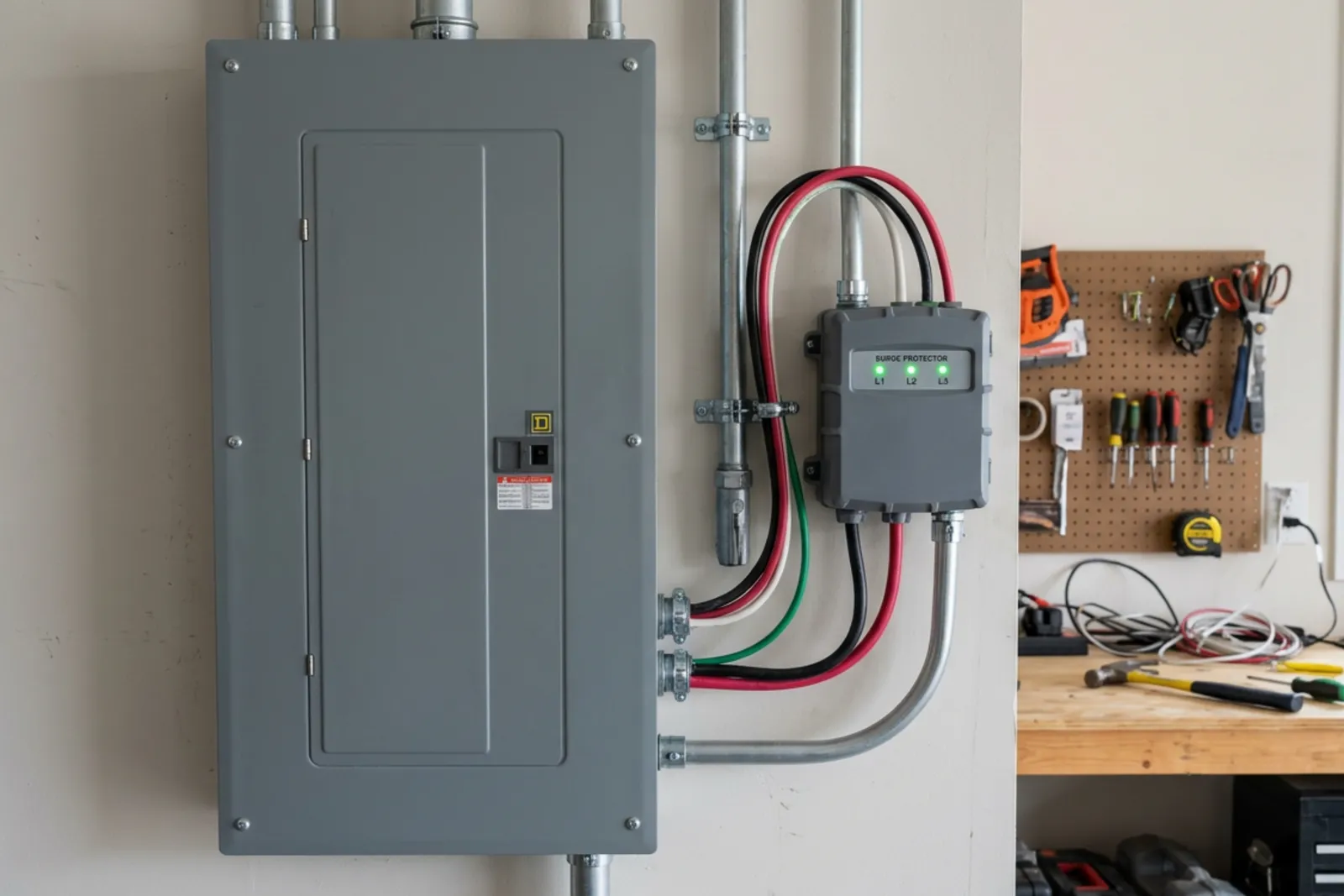
The practical approach is layered protection: a properly selected surge protective device at the electrical panel, supported by local protection where appropriate. Choosing that protection requires more than comparing prices or buying the device with the largest rating. The service arrangement, installation quality, and equipment being protected all matter.
What Surge Protection Can and Cannot Do
A surge is a brief increase in voltage above the normal operating level. Some surges originate outside the home through lightning-related activity or utility switching. Others occur inside when electrical equipment switches on or off.
A surge protective device, usually called an SPD, limits transient voltage by providing a path for surge current between designated conductors. Depending on its design, it may protect between the live conductors, neutral, and ground. Proper grounding and bonding are part of the system, but describing an SPD as simply sending every surge “into the earth” misses how these devices work.
A panel-mounted SPD helps limit surges that could otherwise travel into household circuits. It cannot eliminate every electrical risk.
Surge protection does not keep equipment running during an outage. It also does not correct sustained low voltage, ongoing overvoltage, loose connections, or a damaged service neutral. A direct lightning strike can exceed the protection available from ordinary residential SPDs.
These limits are worth understanding. Surge protection is useful, but it is not a substitute for electrical repairs, sound wiring, or backup power.
Why North Shore Properties Need Individual Assessment
Two homes on the same street can have different protection needs.
One may have underground service and a recently updated panel. Another may have an older service arrangement, overhead conductors passing near trees, and limited space in the panel. Both might benefit from surge protection, but the installation could look quite different.
Overhead lines are exposed to wind, branches, and storm damage. Those conditions can lead to faults and utility operations associated with electrical disturbances. A long overhead service drop or an exposed location deserves closer assessment, although neither determines the correct SPD by itself.
Underground service does not make a home surge-proof. Disturbances can still arrive through the electrical supply, and switching events can originate within the property.
The connected equipment matters, too. Heat pumps, smart thermostats, induction ranges, network equipment, and appliances with electronic controls can be expensive to repair. Solar installations and home charging equipment introduce further considerations because their protection must suit the system design.
For homes across North Vancouver and the wider North Shore, the useful question is: what protection fits this electrical system and its actual exposure?
Type 1 and Type 2 SPDs: Understanding the Difference
The distinction between Type 1 and Type 2 devices concerns their permitted installation locations and testing requirements. It is not a simple ranking of stronger versus weaker.
Type 1 protection
A Type 1 SPD can be suitable for installation on the supply side of the main service disconnect, subject to its certification, installation instructions, and applicable requirements. Some Type 1 devices can also be installed on the load side.
Supply-side installations need careful planning because they involve service equipment that may remain energized when the main breaker is off. Utility coordination or a service disconnection may be necessary.
This arrangement can be worth considering when the service configuration supports it. However, a Type 1 label does not automatically mean a device has greater surge-current capacity than every Type 2 product. The actual specifications must be compared.
Type 2 protection
A Type 2 SPD is installed on the load side of the main service disconnect. In homes, it is commonly connected at the panel through a suitable breaker, although the exact arrangement depends on the product.
This is a common option for residential panel-level protection. It can provide effective coverage when the device is compatible with the electrical system and installed correctly.
Available breaker space matters. So do the panel manufacturer’s requirements, the required breaker size, and the route of the connecting conductors. An electrician should not improvise an incompatible breaker arrangement to make a device fit.
Why installation quality matters
Short, direct connections help an SPD perform as intended. Excess conductor length and unnecessary bends can increase the voltage that reaches equipment during a transient.
That means two installations using the same device may not perform identically. Placement and wiring are part of the protection, not minor finishing details.
What to Compare Beyond the Device Type
Product labels can be confusing. A large surge-current figure is easy to notice, but it should not be the only basis for selection.
An electrician should review the device’s suitability for the service voltage and system configuration, along with its certification for use in Canada. Protection modes, voltage protection ratings, and installation instructions also deserve attention.
The maximum continuous operating voltage indicates the voltage a device can tolerate continuously under specified conditions. Surge-current ratings describe performance under defined tests; they do not promise survival against every real-world event. Likewise, a joule rating on a plug-in product is not a complete measure of protection quality.
Status indication is another practical detail. Many SPDs have lights or other indicators that show whether protection remains available. Some provide remote notification, which can be useful if the panel is somewhere rarely visited.
Choose a device whose condition can be checked without opening electrical equipment. A protective device that has stopped working is easy to overlook if nobody knows what its indicator means.
Building a Second Layer Near Sensitive Equipment
Panel protection provides broad coverage, but local protection can address particular equipment needs.
A suitable plug-in surge protector may be useful for a television, desktop computer, or home networking equipment. It should be connected to a properly grounded receptacle and used within its electrical rating. An ordinary power strip is not necessarily a surge protector.
Point-of-use devices cannot provide the same coverage as an SPD at the electrical panel. They protect equipment connected through them, rather than every branch circuit in the home.
They also need to be chosen carefully. Some protective products depend on coordinated upstream protection, and manufacturer instructions may specify placement or installation conditions.
Hardwired equipment needs a different approach
A heat pump, solar inverter, or EV charger should not be treated like a computer plugged into a power bar. Local protection for hardwired equipment must suit the circuit, environment, and manufacturer’s requirements.
During an EV charger installation, for example, an electrician can assess panel-level protection and whether the selected charger needs any further measures. A Level 2 charger does not automatically require a separate local SPD in every installation.
Solar systems may need protection on AC circuits, DC circuits, or both, depending on their design. An AC SPD is not interchangeable with a device intended for photovoltaic DC circuits.
Remember other conductive connections
Sensitive equipment may also connect to coaxial cable, telephone wiring, or outdoor Ethernet runs. Those conductors can provide another route for transient voltage.
Where protection is appropriate, it should be compatible with the communication system and properly bonded. Protecting the power cord while ignoring an exposed outdoor data cable can leave a gap.
The Electrical Checks That Should Come First
Surge protection planning is a good opportunity to examine the condition of the electrical system. It should not become a way to work around existing defects.
Grounding and bonding need particular attention. Their condition affects safety and the performance of protective equipment. Missing connections, corrosion, or incorrect arrangements should be addressed through proper electrical work.
Panel configuration is another factor. An older or crowded panel may restrict the available installation options. However, an SPD does not automatically require panel upgrades or service upgrades. Those decisions should follow an assessment, not a blanket rule.
It also helps to distinguish physical space from electrical capacity. A panel may lack an available breaker position even when the home does not need a larger service. Conversely, a panel with open spaces may still have capacity limitations when substantial new loads are proposed.
When planning electrical renovations, home rewiring, or new equipment, homeowners can ask licensed electricians to review surge protection alongside the rest of the work. This can make installation more practical, though each change still needs its own justification.
Permits, Qualifications, and Safe Installation
Work at the main panel is not a suitable do-it-yourself project. Turning off the main breaker does not necessarily de-energize all components inside service equipment.
Use an appropriately licensed electrical contractor, and confirm that the person responsible has the qualifications required for the work. It is also reasonable to ask about insurance.
Permit and inspection requirements depend on the installation and the authority having jurisdiction. In British Columbia, electrical oversight may involve Technical Safety BC or a municipality with its own authority. Confirm the requirements for the property’s exact address rather than assuming one process applies throughout Greater Vancouver.
Before approving a quote, ask:
Where will the SPD be installed, and why does that location suit the service?
Is the device certified and compatible with the panel?
Are grounding, bonding, or panel repairs needed first?
Who will arrange any required permit and inspection?
How will you know when the device needs attention or replacement?
Clear answers are more useful than a promise of “complete protection.” No contractor or product can remove every surge risk.
Comparing Costs and Keeping Protection Working
Installed costs vary with the device, panel layout, access, labor, and permitting requirements. Supply-side work may require different coordination than a load-side installation. Repairs or panel modifications can change the scope substantially.
Ask for an itemized quote that separates the SPD installation from other recommended work. A straightforward panel connection and a project involving service changes should not be compared as though they are equivalent.
The value also depends on what is connected. Replacing a heat pump control board or several damaged appliances can be costly, but surge protection is not a guarantee against those expenses. Equipment can fail for unrelated reasons.
Check insurance questions directly with the insurer. Coverage, deductibles, exclusions, and any premium effects are policy-specific.
Once installed, protection needs occasional attention. Follow the manufacturer’s inspection guidance, understand the status indicator, and check it after significant electrical events when safe to do so. Some devices require replacement after their protective components are depleted.
If an event leaves you with burning smells, unusual heat, sparking, or lights becoming unexpectedly bright or dim, treat that as a possible electrical fault rather than a routine SPD issue. Keep clear of damaged equipment and contact the utility or an emergency electrical service as appropriate. Call emergency services if there is fire or immediate danger.
A Practical Choice for Your Home
Start with the electrical system, then choose the device. A compatible panel SPD, installed with suitable connections and sound grounding and bonding, provides the basis for layered protection. Local devices can then address sensitive equipment and other exposed connections.
The best choice is not automatically Type 1, Type 2, or the product with the largest number on the package. It is the protection that fits the service, is installed correctly, and can be checked over time.
Need a licensed electrician?
Free consultations across Greater Vancouver — and 24/7 emergency service.
Get a Free Quote