
The Most Common Electrical Problems in Older Homes
Learn the most common electrical problems in older homes and when to act. Protect your safety and book a professional inspection with Eagle Power.
September 13, 2026
Older homes can be wonderful to live in. They often have better lumber, more character, and floor plans that feel less cookie-cutter. But the electrical system is usually where the romance ends.
If your home was built decades ago, there is a decent chance some part of the wiring no longer fits how people live today. We ask much more from our electrical systems now. Microwave, induction range, heat pump, home office, charging stations, smart devices, maybe even hot tub electrical or sauna electrical. A house built for lamps, one fridge, and a radio was never designed for that.
I see this catch homeowners off guard all the time, especially during renovations or after a home inspection. The walls look fine. The outlets mostly work. Then a breaker trips, a plug feels warm, or an electrician opens the panel and finds a mess.
Here’s what tends to go wrong in older homes, why it matters, and what to do next.
Why older homes run into electrical trouble
Electrical systems wear out, but age alone is not the whole problem. The bigger issue is mismatch.
A house from the 1950s or 1960s may still have wiring that was acceptable when installed, yet not suitable for current loads or current safety expectations. Sometimes the system was partially updated over the years. That can be better than doing nothing, but mixed old and new wiring often creates its own problems.
In Vancouver and surrounding areas, older housing stock adds another layer. Renovations, basement suites, additions, and appliance upgrades are common. Every one of those changes puts more pressure on the panel, branch circuits, and grounding system.
A home can appear functional while still having serious electrical weaknesses. That’s why problems often show up during a renovation, insurance review, or pre-purchase inspection instead of during day-to-day life.
1. Outdated wiring
When people say an old home has “old wiring,” they usually mean one of several things.
Knob-and-tube wiring
This wiring method shows up in very old homes. It does not have a ground wire, and it was installed for a time when electrical demand was low. On its own, knob-and-tube is not always immediately dangerous just because it exists. The real trouble starts when it has been modified badly, buried under insulation improperly, or mixed with newer wiring in sloppy ways.
Common issues include:
brittle insulation
unprotected splices
overloaded circuits
no grounding for modern appliances and electronics
If a home still has active knob-and-tube, it deserves a careful evaluation. I would not ignore it and hope for the best.
Cloth-insulated or aging copper wiring
Some older copper wiring is still serviceable, but insulation can dry out and crack over time. That leaves conductors more exposed and increases the risk of shorts or arcing. If you’re opening walls during a renovation, that is often the moment when hidden deterioration becomes obvious.
2. Ungrounded outlets
Two-prong outlets are one of the most common red flags in older homes. They tell you the circuit may not have a grounding path.
Grounding matters because it gives stray electrical current a safer route if something goes wrong. Without it, shock risk goes up, and surge protection for electronics becomes less reliable. Some devices may still run, which is why homeowners sometimes shrug this off. I wouldn’t.
A few situations show up often:
original two-prong receptacles still in use
three-prong receptacles added without proper grounding
GFCI devices installed as a partial workaround, but not always where needed
A three-prong outlet does not automatically mean the outlet is grounded. That’s a detail many people miss. It needs testing, not guessing.
3. Aluminum wiring
Homes built in certain periods, especially in the 1960s and 1970s, may have aluminum branch wiring. Aluminum is not the same as copper. It expands and contracts differently, and connections can loosen over time if the wiring and devices are not properly rated and installed.
That creates a few specific risks:
overheating at terminals
arcing at loose connections
damage to switches and receptacles
increased fire risk when poor repairs were done in the past
Aluminum wiring does not always mean the entire house needs immediate rewiring, but it does mean the connections and termination methods matter a lot. This is not a “swap a few outlets on a weekend” situation. You want a licensed electrician who understands approved repair methods and local code requirements.
4. Insufficient electrical capacity
This is the big one in many older homes.
A house built around a 60-amp or 100-amp service may struggle with modern electrical demand. Even if nothing looks obviously wrong, the system can be operating too close to its limit.
You may notice:
breakers tripping when multiple appliances run
lights dimming when a large load starts
no room in the panel for new circuits
extension cords everywhere because outlets and circuits are lacking
Capacity becomes a bigger deal when homeowners plan upgrades like EV charger installation, air conditioning, a suite, a workshop, or an updated kitchen. Those projects are often what force the issue. The house may have limped along for years, then one new load tips it over.
For many households, electrical capacity is no longer just about convenience. It affects whether future upgrades are even possible.
5. Overloaded circuits and too few outlets
Older homes often have fewer receptacles than people need. The result is predictable: power bars, extension cords, and too many things plugged into one spot.
That creates heat. Heat is the part people underestimate.
A bedroom that once handled one lamp now powers a TV, phone charger, gaming setup, space heater, and air purifier. A kitchen circuit that once had a toaster and maybe a coffee percolator now handles a microwave, kettle, toaster oven, espresso machine, and more.
Warning signs include:
receptacles that feel warm
discoloured faceplates
buzzing sounds
plugs that fall out loosely
breakers that trip often
Sometimes the fix is simple, like replacing a worn receptacle. Often it is a sign the circuit design no longer fits the room.
6. Aging panels and breaker issues
The panel is the traffic controller of the whole system. In older homes, panels may be undersized, outdated, or simply worn out.
A few common problems:
breakers that trip too easily
breakers that fail to trip when they should
corrosion inside the panel
double-tapped breakers where two conductors are connected to a breaker not rated for that use
limited space for added circuits
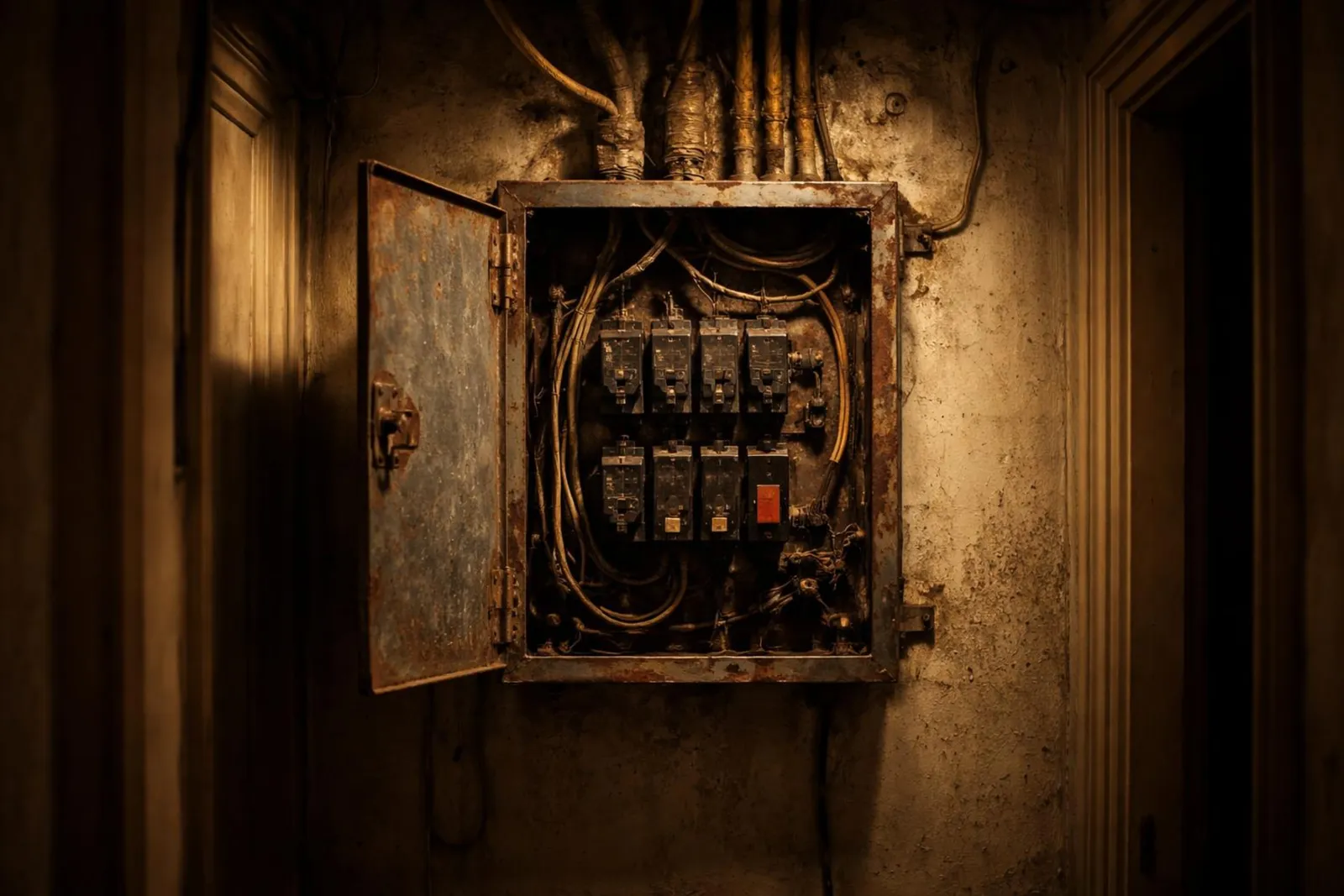
Some older panel brands also have poor reputations for safety. If an inspector or electrician flags the panel, take that seriously. Panel problems are easy to ignore because they sit quietly in a utility room for years. Quiet does not mean fine.
7. DIY electrical work from past owners
This one is less glamorous than knob-and-tube, but honestly, it causes a lot of trouble.
I’ve seen old homes where the original wiring was rough but understandable, and the real danger came from later “improvements.” Hidden junction boxes, reversed polarity, mismatched wire sizes, loose splices, borrowed neutrals, random basement circuits feeding half the main floor. It happens more than people think.
Older homes often pass through many owners. Not all of them hired a renovation electrician. When walls get opened, surprises show up.
Signs your older home may have an electrical problem
Some warning signs are subtle. Others are your house being pretty direct.
Pay attention if you notice:
frequent breaker trips or blown fuses
flickering or dimming lights
buzzing from outlets, switches, or the panel
burning smells near electrical devices
outlets or switches that are warm
discolouration around receptacles
shocks when touching appliances or metal fixtures
two-prong outlets
extension cords used as a long-term solution
a panel that feels full before a renovation even begins
None of these guarantee a major hazard, but they all deserve investigation.
One more thing: if lights flicker only when a specific heavy appliance starts, that often points to load issues. If lights flicker unpredictably throughout the house, the problem may be broader and more urgent.
What an electrician usually checks in an older home
A proper assessment is more than peeking at the panel and saying, “Yep, it’s old.”
A thorough inspection often includes:
service size and main panel condition
breaker compatibility and available panel space
visible wiring type and condition
grounding and bonding
outlet testing for polarity and grounding
signs of overheating or arcing
dedicated circuits for kitchens, bathrooms, laundry, and major equipment
code concerns in renovated areas or added suites
This matters because electrical problems in older homes tend to cluster. A home with ungrounded outlets may also have overloaded circuits. A home with aluminum wiring may also have an undersized panel. Fixing one issue while missing the next one is frustrating and expensive.
Renovations are when electrical problems come to light
A lot of homeowners don’t discover these issues until they start opening walls. That makes sense. Hidden wiring stays hidden until someone removes drywall.
If you’re planning a kitchen remodel, basement update, addition, or suite conversion, bring in a renovation electrician early. Not after cabinets are ordered. Not after drywall is patched. Early.
This is especially true if you’re adding higher-demand equipment such as:
EV charger installation
hot tub electrical
sauna electrical
electric heating upgrades
larger kitchen appliances
workshop tools
These loads are not side notes. They may require dedicated circuits, panel changes, or a service upgrade. The same goes for older mixed-use properties. In those cases, the needs of residential electrical services and commercial electrical services can overlap in messy ways, especially where occupancy has changed over time.
A renovation is the best time to fix hidden wiring problems because access is easier. It is also the worst time to discover them late.
What you can do yourself, and what you should not
There are a few safe homeowner-level checks you can make.
You can:
note when and where breakers trip
look for two-prong outlets
test receptacles with a basic outlet tester
stop using damaged cords and overloaded power bars
label which devices are on which circuits
You should not:
open the panel if you are not qualified
replace devices on aluminum wiring without proper knowledge and materials
assume a three-prong outlet is grounded
cover recurring electrical symptoms with a bigger power bar
bury junction boxes behind drywall
That last one is more common than it should be.
With older homes, electrical DIY has a way of becoming expensive professional repair later. A licensed electrician and insured electrician may sound like standard wording, but in an older property it matters. Hidden conditions are common, and the work needs to be done carefully.
Which upgrades usually make the most sense first
Not every home needs a full rewire right away. Some do. Many need a prioritized plan.
Common first steps include:
Fixing safety issues
If there are signs of overheating, damaged wiring, unsafe panel conditions, or improper aluminum connections, start there. Safety first is boring advice, but it’s still correct.
Improving grounding and protection
Replacing ungrounded receptacles, adding GFCI protection where required, and correcting grounding and bonding issues can reduce risk fast.
Adding circuits where demand is highest
Kitchens, bathrooms, laundry rooms, garages, and home offices often need attention first because that’s where load tends to pile up.
Upgrading the panel or service
If the house cannot support modern usage, a panel upgrade or service upgrade may be the practical next move. This is often necessary before EV charger installation or major renovation work.
Rewiring problem areas
Sometimes the smartest approach is partial rewiring. Old wiring in an attic conversion, basement suite, or renovated kitchen may be replaced first, with a broader plan for later phases.
When to call for help right away
Some electrical issues can wait a few days for scheduling. Some should not.
Call promptly if you have:
a burning smell from outlets or the panel
sparking
a breaker that will not reset
flickering across multiple rooms
signs of melted insulation
shocks from appliances or fixtures
water exposure near electrical equipment
If you are in an older home and one of those shows up, don’t talk yourself into “it’s probably nothing.” Electrical problems are strange that way. They can look minor until they aren’t.
A final word for older-home owners in Vancouver
Owning an older home often means choosing what to preserve and what to update. Electrical systems are one area where nostalgia should not win.
You do not need to panic over every old outlet or every dated panel. But you do need clear information. A proper assessment can tell you whether you’re dealing with routine upgrades, a real safety issue, or a system that simply can’t handle modern loads anymore.
That matters whether you’re planning a renovation, trying to support new equipment, or just wanting the house to feel dependable. Good electrical work is not flashy. Most of the time, you barely notice it. That’s kind of the point.
For homeowners searching for Vancouver electrical services, the best next step is usually straightforward: have the home evaluated before the small annoyances become expensive repairs. In older houses, that is money and stress well spent.
Need a licensed electrician?
Free consultations across Greater Vancouver — and 24/7 emergency service.
Get a Free Quote