
Do You Need a Permit to Replace an Electrical Outlet in British Columbia?
Learn when an electrical outlet replacement requires a permit in British Columbia and when to call licensed electricians. Read the guide.
September 30, 2026
Replacing a worn electrical outlet can look like one of the simplest jobs in a home. Remove the cover plate, disconnect a few wires, install a new receptacle, and put everything back together. In some cases, it really is a narrow replacement task that does not require an electrical permit in British Columbia.
But that exception has limits. A permit exemption is not a blanket approval to alter wiring, add outlets, increase circuit capacity, or solve hidden electrical problems behind a wall. The distinction matters because electrical work that seems small on the surface can expose damaged conductors, loose connections, missing grounding, moisture damage, or overloaded circuits.
This guide explains British Columbia’s outlet replacement rules under the Electrical Safety Regulation, B.C. Reg. 100/2004, and outlines when it is time to stop and call licensed electricians.
The Basic Rule: Electrical Work Usually Requires a Permit
British Columbia regulates electrical work through the Safety Standards Act, the Electrical Safety Regulation, and the B.C. Electrical Code. The provincial code incorporates the Canadian Electrical Code, Part I, along with B.C.-specific amendments.
As a general rule, electrical work performed on an electrical installation requires an installation permit. This often includes work involving:
New wiring or replacement wiring
Added branch circuits
New receptacles in new locations
Panel upgrades and service upgrades
Circuit extensions
Changes to overcurrent protection
Electrical renovations
Work requiring a utility connection or reconnection
A permit allows the work to be reviewed and inspected where required. It is a safety control, not just paperwork. Once wiring is concealed behind drywall or energized, finding defects becomes much harder and more expensive.
That said, B.C. regulations recognize that some maintenance-level replacements do not change the electrical installation itself. Replacing an existing receptacle with a comparable one is one of those limited exceptions.
When Replacing an Outlet Does Not Require a Permit
Under the Electrical Safety Regulation, no permit is required when an individual replaces a receptacle with electrical equipment of a similar type or rating, provided it is not more than 150 volts to ground.
In everyday terms, this generally means replacing an existing outlet in the same location with a comparable outlet, without altering the wiring or the circuit.
For example, a standard 120-volt duplex receptacle that is cracked, loose, or no longer holding plugs securely may be replaced with another suitable 120-volt duplex receptacle. If the device is installed in the same box, connected to the same conductors, and the circuit is otherwise left alone, that is usually the kind of replacement the exemption addresses.
The regulation also provides a similar permit exemption for replacement of certain other electrical products, including cord attachment plugs, snap switches, ballasts, dimmer switches, fan speed controllers, thermostats, and overcurrent devices. Again, the key word is replacement.
A straightforward replacement does not include improving, extending, or redesigning the electrical system while the cover plate is off.
What “Like for Like” Really Means
“Like for like” is a useful shorthand, though the regulation uses the idea of equipment with a similar type or rating. It means the replacement should remain functionally and electrically comparable to the device it replaces.
That can include replacing an old receptacle with a new approved receptacle of the same general rating. It may also mean replacing a worn tamper-resistant receptacle with another appropriate tamper-resistant model where that feature already applies.
It does not mean any receptacle that physically fits in the electrical box is acceptable.
A new device must still be suitable for the circuit, the location, and the intended use. For example, a specialty receptacle intended for a higher-load appliance does not somehow turn an existing circuit into a higher-capacity circuit. The branch-circuit conductors, breaker, grounding, box fill, and device rating all have to support the installation.
This is where people get into trouble. A receptacle can look modern, heavy-duty, or more convenient while being completely wrong for the wiring behind it.
What the Permit Exemption Does Not Cover
The outlet replacement exemption is narrow. It does not cover changes to the electrical installation, even if those changes happen inside the same outlet box.
A permit may be needed, and qualified electrical work may be required, when the job involves:
Adding a new receptacle where none existed
Moving a receptacle to a different wall location
Extending wiring to another box
Replacing or rerouting damaged conductors
Installing a new branch circuit
Changing a breaker to a larger size
Altering a junction box or adding a junction
Correcting missing or faulty grounding
Installing equipment that changes the circuit’s load or purpose
Connecting a new appliance that needs dedicated power
There is a practical line to remember: replacing the face device is one thing. Altering what feeds the device is another.
Suppose you remove an old receptacle and find brittle wire insulation, scorched conductors, an undersized box, or no reliable grounding path. At that point, the job is no longer a simple outlet swap. Those conditions may require electrical repairs, rewiring, inspection, and possibly a permit.
It is tempting to treat the visible outlet as the entire problem. Often it is not.
A Permit Exemption Does Not Mean Anyone Can Do the Work
One of the most common misunderstandings is that a permit exemption means anyone may legally perform the work. Those are separate questions.
British Columbia’s Electrical Safety Regulation limits regulated electrical work to people who are authorized under the regulation. Authorization can come through appropriate SkilledTradesBC certification, recognized training, approved employer training programs, homeowner permit provisions, a manufacturer’s technical role, or another permitted category.
The scope of a person’s authority matters. So do any conditions attached to their certification, permit, or employment.
For homeowners, the rules are especially specific. A person who owns and occupies a qualifying fully detached dwelling may perform certain electrical work under a homeowner installation permit, subject to restrictions. This is different from the narrow permit exemption for a like-for-like outlet replacement.
In other words, two questions should be answered before work begins:
Does the task require a permit?
Is the person doing the work authorized to perform it?
Those answers are not always the same.
Who Qualifies as a Homeowner for Electrical Permit Work?
For homeowner-permit purposes, B.C. defines a homeowner as the owner of a fully detached dwelling who lives, or intends to live, in that dwelling as a permanent residence.
A fully detached dwelling may include a detached one-unit home, a manufactured home, or a recreational vehicle. The definition does not usually extend to rental property owners doing work in a tenant-occupied unit, tenants, strata corporations, or condominium owners in multi-unit buildings.
The homeowner permit route also has electrical limits. The work must generally be in an installation not exceeding 200 amps and 150 volts to ground on single-phase power. Electricity also cannot be supplied from that dwelling to another separately owned or occupied property.
That last point is easy to overlook. A detached home with a separately occupied suite, another dwelling, or an outbuilding supplied for someone else’s use may involve a more complicated permit and authorization question.
If a permit is issued for homeowner work, inspection requirements apply. The work must be inspected before rough wiring is concealed and before power is connected. Homeowners must also request inspection promptly when work, or a phase of work, is complete.
For anything beyond a very limited repair, working with a qualified Vancouver electrician or FSR Contractor is often the safer route. It avoids making assumptions about permit eligibility, inspection timing, and code requirements.
Property Type Changes the Answer
Electrical rules do not exist in a vacuum. The building itself, who occupies it, and who owns the electrical system can all affect what is allowed.
Extra caution is needed in rental homes, condominiums, strata buildings, duplexes, apartment buildings, and properties with shared electrical infrastructure. A receptacle inside one unit may be fed through common systems, connected to a shared panel, or subject to building management rules.
A tenant should not assume they can replace an outlet just because it is inside their home. A landlord may be responsible for arranging electrical repairs. A strata corporation may have rules about work that affects common property or building systems. In commercial electrical services, the work may also be subject to workplace, lease, insurance, and facility-management requirements.
Local authorities matter too. In many parts of Greater Vancouver, electrical permits and inspections are administered through local regulatory authorities. Provincial rules set the overall framework, but municipal processes or local safety authority requirements may apply to a particular address.
Before starting work, confirm the requirements for your municipality and your property. That short phone call is less frustrating than discovering later that work should have been permitted or inspected.
Warning Signs That Turn an Outlet Swap Into a Professional Repair
A receptacle should not be replaced casually when there are signs that the issue goes beyond normal wear.
Call licensed electricians if you see, smell, hear, or feel any of the following:
A warm outlet cover or warm plug
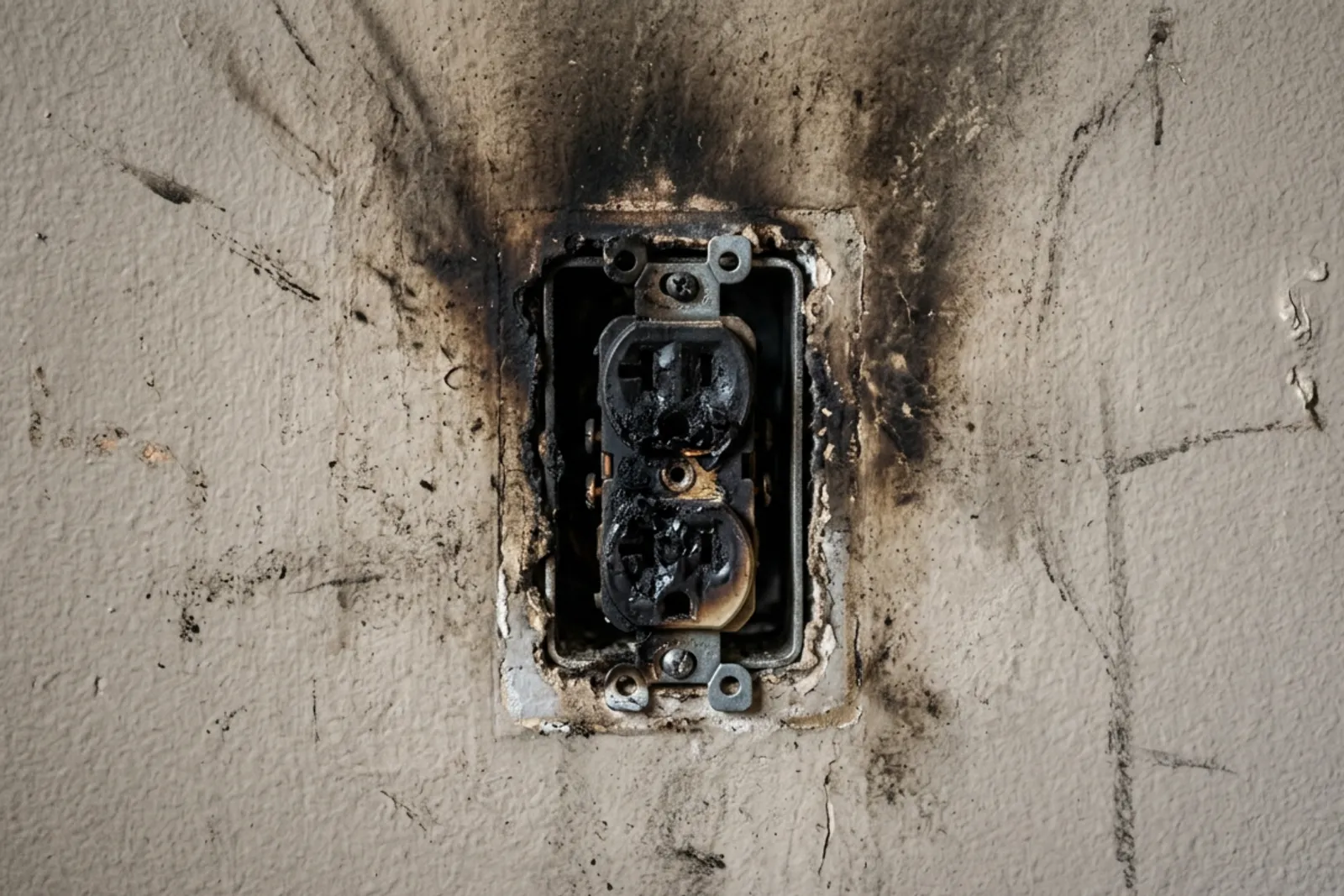
Discoloration, melting, scorching, or a burning odor
Sparking, buzzing, crackling, or intermittent power
A loose electrical box or damaged wall material
Corrosion or moisture around the outlet
Brittle, frayed, overheated, or damaged wiring
Aluminum conductors
Ungrounded or uncertain wiring
Repeated breaker trips
A receptacle near a sink, exterior location, garage, deck, bathroom, or other damp area
A breaker that cannot be clearly identified or safely shut off
These are not cosmetic issues. Heat can point to a loose connection, damaged receptacle contacts, overloaded conductors, or a failing splice upstream. Moisture can travel farther into a box or wall cavity than it appears to from the outside.
If an outlet is loose enough that plugs fall out, the device may simply be worn. But if the entire box moves when you insert a plug, the box itself may not be securely mounted. Fixing that can involve more than exchanging one device for another.
When the situation is urgent, such as active sparking, smoke, burning odor, or loss of power affecting essential equipment, turn off power if it can be done safely and contact an emergency electrical service provider.
Specialty Receptacles Need More Than a Quick Swap
Modern homes use more specialized receptacles than they did a few decades ago. Ground-fault circuit interrupter outlets, weather-resistant devices, tamper-resistant receptacles, USB charging outlets, smart outlets, and receptacles for dedicated appliances all have their place. Still, a specialty device can introduce requirements that an older installation does not meet.
A receptacle near water may require ground-fault protection. Outdoor outlets need equipment approved for wet or damp locations, along with proper covers and installation methods. A receptacle for a larger appliance may require a dedicated circuit with the correct conductor size and breaker rating.
The same principle applies to bigger electrical projects. An EV charger installation, hot tub wiring, sauna wiring, and home rewiring are not extensions of a basic outlet replacement. They require a full review of available electrical capacity, panel condition, load calculations, equipment specifications, and permit requirements.
A Level 2 charger may need a dedicated 240-volt circuit. A hot tub electrician needs to account for bonding, disconnect location, ground-fault protection, and outdoor conditions. These projects should be designed as installations, not treated as upgraded outlets.
Equipment Must Be Approved for Use in B.C.
Electrical equipment installed in British Columbia generally needs an acceptable certification, approval, or agency mark. Common markings may come from recognized certification organizations, depending on the product and its intended use.
An approval mark matters because it indicates that the equipment has been assessed for electrical shock and fire risks under defined conditions. Still, the mark does not confirm that a device has been installed correctly.
A certified receptacle can be unsafe if it is connected to damaged wiring, installed in the wrong environment, overloaded, improperly grounded, or placed in an overfilled box. Product approval and proper installation are separate parts of safety.
Avoid unapproved devices, counterfeit products, and electrical equipment with unclear labeling. Bargain-priced devices from unknown sources can be an expensive gamble when they are installed inside a wall.
A Simple Decision Framework Before You Replace an Outlet
Before treating an outlet as a quick repair, pause and work through a few practical questions.
First, is this truly a replacement? The existing outlet should remain in the same location, on the same circuit, with no changes to conductors, boxes, or grounding.
Next, is the new receptacle comparable in type and rating, and is it suitable for the location? A device in a bathroom, outdoors, or near a kitchen counter may have requirements that differ from a standard indoor living-room outlet.
Then consider the circuit’s condition. Can you identify the correct breaker, de-energize the circuit, and verify it is off using appropriate test equipment? If the answer is uncertain, stop. Guessing at a panel is a poor safety plan.
Finally, look for signs of a larger problem. Heat, damaged insulation, corrosion, loose boxes, ungrounded wiring, aluminum wiring, and repeated breaker trips all call for a more thorough assessment.
The Bottom Line
British Columbia allows a narrow permit exemption for replacing a receptacle with similar equipment or rating, up to 150 volts to ground. That is useful for a genuine like-for-like replacement. It does not authorize rewiring, adding outlets, moving devices, increasing capacity, or altering a circuit.
The safest approach is to judge the work by what happens behind the cover plate, not how small the job appears from the room. If the installation changes, if the wiring condition is unclear, or if the outlet shows signs of damage or overheating, the work has moved beyond a simple replacement.
For permit-controlled work, renovations electrician services, panel upgrades, and any repair involving uncertain wiring, a qualified professional can help ensure the installation is code compliant, properly permitted, and inspected when required.
Need a licensed electrician?
Free consultations across Greater Vancouver — and 24/7 emergency service.
Get a Free Quote