
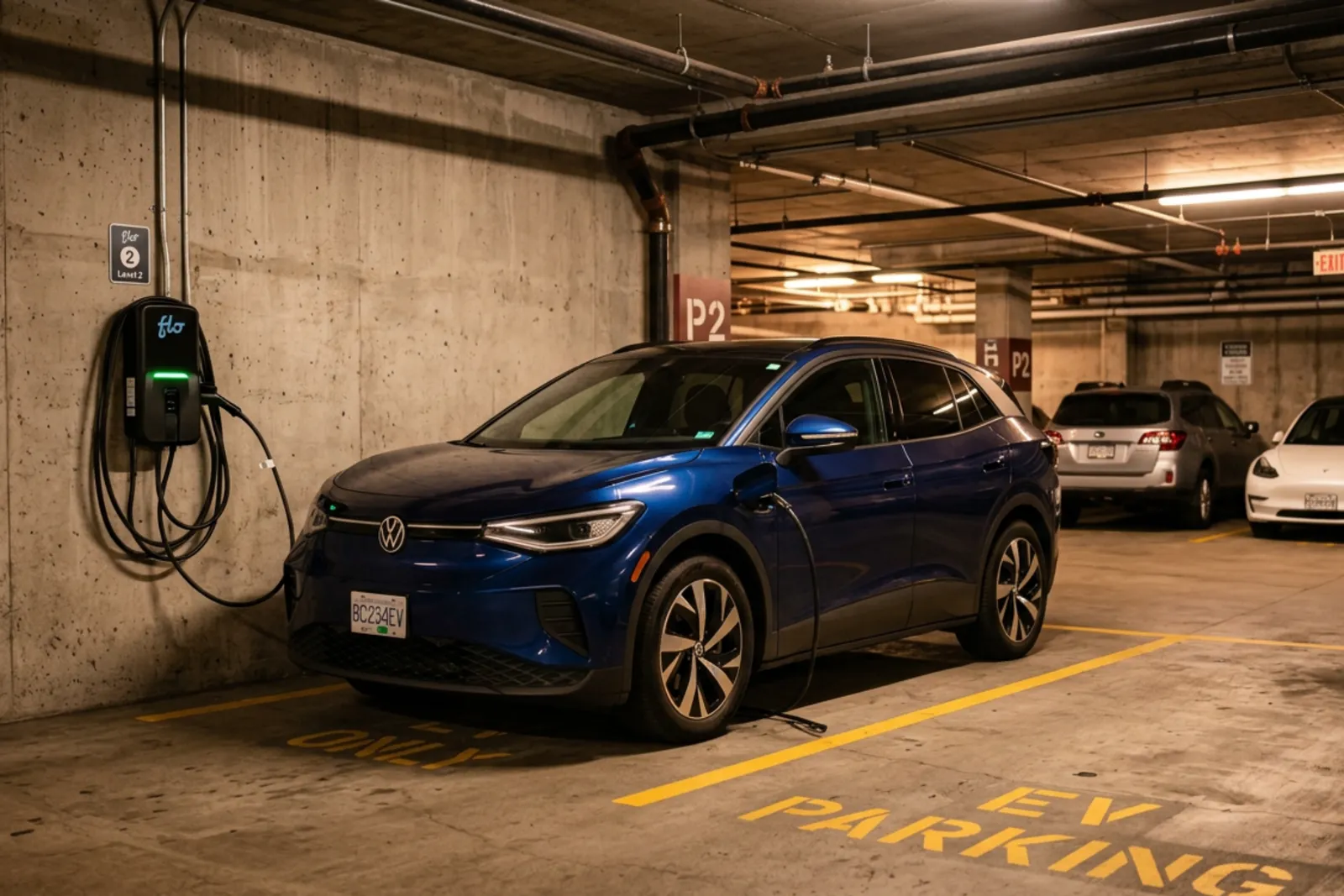
What Does EV Charger Installation Cost in Metro Vancouver?
Learn what affects EV charger installation costs in Metro Vancouver, from panels to permits. Get informed before requesting a quote today.
September 23, 2026
Buying an electric vehicle is the exciting part. Figuring out home charging is where the practical questions begin.
For many drivers in Greater Vancouver, a Level 2 charger is the right answer. It can recharge most EVs overnight, avoids repeated trips to public stations, and gives you more control over your daily routine. But the cost of EV charger installation is rarely just the price printed on the charger box.
Your home’s electrical panel, the distance to the parking spot, permit requirements, and the type of property all affect the final quote. A detached garage in Surrey has different constraints than a condo parkade in North Vancouver or a townhouse in Coquitlam.
Here is how to think through the main EV charger installation costs in Metro Vancouver, what local service-call rates can tell you, and which questions to ask before approving electrical work.
Start With the Difference Between a Service Call and an Installation Quote
This distinction causes plenty of confusion.
Electricians commonly publish service-call pricing for troubleshooting and electrical repairs. These rates apply when an electrician needs to diagnose an issue, such as a breaker that keeps tripping, an outlet that has failed, or existing EV charging equipment that will not operate safely.
A new EV charger installation is usually handled differently. It is generally quoted as a project because the work can vary widely by property. One installation may involve a short cable run beside the main panel. Another may require conduit through a finished basement, a new subpanel in a garage, or coordination with a strata corporation.
In the Lower Mainland and Fraser Valley, an example of standard troubleshooting pricing is:
$200 for the first hour during standard business hours, typically 7 AM to 6 PM
$275 for a two-hour troubleshooting call
$350 for a three-hour troubleshooting call
$275 for the first hour of an after-hours emergency callout, generally 6 PM to 7 AM
$300 for a two-hour after-hours call
$400 for a three-hour after-hours call
These figures are useful for understanding the cost of diagnostics or electrical repairs. They should not be treated as a complete EV charger installation price. New work is often quoted as a flat project fee or a detailed estimate that includes labour, materials, permits, and testing.
Also read the fine print. Service-call rates generally exclude taxes and materials, and time may be billed in half-hour increments. A minimum service-call charge may apply even when the issue turns out to be small.
Why Level 2 Home Charging Usually Requires Electrical Work
A Level 1 charger plugs into a standard household receptacle. It is slow, but it may work for drivers with short commutes and plenty of time between trips.
Most homeowners who want dependable home charging choose a Level 2 charger. These chargers use a 208-volt or 240-volt circuit and can deliver substantially more power than a standard outlet. That convenience comes with electrical requirements.
A proper Level 2 charger installation usually includes a dedicated circuit, correctly sized wire, an appropriate breaker, and either a hardwired connection or a receptacle rated for the intended load. The electrician also needs to confirm that the home’s electrical service can safely support the additional demand.
This is not a job for a general handyman. EV charging is a continuous electrical load, which means sizing and installation details matter. Licensed electricians should assess the equipment specifications, the vehicle’s charging requirements, the electrical panel, and the route between the panel and charger location.
A charger that appears to work can still be unsafe if the circuit, terminations, breaker, or receptacle are wrong. Heat buildup at a poorly installed connection is not always obvious until there is damage.
The Main Cost Components of EV Charger Installation
A useful quote breaks the project into understandable pieces. You do not need to become an electrician, but you should know what you are paying for.
The Charger Hardware
The charging unit itself is one part of the budget. Price varies with amperage, cable length, smart controls, weather rating, manufacturer, and whether the charger is hardwired or plug-in.
For most homes, a Level 2 charger is the common choice. Some owners select a basic unit with scheduled charging. Others want app monitoring, energy-use reporting, load management, or integration with solar equipment. Those preferences affect hardware cost, but more features do not remove the need for a safe electrical installation.
Before buying a charger independently, check its electrical requirements. A unit may be rated for a circuit larger than your existing panel can support without changes. It is frustrating to purchase a charger first and discover later that a panel upgrade is required.
Dedicated Breaker and Panel Space
Most Level 2 chargers need a new dedicated breaker. The breaker size depends on the charger’s continuous load and the manufacturer’s instructions.
The panel also needs physical space for the breaker. If the panel is full, an electrician may be able to reorganize existing circuits, install approved tandem breakers where suitable, add a subpanel, or recommend service upgrades. The right solution depends on the specific panel and the home’s electrical load calculation.
Panel upgrades can change a straightforward charging project into a larger electrical renovation. An older home may have a smaller service capacity, aging equipment, or a panel that no longer suits modern loads. Air conditioning, electric heat, induction cooking, hot tub wiring, sauna wiring, and EV charging all draw substantial power. The combined demand matters more than any one appliance.
Cable, Conduit, and the Distance to the Charger
The distance between the electrical panel and parking location is one of the biggest variables in EV charger installation.
A charger mounted a few metres from the panel may require limited wiring and labour. A detached garage, exterior driveway, underground parkade, or parking stall across a large building can require much more cable, conduit, fittings, fire stopping, drilling, trenching, or surface-mount raceway.
Conduit may be installed indoors, outdoors, underground, or through common areas. Each situation has different material and labour needs. Outdoor and underground installations must also account for weather exposure, physical damage, burial requirements, and local code rules.
This is why online “average installation cost” figures can be misleading. They may describe a simple installation in another city, under different permit rules, with a much shorter cable run.
Labour Time and Crew Size
Labour can be included as a fixed project amount, an hourly estimate, or a combination of both. Ask how the quote handles it.
A simple install may involve one electrician mounting the charger, running cable, installing the breaker, making terminations, testing the circuit, and completing paperwork. More complex work may need two electricians, especially when cable pulling is difficult, access is limited, or the work must be completed within a narrow building access window.
A clear estimate should state whether it includes:
A site assessment or diagnostic visit
Installation labour and the anticipated number of technicians
Materials such as wire, conduit, fittings, breaker, and mounting hardware
Testing, documentation, and permit coordination
Any work outside the stated scope
If the electrician bills hourly, ask what happens if hidden conditions extend the job. Old wiring, inaccessible spaces, concrete walls, water damage, or an unexpectedly full panel can add time.
Permits and Inspections
EV charger installation commonly requires a permit and inspection. The process varies by municipality and property type, but the basic idea is simple: electrical work should be checked to confirm that it meets applicable safety rules.
In Greater Vancouver, homeowners should ask whether the quoted price includes permit fees and whether the installer will arrange the permitted inspection. Do not assume this is included because a quote says “installation.”
Permits can feel like bureaucracy when you just want to charge your car. Still, they provide a record that the electrical work was completed and inspected. That documentation can matter for insurance, resale, future renovations, and safety.
A proper installation should be code compliant, with the charger and circuit sized for the actual equipment. If an installer suggests bypassing permits to save money, that is a reason to pause.
When a Panel Upgrade Becomes Part of the Project
Panel upgrades are one of the largest possible cost additions, but they are not automatically required.
The electrician should complete a load assessment to determine whether the existing service can accommodate the new EV load. A 100-amp service might support charging in some homes, while another house with the same service size may need changes because it already has several major electrical loads.
Older homes often deserve extra attention. Some may need home rewiring, replacement of outdated equipment, or repairs before new high-demand circuits are added. A home with frequent breaker trips or flickering lights should be assessed before installing a charger.
There are also alternatives to a full service upgrade in certain cases. Load-management equipment can monitor household demand and reduce or pause EV charging when the home is near its capacity. This may be a practical option, though its suitability depends on the charger, equipment, electrical service, and local approval requirements.
A reputable Vancouver electrician should explain why a service upgrade is needed, if it is needed, rather than simply adding it to a quote without evidence.
Condo, Townhouse, and Strata Charging Has More Moving Parts
Installing a charger in a detached home is usually more direct. Shared garages and strata properties are different.
The parking stall may be part of a common area. Electrical rooms may be far from the stall. The route for conduit could cross common property, pass through fire-rated walls, or require access to rooms controlled by building management. A strata council may have rules for charger type, installation methods, electricity billing, contractor insurance, and restoration work.
Condo owners should start the approval process early. The electrician may need building drawings, electrical room access, parking stall details, or information about the building’s existing capacity. In some buildings, one charger is manageable but many individual chargers would overload the shared infrastructure without a broader charging plan.
This does not mean condo charging is impossible. It means the project needs coordination. A permitted inspection may involve different steps than a single-family home, and the administrative time can affect cost.
For a shared garage, ask who owns the circuit, who pays for electricity, where the charger will be mounted, and how future maintenance will be handled. Sorting out those questions before installation is much easier than untangling them after the charger is installed.
How After-Hours Electrical Work Affects the Price
Most planned EV charger installations happen during regular business hours. That is usually the most economical approach, especially when permits, building access, or inspections are involved.
After-hours rates are mainly relevant when there is an urgent electrical issue. For example, a charger circuit may trip repeatedly, a receptacle may show signs of overheating, or a damaged cable may need immediate attention. In those cases, emergency electrical service costs more because of the response time and scheduling demands.
A typical after-hours initial callout may be $275 for the first hour, compared with $200 during regular hours for a standard troubleshooting visit. Material costs and taxes are separate.
If your charger is not working but there are no signs of overheating, smoke, burning odour, or visible damage, scheduling a normal diagnostic appointment may be reasonable. If you notice heat, arcing, scorch marks, a burning smell, or repeated breaker trips, stop using the equipment and seek qualified help promptly.
Questions to Ask Before You Approve a Quote
A detailed quote does more than tell you the price. It helps prevent misunderstandings.
Ask these questions before work begins:
Is this a fixed installation quote, an hourly estimate, or a service call followed by a project bid?
Does the price include the charger, or am I supplying it?
Are the breaker, cable, conduit, fittings, and mounting materials included?
Is a permit required, and who will arrange the inspection?
Has the electrician assessed panel capacity and available panel space?
What assumptions does the quote make about cable route, wall access, trenching, or concrete drilling?
Will one electrician complete the job, or will a larger crew be needed?
Are taxes and material markups included or separate?
What happens if panel work, repairs, or additional materials are required?
Is there a labour warranty, and what manufacturer warranty applies to the charger?
For troubleshooting appointments, it is also reasonable to ask about the minimum charge, billing increments, cancellation policy, and expected callback time. Local electrical companies may request card information to schedule a service call and may charge for cancellations made within 24 hours.
A Better Way to Budget for Home Charging
Instead of searching for one magic installation number, build a budget around the parts of your own project.
Start with charger hardware. Add the cost of a dedicated circuit, cable and conduit route, installation labour, permit fees, and taxes. Then leave room for panel work if the electrical assessment identifies capacity or equipment issues.
If the charger is close to a modern panel with spare capacity, the project may be relatively simple. If the parking space is distant, the property is older, or the installation is in a strata garage, expect a more detailed proposal and possibly a larger budget.
That may sound less tidy than an online average. It is also more honest.
The Bottom Line
EV charger installation costs in Greater Vancouver depend on the electrical work behind the charger, not just the charger itself. Published service-call rates, such as a $200 first-hour troubleshooting call during standard hours, can help you understand the cost of diagnostics and electrical repairs. They do not define the price of a new installation.
For planned home charging, request a written project quote that separates labour, materials, permits, inspections, taxes, and possible panel upgrades. Choose licensed, insured electricians who can assess capacity, install the correct dedicated circuit, and complete the required permitted inspection.
A safe installation takes a little planning. Once it is done properly, plugging in at home becomes the easy part.
Need a licensed electrician?
Free consultations across Greater Vancouver — and 24/7 emergency service.
Get a Free Quote