
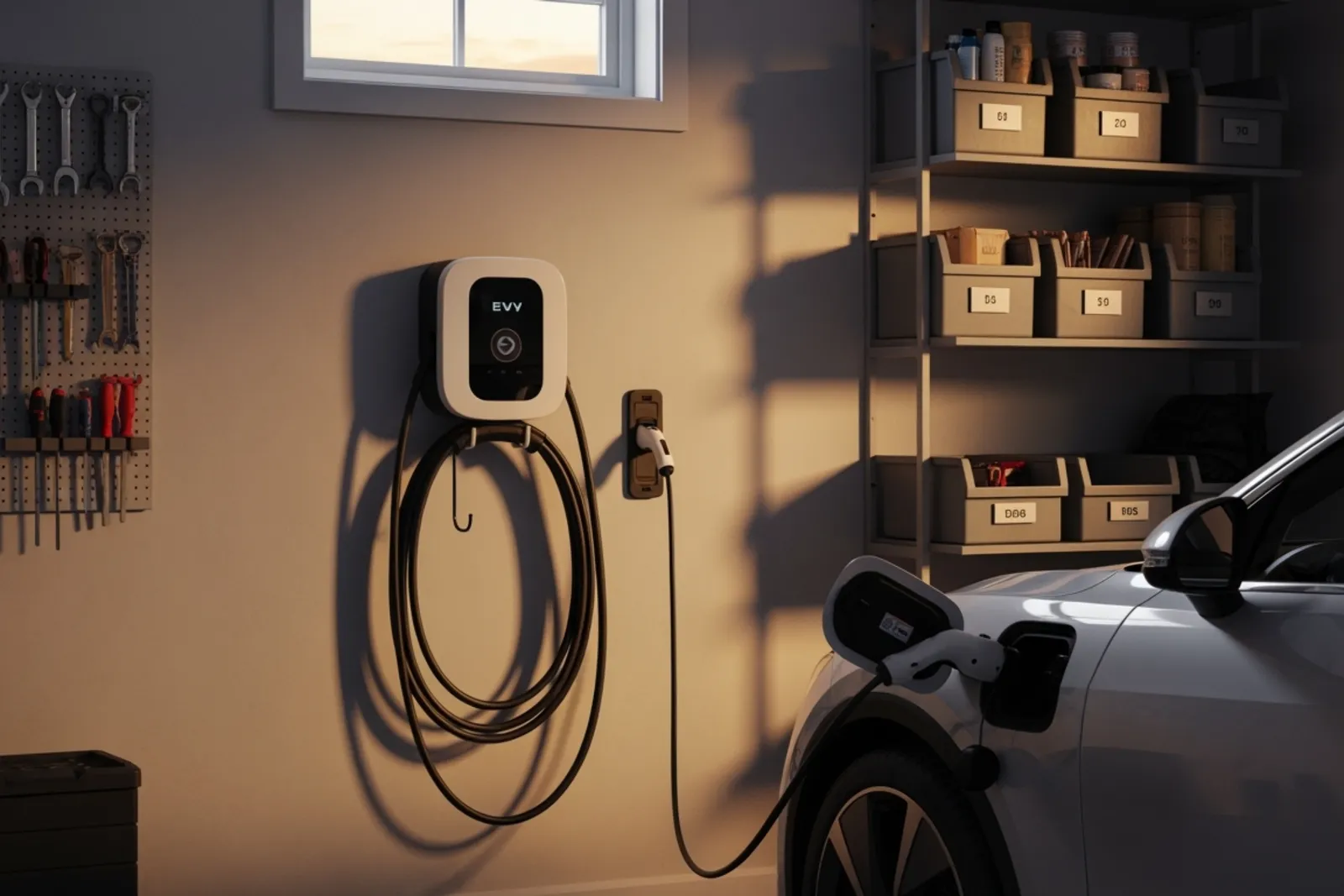
EV Charger Installation in Greater Vancouver: What Homeowners and Businesses Should Know
Learn what homeowners and businesses in Greater Vancouver should know about EV charger installation. Explore safe, code-compliant charging options.
September 23, 2026
Buying an electric vehicle is the easy part. Charging it well is where real life starts.
Most EV drivers figure this out quickly. Public charging helps, especially on road trips or busy days, but home charging is what makes an EV feel convenient. For businesses, workplace charging can be just as practical. It can support staff, company vehicles, or customers who stay on site for a while.
An EV charger is still electrical equipment, though. It is not something to treat like a new toaster or a fancy Wi-Fi gadget. A proper EV charger installation involves load calculations, breaker sizing, cable runs, permits, and a final inspection. In older homes across Greater Vancouver, it often raises another question too: can the existing electrical service handle one more large load safely?
If you live or work in North Vancouver, West Vancouver, Vancouver, Burnaby, Richmond, Coquitlam, or Surrey, this matters even more than people expect. Building ages vary a lot. So do panel sizes, parking layouts, and access to power.
Start with the kind of charging you actually need
I think the biggest mistake people make is shopping for the charger before they understand their charging habits.
There are two common options for everyday use.
Level 1 charging
Level 1 uses a regular 120-volt outlet. It is slow. For some drivers, that is fine. If you drive short distances, park for long hours, and do not mind gradual charging, it can work. It is the simplest version of home charging, but it is also the easiest to outgrow.
Level 1 can be useful as a temporary setup, though many people find it frustrating after a while, especially in winter when charging can take longer and energy use tends to rise.
Level 2 charging
A Level 2 charger uses a 240-volt circuit, similar in voltage to large household appliances. This is the setup most people mean when they talk about EV charger installation. It charges much faster and fits normal daily life better. If you drive often, have more than one EV, or want to top up overnight with less stress, a Level 2 charger is usually the better choice.
For businesses, Level 2 is often the practical starting point as well. Employees can charge during a shift, and customers can gain meaningful range during an appointment, meal, or shopping trip.
The right charging speed depends on more than the charger itself. Your vehicle's onboard charging limit matters. So does the available capacity in your electrical system. A bigger charger is not automatically a better one.
Why EV charger installation is an electrical project, not just a purchase
A charger might look simple on the wall, but the electrical work behind it is what makes it safe.
A proper installation usually includes a dedicated circuit, the right breaker size, correct wire gauge, suitable mounting, and weather-rated equipment if the charger is outdoors. The charger also needs to be placed where the cable can reach the vehicle without creating a tripping hazard or being stretched across a walkway.
That is why licensed electricians matter. In British Columbia, electrical work should be done by qualified, insured electricians working through the proper licensing and permit process. If you are comparing companies, ask whether they handle permits, inspection scheduling, and code-compliant installation from start to finish. If they hesitate, I would take that as a warning sign.
You may also hear terms like Master Electrician or FSR Contractor. Those titles relate to qualification and supervision within the trade. They are not just marketing words when used properly. For work like EV charger installation, especially when panel upgrades or service upgrades may be involved, those details count.
A local Vancouver electrician or North Vancouver contractor will often have a better feel for the building stock in the area. That sounds small, but it matters. A 1960s house in North Vancouver can present very different issues from a newer home in Surrey or a commercial unit in Richmond.
Can your electrical panel handle an EV charger?
Sometimes the answer is yes. Sometimes it is yes, but only with conditions. And sometimes the charger is what finally exposes the fact that the panel is already stretched.
Many homes in Greater Vancouver still have 100-amp service. Some have less. That does not automatically rule out a charger, but it does mean a proper load calculation is important. If the home already has electric baseboards, air conditioning, a heat pump, a suite, a hot tub, or a sauna, available capacity can disappear quickly.
The same thing happens in commercial spaces. A business may have enough service on paper, then discover that HVAC equipment, refrigeration, production tools, or tenant improvements already use most of it.
Here are a few signs that panel upgrades or service upgrades may need to be part of the conversation:
The main service is 60 amps or an older 100-amp setup.
The panel is full or has tandem breakers everywhere.
Breakers trip when several appliances run at once.
The property still uses a fuse panel.
You are planning other electrical renovations at the same time.
You are adding other heavy loads such as hot tub wiring, sauna wiring, or air conditioning.
In some cases, load management equipment can help. This allows a charger to reduce or pause charging when the home is drawing a lot of power elsewhere. It can be a smart alternative to full panel upgrades, depending on the property and the charger model. Still, it needs to be designed properly. Guesswork is how people end up calling for electrical repairs later.
If you are already planning home rewiring, a renovation, or other residential electrical services, it often makes sense to coordinate everything at once. The same goes for businesses handling tenant improvements or broader commercial electrical services. Good planning usually costs less than doing the work in pieces.
What a proper EV charger installation usually looks like
The process is more straightforward than many people expect, assuming the electrical system is in decent shape.
1. Site assessment
The electrician looks at the panel, parking location, route for wiring, charger location, and whether the setup will be indoors or outdoors. In condos and commercial sites, they may also review access to shared electrical rooms or metering.
2. Load calculation
This is where the real answer comes from. The electrician checks what the building already uses and whether the charger can be added safely. If not, they may recommend load management, panel upgrades, or service upgrades.
3. Permit and planning
A code-compliant installation usually requires a permit and inspection. Ask for this directly. A permitted inspection protects the property owner because there is a record that the work was done properly and checked.
4. Installation
This includes running the circuit, installing breakers, mounting the charger, labeling the equipment, and testing the system. If the charger is outdoors, proper equipment rating and placement matter a lot in Vancouver weather.
5. Final testing and inspection
The electrician confirms that charging works correctly and that the installation passes inspection. This last step is easy to underestimate, but it is part of what separates proper electrical work in Greater Vancouver from quick, risky shortcuts.
The charger location matters more than people think
A charger should be convenient, but convenience is not the only goal.
You want a spot where the cable reaches the vehicle without crossing a sidewalk, doorway, or garage path. The charger should be mounted at a practical height. Outdoor setups should account for rain exposure, physical protection, and the fact that people handle cables with wet hands all the time. That does not mean outdoor charging is unsafe. It means the equipment and installation need to match the conditions.
For homes, the usual options are a garage wall, side wall near a driveway, or a protected exterior location near parking.
For commercial electrical services, placement often gets more complicated. You may need to think about traffic flow, parking enforcement, accessibility, lighting, bollards for impact protection, and future expansion. If a business expects more than one charger later, it is often worth planning conduit and panel capacity in advance.
That same planning mindset applies to other projects too. A renovations electrician may coordinate charger placement with electrical renovations, lighting design, or service changes so the finished space works better and looks cleaner.
Condos, strata properties, and shared parking need extra planning
Detached homes are usually the simplest case. Multi-unit buildings are not.
If you own a condo or operate in a strata building, EV charger installation can involve approval from the strata, review of common electrical infrastructure, metering questions, and decisions about cost sharing. Sometimes the electrical room is far from the parking stall. Sometimes the service has limited spare capacity. Sometimes the hardest part is not the wiring, it is the paperwork.
This is where experience helps a lot. A contractor who mainly does simple house calls may not be the best fit for a complicated shared-property installation. You want licensed electricians who understand permits, building rules, and the practical side of routing power through an occupied building without creating bigger problems.
For businesses in mixed-use buildings, the same caution applies. A charger that looks simple on a site plan can involve landlord approval, utility coordination, or new metering.
Workplace charging is different from home charging
A business charger is not just a home charger in a parking lot.
At home, the question is usually, "Will my car be ready in the morning?" At work, the questions multiply. Who uses the charger? Staff only? Customers too? Is it free or paid? Does the charger need access control? Will the business add more chargers later? What happens if one charger becomes popular and another space sits empty?
There is also maintenance to think about. Commercial sites need durable equipment and a plan for upkeep. A broken charger in a home garage is annoying. A broken charger in a customer lot becomes an operations issue.
Some businesses also need to watch demand charges or peak electrical use. That does not mean workplace charging is a bad idea. It just means the installation should be thought through as part of the building's overall electrical load, not as a bolt-on gadget.
Safety mistakes worth avoiding
This is the part where I get a little blunt, because bad EV charging setups are usually avoidable.
Do not rely on random adapters, questionable receptacles, or extension cords as a long-term plan. Temporary solutions tend to become permanent. Permanent electrical work should be installed like permanent electrical work.
Be careful with older dryer outlets too. Some people try to share them with a vehicle, especially in garages or nearby laundry rooms. A few setups can be done safely with the right equipment, but many are awkward, inconvenient, or plainly unsafe. If the outlet is old, loose, ungrounded, or improperly wired, the risk goes up fast.
Watch for warning signs after installation or during regular use:
The breaker trips repeatedly.
The charger or receptacle feels unusually hot.
You smell burning or melting plastic.
The cable shows damage.
Charging stops unpredictably.
If that happens, stop using the equipment and call for electrical repairs right away. If there is overheating, smoke, or a serious fault, treat it as an emergency electrical service issue. That is exactly the kind of situation that can justify 24/7 emergency service.
How to choose the right electrician for an EV charger
People often ask for the "best charger," but the better question is who is installing it.
Look for licensed electricians and insured electricians with direct experience in EV charger installation. Ask whether they handle residential electrical services, commercial electrical services, permits, and final inspection. Ask whether they do panel upgrades, service upgrades, and troubleshooting in case the project uncovers a larger issue.
It also helps if they understand the wider electrical picture. For example, a home with a future suite, heat pump, hot tub electrician needs, sauna electrician work, or planned home rewiring may need a different approach than a home where the charger is the only new load. A contractor who also handles electrical renovations can often spot those conflicts early.
Local experience matters across Greater Vancouver. Homes in Vancouver and North Vancouver often bring older panels and tighter retrofit conditions. Burnaby and Richmond may involve mixed residential and commercial layouts. Coquitlam and Surrey often include newer developments with different service configurations. None of that is dramatic, but it is the kind of detail that can make electrical work smoother.
A good EV charger setup should feel boring
That might sound odd, but boring is the goal.
A well-installed charger should work quietly, charge reliably, and fit into daily life without drama. No hot outlets. No overloaded panel. No mystery tripping. No inspection problems when you sell the property later.
Whether you are setting up home charging for one vehicle or planning commercial electrical services for a fleet or staff parking area, the same basic rule applies. Get the electrical side right first.
An EV charger is one more large electrical load in a building. Treat it with the same respect you would give to a range, a heat pump, hot tub wiring, sauna wiring, or a major service change. When the work is code compliant and properly inspected, the charger becomes the easy part of owning an EV. And honestly, that is how it should be.
Need a licensed electrician?
Free consultations across Greater Vancouver — and 24/7 emergency service.
Get a Free Quote