
GFCI Protection Near Water: A Practical Guide to Home Electrical Safety
Learn where GFCI protection matters near water, how to test it, and when to call an electrician. Follow these practical steps to help keep your home safe.
November 18, 2026
A hair dryer beside a sink. An extension cord across a damp patio. A washing machine with a damaged power cord. These are ordinary household situations, but each can create a path for electricity to travel through a person.
Water makes electrical hazards more dangerous because wet skin generally offers less resistance to current than dry skin. You do not need standing water or a submerged appliance for a serious shock to occur. Damp hands, a wet floor, or contact with grounded plumbing can be enough.
Ground-fault circuit interrupter protection, usually called GFCI protection, helps reduce that risk by cutting power quickly when electricity escapes its intended path. Understanding what it does, where it belongs, and how to check it is a useful part of keeping a home safe.
What a GFCI Does, and What It Cannot Do
Electricity normally travels to an appliance through the hot conductor and returns through the neutral conductor. A GFCI monitors the balance between those currents.
If some current takes another path, perhaps through damaged insulation, a wet surface, or a person, the GFCI detects the imbalance and quickly interrupts power. It responds to a very small leakage current, typically around 5 milliamps for the type commonly used to protect people.
That speed matters. A conventional circuit breaker primarily protects wiring against overloads and short circuits. A dangerous shock can involve far less current than would trip a standard breaker.
GFCI protection can be in more than one place
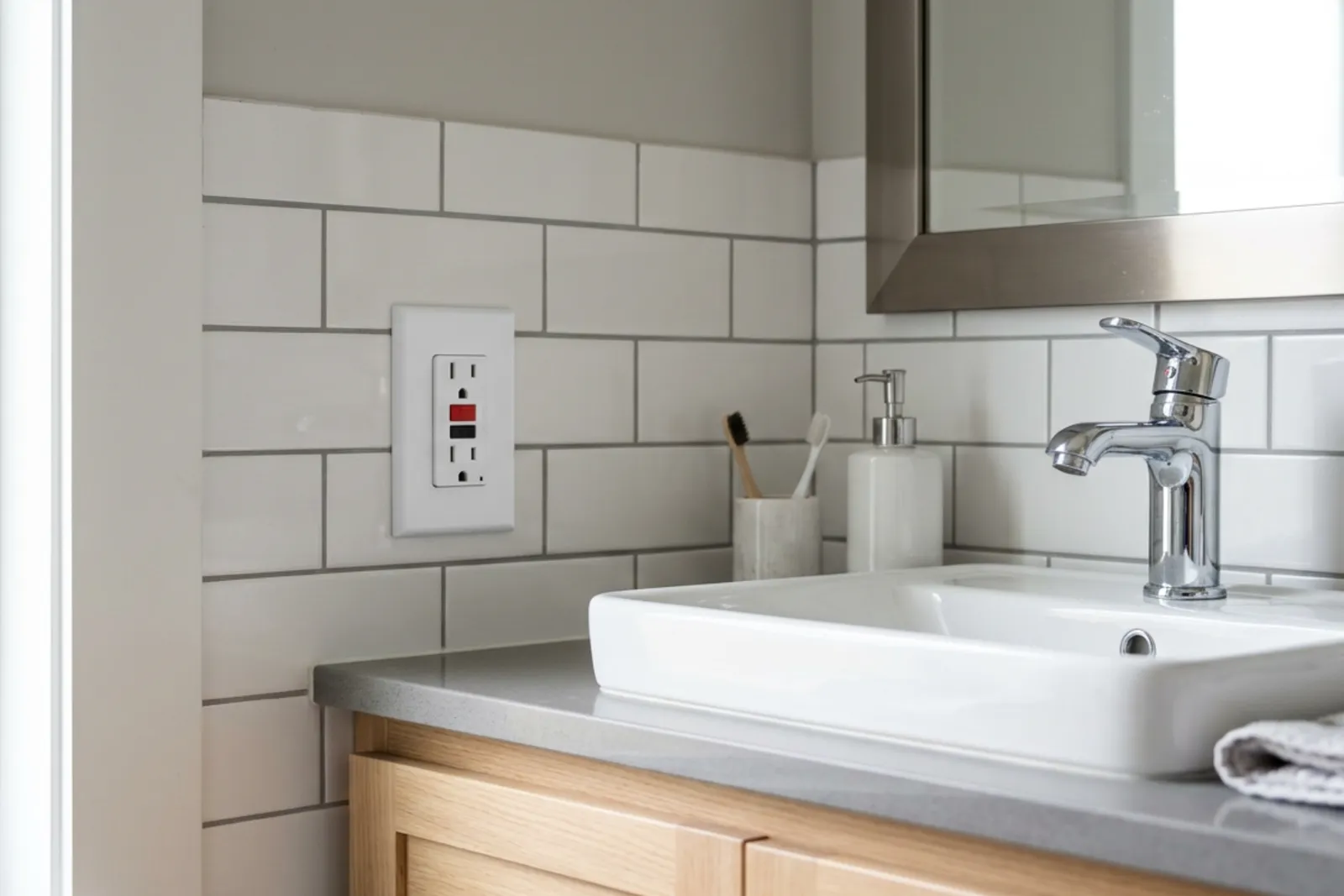
A GFCI receptacle usually has buttons labeled “TEST” and “RESET.” Depending on how it is wired, it may also protect other receptacles farther along the same circuit.
A GFCI circuit breaker provides protection at the electrical panel. That means a receptacle without visible buttons may still have GFCI protection.
Appearances alone are not enough to confirm protection. Labels can help, but a qualified electrician can identify which outlets a protective device actually serves.
Protection has limits
A GFCI does not prevent every electrical injury. For example, it may not protect someone who simultaneously contacts hot and neutral conductors if the current remains balanced.
It also does not replace grounding, suitable wiring, or overcurrent protection. Arc-fault circuit interrupters, or AFCIs, address certain arcing hazards and have a different purpose.
Think of GFCI protection as one safety measure among several. It does not make using electrical equipment near water safe under all circumstances.
Where GFCI Protection Matters Most
Bathrooms, kitchens, laundry areas, and outdoor spaces deserve particular attention. Exact requirements depend on the electrical code adopted locally, the type of installation, and sometimes the age of the home.
Do not assume that an older installation meets current requirements simply because it has worked without incident.
Bathrooms and kitchens
Bathroom receptacles are often close to sinks and used by people with damp hands or bare feet. Keep hair dryers, electric shavers, and other cord-connected devices away from water, even when the receptacle has GFCI protection.
In kitchens, countertop appliances may sit near sinks, spills, or wet preparation areas. Position cords so they cannot fall into water or cross hot surfaces. Unplug portable appliances when they are not in use, following their instructions.
A GFCI is a backup against a fault. Keeping electrical devices away from water remains the first precaution.
Laundry rooms, basements, and garages
Laundry equipment combines electrical power with water supplies and drain connections. Leaking hoses or an overflowing utility sink can expose nearby equipment to moisture.
Basements and garages may also have damp floors, exterior doors, or grounded concrete surfaces. The absence of a sink does not automatically mean GFCI protection is unnecessary.
If you are planning electrical renovations, have the electrician review these spaces rather than focusing only on the room being remodeled.
Outdoor receptacles and equipment
Rain, irrigation, snow, and condensation all affect outdoor electrical installations. GFCI protection is important, but outdoor equipment also needs suitable weather-resistant components and covers.
Where required, an in-use cover protects the receptacle connection while a cord is plugged in. Extension cords and connected equipment must be rated for their intended outdoor use.
Never run a cord through standing water or use indoor power strips on a patio. A balcony is still an outdoor environment, even when a roof shelters it.
Hot tubs, saunas, and home charging
Hot tub wiring and sauna wiring require attention to equipment instructions, grounding, bonding, disconnects, and applicable protection requirements. These are not suitable projects for improvisation.
EV charger installation also requires a broader assessment than checking whether a nearby outlet works. A Level 2 charger can draw substantial current for extended periods. Outdoor home charging adds exposure to moisture and physical damage.
Have licensed electricians assess the circuit, equipment location, and applicable requirements. Panel upgrades or service upgrades may be needed in some homes, but that decision should follow a load assessment.
How to Check a GFCI Safely
A GFCI should be tested according to its manufacturer’s instructions, commonly once a month. Even self-testing models may have instructions for regular manual testing.
For a typical GFCI receptacle, the basic check is:
With dry hands and a dry surrounding area, plug in a small lamp and turn it on.
Press the receptacle’s “TEST” button. The lamp should turn off.
Press “RESET.” Power should return, and the lamp should turn on again.
Follow the device’s directions if they differ. For a GFCI breaker, use the manufacturer’s testing procedure. Do not remove the panel cover or touch internal components.
If power remains on after pressing “TEST,” the protection may have failed or the installation may be incorrect. Stop using the affected receptacle and arrange electrical repairs.
If the device will not reset, do not force the button or repeatedly try it. A loss of supply power, a connected appliance fault, moisture, or a failed device could be responsible.
What repeated tripping means
Repeated trips are a reason to investigate, not bypass the protection.
When conditions are dry and there is no visible damage, safely unplugging connected portable equipment may help identify whether a particular appliance is involved. Equipment that repeatedly trips a GFCI should stay out of use until assessed.
Do not move it to an unprotected outlet to keep it running. That removes protection without fixing the fault.
Everyday Habits That Reduce Electrical Risk
GFCI protection is most useful alongside routine maintenance and sensible handling of cords, plugs, and appliances.
Repair damaged receptacles and covers
Missing or broken cover plates can expose wiring or terminals. Loose receptacles may allow plugs to fit poorly, creating heat and arcing.
Do not use an outlet that is cracked, scorched, unusually warm, or unable to hold a plug securely. A burning smell, buzzing, or discoloration also calls for professional attention.
Replacing a cover plate does not resolve damage inside the electrical box. The underlying condition needs assessment.
Turn appliances off before unplugging
Unplugging a device while it is drawing current can cause an arc as the plug separates from the receptacle. The risk can be greater with high-current equipment such as electric heaters and air conditioners.
Use the appliance’s normal controls to turn it off first, then disconnect it by gripping the plug rather than pulling the cord.
Large appliances, including ranges and clothes dryers, may have specific isolation procedures. Follow the manufacturer’s instructions and get qualified help when access or disconnection is unsafe.
Keep damaged cords out of service
Frayed insulation, exposed wires, crushed sections, loose plug blades, and heat damage are reasons to stop using a cord or appliance. Tape is not an adequate repair for a damaged power cord.
Keep cords away from sharp edges, hot surfaces, and areas where doors or furniture can crush them. Protect them from pets that chew and young children who may pull or handle them.
Choose electrical products with a recognized certification mark appropriate for your jurisdiction. An inexpensive appliance without credible certification is not worth the uncertainty.
Protect children around receptacles
Tamper-resistant receptacles have internal shutters designed to resist the insertion of foreign objects. They still accept a proper plug when used normally.
Suitable outlet covers may help protect accessible receptacles, but loose caps can become choking hazards. Choose age-appropriate products and follow their instructions.
Neither option replaces supervision. Keep cords and plugged-in appliances out of reach, especially near water.
What to Do When Electrical Equipment Gets Wet
A device that dries out is not necessarily safe to use again. Water can leave contamination, damage insulation, and cause corrosion inside equipment where you cannot see it.
If an appliance falls into water, do not reach in to retrieve it while it may be energized. Keep others away. Disconnect power only if you can do so from a dry, safe location without approaching the hazard.
Flooded areas require particular caution. Do not enter standing water to reach an electrical panel, switch, or appliance. Contact emergency responders or the electrical utility when there is immediate danger.
Equipment exposed to water should be assessed by a qualified person before returning to service. Some components must be replaced rather than cleaned or dried. The correct decision depends on the equipment, the extent of exposure, and manufacturer guidance.
If someone is being shocked, do not touch them while they remain in contact with the electrical source. Call emergency services and isolate power only when safe. Follow the dispatcher’s instructions.
Permits, Inspections, and Professional Help
Electrical work can involve hazards that are not visible after installation. A receptacle may supply power even when its grounding, connections, or protective devices are incorrect.
Depending on the jurisdiction and scope, electrical work may require a permit and inspection. Homeowner permits are available only where local rules allow them and eligibility requirements are met.
For homeowners in Greater Vancouver, the responsible permitting authority can vary by municipality. Check the requirements for the property before work begins.
A permitted inspection helps verify that the installation meets applicable requirements. It does not replace careful planning or qualified workmanship.
Professional assessment is especially worthwhile when adding receptacles, changing circuits, working around water, or investigating repeated trips. Before hiring, verify the contractor’s license and insurance rather than relying only on a description such as “insured electricians.”
If you notice smoke, active sparking, or a strong burning smell, keep clear and call emergency services when there is an immediate threat. Urgent electrical faults may also require emergency electrical service once the area is safe.
Make Electrical Safety a Routine Check
Start with the places where electricity and moisture are most likely to meet. Confirm GFCI protection, test it as directed, and look for damaged cords, loose outlets, and missing covers.
Then act on what you find. Stop using damaged equipment. Investigate recurring trips. Have uncertain wiring assessed instead of assuming that a working outlet is a safe outlet.
GFCI protection can interrupt a dangerous fault in a fraction of a second. Keeping that protection functional, and keeping electricity away from water wherever possible, gives it the best chance to do its job.
Need a licensed electrician?
Free consultations across Greater Vancouver — and 24/7 emergency service.
Get a Free Quote