
Home Backup Generator Installation in Greater Vancouver: A Practical Guide for Homeowners
Learn how home backup generator installation works in Greater Vancouver, from permits to costs and safety. Read the practical guide from Eagle Power.
August 27, 2026
Power outages have a way of turning ordinary things into urgent problems. A fridge full of food stops being invisible. So does a sump pump, a furnace fan, a medical device, or the garage door opener when you need to get out.
That is why backup generators keep coming up in conversations across Greater Vancouver, especially in places like North Vancouver, West Vancouver, Vancouver, Burnaby, Richmond, Coquitlam, and Surrey, where storms and utility interruptions are part of life. A properly installed system can keep selected parts of a home running when the utility goes down. The phrase properly installed matters. This is not casual electrical work. It needs planning, permits, coordination, and code compliant installation.
If you are trying to figure out what a home backup generator install actually involves, this guide walks through the basics, the likely costs, and the steps that happen before installation day.
What a home backup generator system actually includes
Most people picture the generator itself and stop there. In reality, the generator is only part of the setup.
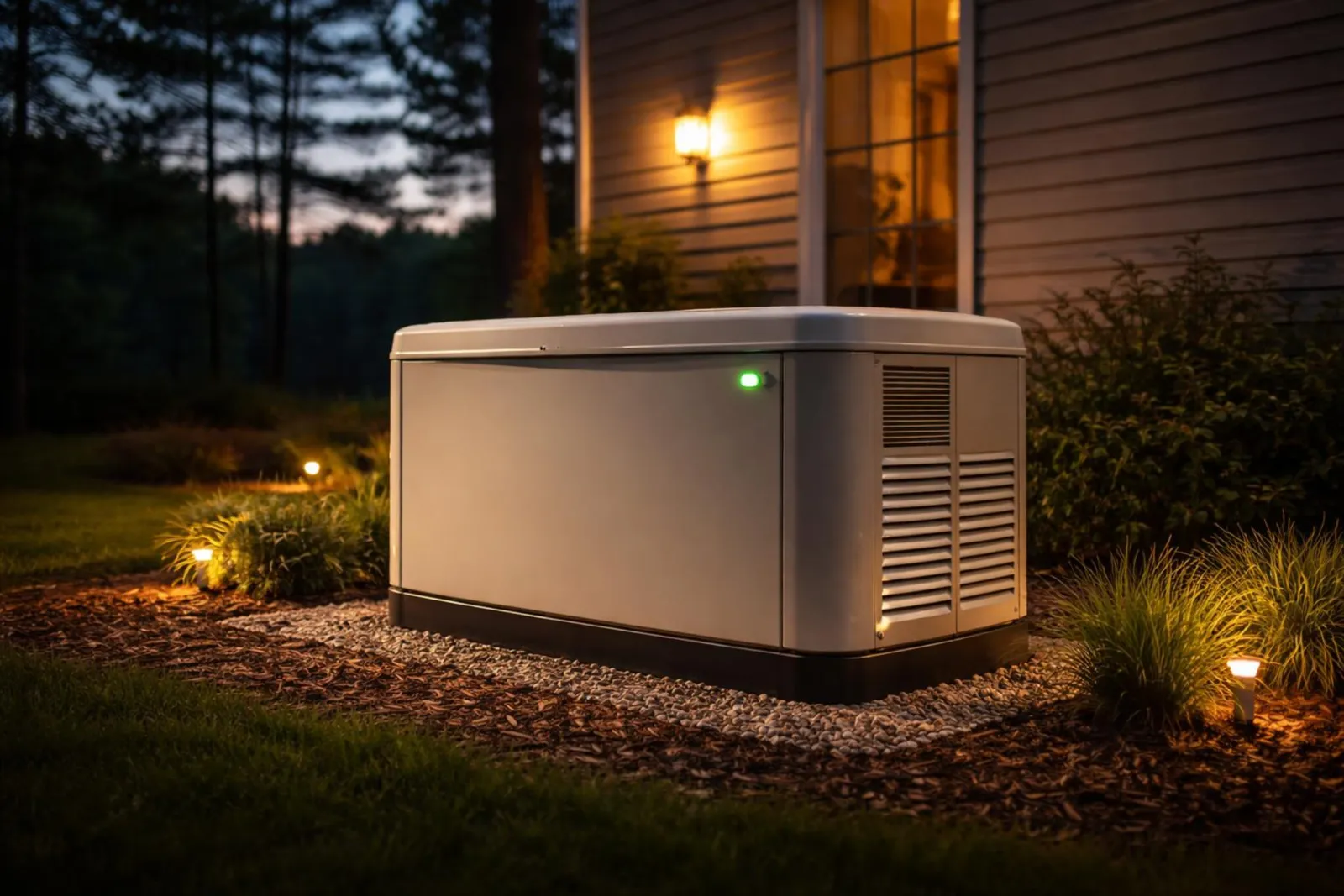
A typical home backup generator installation includes three main pieces. First, there is the generator unit outside the home. One common example is a 14,000 watt natural-gas-capable generator that can supply 60A at 240V during a utility outage. That is enough for selected household loads, not every possible circuit in a large house.
Second, there is an automatic transfer switch, often called an ATS. This is the part that makes the system feel seamless. When utility power fails, the ATS disconnects the home from the utility source and transfers the backed-up load to the generator. When utility power returns, it switches back. That switching matters for safety. You never want a generator feeding power back into utility lines.
Third, there is usually a dedicated generator panel installed near the main electrical panel. This panel contains the circuits chosen for backup. Instead of trying to power the whole house, the system is often designed around the loads that matter most.
That last point is worth sitting with for a moment. Many homeowners start with the idea, “I want the whole house backed up.” Sometimes that is possible, but often it is more practical and more affordable to choose essential circuits. The best setup is not the one with the longest wish list. It is the one that carries the loads you actually need during an outage.
Choosing what you want backed up
This part is more personal than technical. Two homes can have the same square footage and need very different backup plans.
A family with young kids may care most about refrigeration, lighting, internet, and heating controls. Someone working from home may put more weight on office circuits and networking equipment. A homeowner with a finished basement may care about a sump pump first, everything else second. If there is medical equipment involved, that usually moves to the top immediately.
Typical circuits homeowners ask to back up include:
Fridge and freezer
Furnace or boiler controls
Sump pump
A few lighting circuits
Internet and modem equipment
Kitchen receptacles
Garage door opener
Security system
Selected bedroom or office circuits
This is where expectations need to be honest. High-demand loads add up quickly. Electric ranges, large air conditioning systems, electric heat, hot tubs, saunas, and some workshop equipment can change the scope fast. A generator that keeps the essentials on during an outage may not run every heavy load at the same time.
A clear circuit list helps everyone. It helps the homeowner understand priorities, and it helps licensed electricians prepare a realistic budget instead of guessing from photos alone.
The information needed for an initial budget
Before an installer can give even a rough budget, they need a decent picture of the house and the existing electrical setup. If you are gathering information for a backup generator quote, these details usually matter most:
Full home address
Photos of the hydro meter or exterior meter location
Photos showing where the utility connection enters the home
Clear photos of the electrical panel labels and the space around the panels
A simple description of how the panel layout relates to the utility meter base
A list of circuits or equipment you want backed up during outages
Good photos save time. Bad photos create confusion, and confusion turns into site visits just to answer basic questions. If the panel directory is faded or handwritten in a way only the previous owner understood, say that upfront. That is common, especially in older homes across Greater Vancouver.
It also helps to mention any known issues with the electrical system. If the panel is crowded, if there were past renovations, if the home has had service upgrades, or if there is older wiring in parts of the house, those details can affect the quote.
What a backup generator installation usually costs
Here is the straightforward part. Installation packages for a home backup generator setup can start from $12,500 CAD plus tax, depending on the site. That is a starting point, not a guaranteed final number.
Electrical permit fees are usually extra. Final pricing is typically confirmed after an on-site visit, because the small details matter a lot in this kind of work. Meter location, panel condition, wire routing, generator placement, and access around the house all affect labor and materials.
There are also several costs that are often not included in the electrical scope. This catches people off guard, so it is better to be blunt about it.
Natural gas or propane work is commonly separate. The electrical contractor installs the electrical side of the system, but the gas connection is generally handled by a customer-contracted gas fitter. Referrals may be available, but it is still a separate trade.
Repairs to drywall, paint, roofing, or the building envelope are also usually excluded. If wire routing or equipment placement requires opening finishes or passing through an exterior wall, any finish repair is normally the homeowner’s responsibility.
A new concrete base or pad for the generator may be another added cost. Some sites already have a suitable location. Some do not. That needs to be checked in person.
Homes built before 1990 may need asbestos testing before certain work can proceed. That is not a minor detail. If wall cavities, panel areas, or other building materials could contain asbestos, testing and any required abatement become a separate cost and a safety requirement.
If the property is outside the main Greater Vancouver service area, extra travel-related charges can also apply. Vancouver Island is one example where additional fees may come up.
This is why online price shopping for generators gets messy. The unit price is only one part of the total. Installation, permits, existing electrical conditions, and site access often make the bigger difference.
The process, step by step
The actual customer journey is fairly predictable, even though every house is different.
The first step is preparing a budget. The homeowner sends the address, photos, panel information, and the list of desired backup circuits. Based on that material, an initial budget estimate is usually provided by email.
If the budget looks reasonable, the next step is an on-site visit. This is where the installer checks clearances, confirms panel conditions, reviews generator placement, and looks for anything the photos missed. After that visit, a final quote is prepared. If the quote is approved, a deposit is generally required before permits and scheduling move ahead.
Once approved, permits and scheduling begin. Electrical permits are often issued within about a week. Utility scheduling can take longer. In many cases, BC Hydro scheduling may take up to two weeks. That timing matters because some work involves coordination with the utility.
On installation day, the area around the electrical panel needs to be clear. Power to the home usually needs to be shut off for about one to two hours so the wiring can be completed safely. The gas connection must also be arranged by the homeowner through the appropriate gas contractor. Any roof, envelope, or interior finish repairs related to the work remain outside the electrical scope.
That process sounds simple when written down. In practice, the site visit is where the job either becomes straightforward or exposes complications. An older service, tight access, limited clearance, or a packed panel can change the approach.
Why permits and inspections matter more than people think
Generator installs are one of those projects where permit shortcuts are a bad idea.
A backup system ties into the home’s electrical service and changes how power is distributed during an outage. That work needs to be permitted and inspected. It is about more than paperwork. A permitted inspection helps verify that the transfer equipment, panel work, grounding, and routing are done properly and safely.
For homeowners, permit records also matter later. They matter for insurance questions, resale conversations, and future electrical work. When another electrician comes in years later for panel upgrades, home rewiring, or electrical repairs, clear records make life easier for everyone.
This is one place where code compliant work is not a marketing phrase. It is the baseline. The same goes for using licensed electricians who understand service equipment, transfer systems, and utility coordination.
Older homes can add a layer of complexity
A lot of homes in Greater Vancouver are not new. Some have had additions, suite work, kitchen renovations, or partial electrical renovations done over decades. That history tends to show up during generator planning.
Older homes may have limited panel space. Some may need service upgrades or panel upgrades before a generator setup makes sense. Others may need cable routing through areas that trigger asbestos concerns. Homes built before 1990 should be taken seriously on that front. Testing is an extra step and an extra cost, but it is there for a reason.
This is also why a backup generator quote is never only about the generator. It is partly a snapshot of the whole electrical system. If the existing service is undersized, if the panel is aging, or if clearances are poor, those issues can surface during the quote process.
None of that means the project is off the table. It just means the first number you hear is not always the last number.
A note for small businesses and mixed-use properties
Even though most backup generator conversations focus on houses, some small business owners ask similar questions, especially in mixed-use buildings or live-work spaces. The planning logic is similar. Start with critical loads, not ideal loads. Figure out what absolutely must stay on, what can stay off, and what needs separate coordination with the building or utility.
Businesses often have a different set of priorities, such as lighting, networking equipment, refrigeration, point-of-sale devices, or security systems. If the property is commercial or partly commercial, the electrical design may need a different approach. In those cases, it helps to work with professionals who handle broader commercial electrical services such as service upgrades, maintenance, lighting design, and repairs.
What homeowners should do before installation day
The easiest way to keep a project moving is to prepare the site before the crew arrives.
Clear the area around the electrical panel. That means no shelving, storage bins, bikes, or stacked paint cans in the working space. Electricians need room to work safely, and the clearance rules are there for a reason.
Expect a power interruption. In most cases, the home will be without power for roughly one to two hours while the panel and transfer equipment are connected. That may be manageable for most households, but it is worth planning around if someone works from home or relies on electrically powered medical equipment.
Coordinate the gas contractor early. Homeowners are typically responsible for arranging natural gas or propane hookup through a qualified gas fitter. Waiting until the electrical work is nearly done can slow the whole project.
Ask about repairs before the work starts. If wire routing may affect drywall, paint, roofing, or exterior penetrations, know in advance who is handling those repairs. A surprising amount of frustration comes from assumptions, not from the electrical work itself.
Questions worth asking before you approve a quote
A few plain questions can save a lot of second-guessing later.
Ask which circuits are included in the backup panel, and which are not. Ask whether the quoted generator size matches your outage priorities or only covers a reduced load plan. Ask what permit fees are extra. Ask whether a concrete pad is included. Ask whether asbestos testing may be required. Ask what utility coordination is needed and how long scheduling usually takes.
It is also reasonable to ask whether the existing service and panel are in good enough shape for the planned installation. Sometimes a generator project reveals the need for panel upgrades or related electrical repairs. That is not anyone being difficult. It is just the reality of working on real homes instead of idealized diagrams.
The main thing to remember
A backup generator install is part convenience, part safety planning, and part infrastructure project. It is not a small add-on. It involves electrical design, permits, site conditions, utility coordination, and another trade if gas service is part of the setup.
The good news is that the process is pretty manageable when expectations are clear. Gather accurate photos. Make a realistic circuit list. Expect the budget to be site-visit dependent. Understand what is excluded from the electrical scope. Leave room in the timeline for permits and BC Hydro scheduling.
The best backup generator plans are usually the least dramatic ones. They are specific, permitted, and boring in the right way. When the lights go out, boring is exactly what you want.
Need a licensed electrician?
Free consultations across Greater Vancouver — and 24/7 emergency service.
Get a Free Quote