
Home Electrical Safety Checklist: What to Check and When to Call an Electrician
Use this home electrical safety checklist to spot warning signs, check outlets and breakers safely, and know when to call an electrician. Start your safety check today.
November 6, 2026
A breaker that trips every time you use the kettle is easy to dismiss as an inconvenience. So is an outlet that no longer holds a plug firmly. Both deserve attention.
Electrical problems do not always announce themselves with smoke or sparks. Loose connections, damaged cords, overloaded circuits, and aging equipment can create hazards long before anything stops working.
A home electrical safety checklist helps you notice those warning signs without taking equipment apart. The goal is simple: know what you can safely observe, understand the limits of basic troubleshooting, and recognize when licensed electricians need to take over.
For homeowners across Greater Vancouver, this is especially useful before renovations, after water intrusion, or when adding equipment such as an EV charger or electric sauna.
Start With the Signs That Require Immediate Action
Before checking outlets or testing safety devices, make sure there is no active emergency.
Treat these conditions as urgent:
Smoke, flames, or a persistent burning smell near electrical equipment.
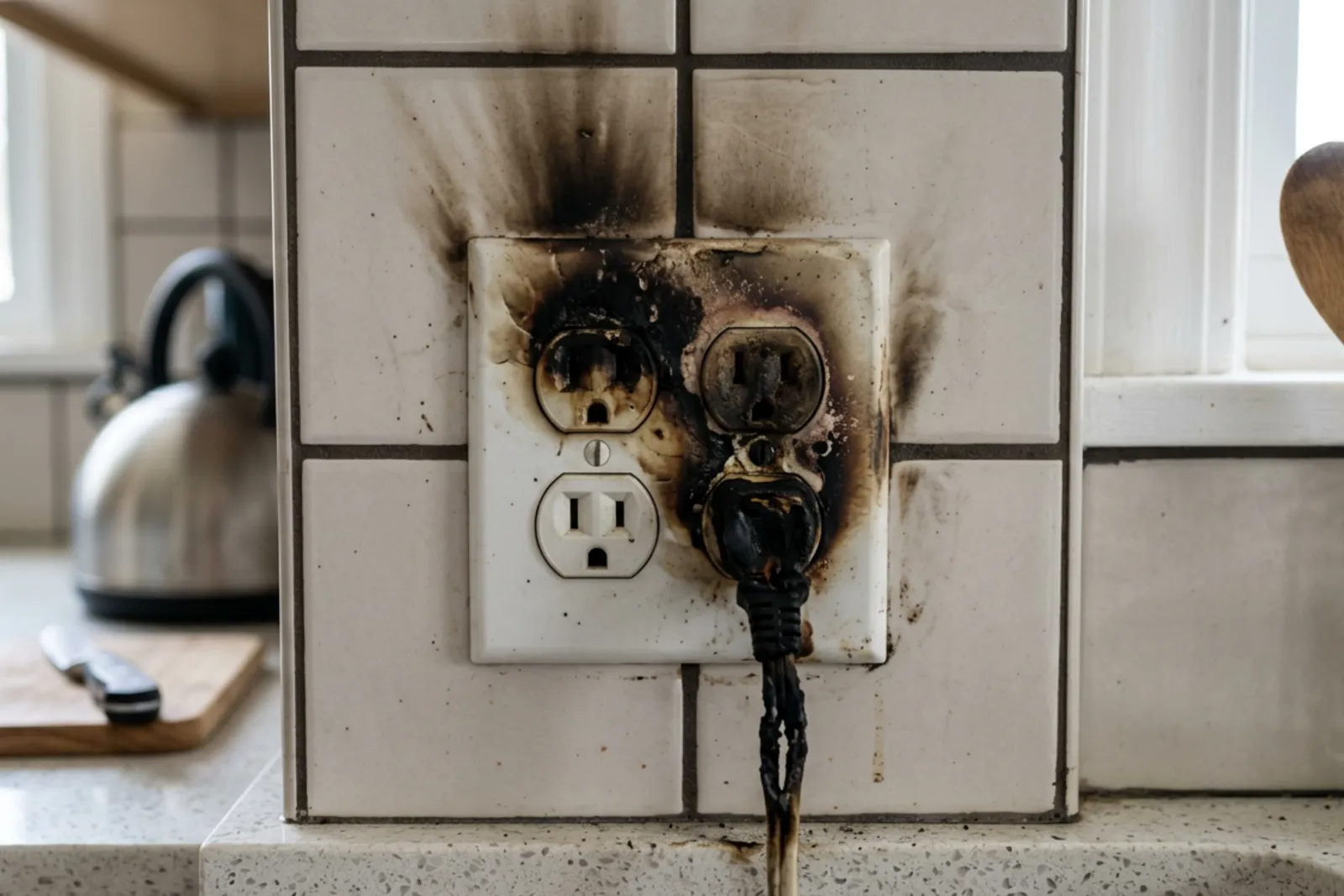
Sparks, crackling, or visible scorching at an outlet, switch, appliance, or panel.
An electric shock or tingling sensation from an appliance, faucet, or other metal surface.
Water reaching electrical outlets, wiring, appliances, or a panel.
A fallen power line or damaged electrical service connection.
If there is smoke or fire, leave the building and call 911. Do not use water on an electrical fire, and do not delay evacuation to shut off the power.
Stay away from wet electrical equipment. Never enter standing water to reach a breaker panel or unplug an appliance. Electricity can travel through water and nearby conductive materials.
For a fallen power line, keep at least 10 meters away and contact 911 and the utility. Treat every downed line as energized.
An emergency electrical service may be necessary for an urgent wiring fault, but it does not replace emergency responders or the utility during a fire, downed-line incident, or immediate threat to life.
A Room-by-Room Home Electrical Safety Checklist
Keep this inspection visual. Do not remove outlet covers, open electrical boxes, or take the cover off a panel. A panel can contain energized components even when the main breaker is off.
Check outlets and switches
Look for cracked faceplates, discoloration, missing covers, or outlets that move when a plug is inserted. Plugs should fit securely without sagging or falling out.
Pay attention to changes in operation. A switch that suddenly buzzes, an outlet that intermittently loses power, or a receptacle that becomes hot needs assessment. Some dimmers produce mild warmth during normal operation, but excessive heat, burning odors, or new discoloration should never be dismissed.
Do not keep using a damaged outlet because the other socket still works. Stop using the affected device and arrange electrical repairs.
If children live in or visit the home, ask about tamper-resistant receptacles. These have built-in shutters designed to reduce access to energized contacts.
Inspect cords and power strips
Check accessible cords for cuts, exposed conductors, crushed sections, or damaged plugs. Replace damaged cords or equipment rather than covering the damage with tape.
Extension cords are for temporary use. They should not run under rugs, through doorways, or behind walls. Those locations can hide damage and allow heat to build up.
Do not connect power strips together. Plug high-demand appliances, such as portable heaters, directly into suitable wall outlets according to the manufacturer’s instructions. A power strip does not increase the capacity of the circuit supplying it.
If a room needs extension cords permanently, that is a reason to discuss additional outlets with an electrician.
Look at lighting and fixtures
Use bulbs that meet the fixture’s wattage and compatibility requirements. An LED bulb’s “equivalent wattage” describes brightness, not its actual power consumption; follow the fixture and bulb labeling.
Check for loose fixtures, damaged lamp cords, and flickering that persists after a compatible bulb has been installed correctly.
One flickering lamp may have a bulb or fixture problem. Lights that brighten and dim across several rooms can indicate a more serious wiring or supply issue. Stop basic troubleshooting and contact an electrician promptly.
Check kitchens, bathrooms, and outdoor areas
Ground-fault circuit interrupter protection, usually called GFCI protection, reduces the risk of electric shock by disconnecting power when it detects an imbalance.
Check GFCI receptacles using their built-in TEST and RESET buttons, following the manufacturer’s instructions. Monthly testing is commonly recommended. Testing temporarily interrupts power, so plan around any connected equipment that cannot tolerate an unexpected shutdown.
If the device will not trip during testing, will not reset, or repeatedly trips, do not bypass it. Arrange an assessment.
GFCI protection may be provided by another receptacle or by a breaker, so an outlet without buttons is not necessarily unprotected. An electrician can confirm the arrangement and whether it meets applicable requirements.
Outside, look for damaged weather-resistant covers, exposed connections, and cords unsuitable for outdoor use. Avoid using outdoor electrical equipment in wet conditions unless it is specifically designed and approved for that use.
Check alarms
Test smoke and carbon monoxide alarms according to their manufacturers’ instructions. Replace batteries where applicable, and replace alarms at the end of their rated service life.
Hardwired alarms may still have backup batteries that need attention. Never disconnect an alarm to stop nuisance sounding without addressing the cause and restoring protection.
Inspect the Electrical Panel Without Opening It
Your panel should be accessible, dry, and unobstructed. Do not store boxes, paint, or other household items directly in front of it.
With the panel cover closed, look for rust, water staining, missing components, or visible damage. Listen for unusual buzzing or crackling without putting your face near the equipment.
A burning smell, significant heat, or evidence of arcing requires urgent attention. Do not touch the panel or operate breakers if it appears damaged, wet, or unsafe.
Circuit labels should identify what each breaker supplies. Accurate labels make electrical maintenance and emergency response easier. If labels are unclear, arrange safe circuit identification rather than guessing during a fault.
Age alone does not determine whether a panel needs replacement. Condition, equipment type, available capacity, and planned electrical loads all matter. Panel upgrades should follow an assessment, not simply the assumption that a newer panel fixes every problem.
Safe Troubleshooting for Common Electrical Problems
Troubleshooting should stop at observation and straightforward user controls. Wiring repairs, voltage testing inside equipment, and breaker replacement belong with qualified professionals.
When one appliance stops working
Start with the appliance’s normal controls and manufacturer’s troubleshooting instructions. If it is safe and dry, check whether its plug is fully seated.
Look for damage to the plug, cord, or outlet before touching anything. Do not test a suspect appliance in several different outlets if it smells burnt, sparks, or has already caused a protective device to trip.
If other equipment on the same circuit has also stopped working, the problem may involve the circuit rather than the appliance.
When a GFCI outlet trips
Unplug connected appliances if doing so is safe. Check for an obvious source of moisture or damaged equipment, without opening anything.
Follow the device instructions to reset it only after the apparent cause has been removed. If it will not reset, trips again, or shows damage, leave it out of service and call an electrician.
One GFCI can protect several downstream outlets. A bathroom or outdoor outlet that appears dead may be supplied through a GFCI elsewhere.
When a breaker trips
A breaker can trip because of an overload, short circuit, ground fault, or another detected problem. Its operation is a warning, not an annoyance to defeat.
If the panel is dry, undamaged, and shows no abnormal heat, smell, or noise, unplug or switch off equipment on the affected circuit. A clearly identifiable overload, such as several high-demand appliances running together, may explain the trip.
Following the panel manufacturer’s instructions, one reset may be reasonable after removing that load. If the breaker trips again, leave it off and arrange electrical repairs. If the cause is unclear, seek professional advice rather than resetting it.
Never hold a breaker on, repeatedly reset it, or replace it with a higher-rated breaker to stop tripping. The wiring may not be rated for the additional current.
When the whole home loses power
Check the utility’s outage information using a phone, if available. Nearby homes may also be affected, although that does not conclusively identify the cause.
Avoid opening the panel or touching service equipment. If the utility reports no outage, contact it or an electrician for guidance.
Never operate a fuel-powered generator indoors, in a garage, or near doors and windows. Never connect a generator through a household outlet. Safe connection to home wiring requires approved transfer equipment installed by qualified professionals.
Plan Ahead Before Adding Large Electrical Loads
New equipment can expose capacity problems that ordinary daily use never revealed.
EV charger installation, hot tub wiring, sauna wiring, and major kitchen changes all require more planning than finding space for another breaker. An electrician needs to assess the electrical service, existing loads, circuit requirements, equipment instructions, and applicable code.
A Level 2 charger, for example, can draw substantial power for extended periods. Some homes can support home charging without a service upgrade; others may need load management or additional capacity. A proper load assessment helps establish the options.
The same principle applies to electrical renovations. Before walls are closed, a renovations electrician can evaluate outlet placement, dedicated circuits, lighting design, and wiring condition. This is also a useful time to determine whether targeted repairs or more extensive home rewiring are appropriate.
Panel upgrades and service upgrades are related but different. Replacing a panel does not automatically increase the capacity of the utility supply.
Choose Qualified Help and Keep Useful Records
In Greater Vancouver, electrical permit and inspection responsibilities vary by location. Technical Safety BC oversees electrical safety in many areas, while some municipalities administer their own permits and inspections.
Before work begins, confirm who will obtain the permit and arrange required inspections. Do not assume that every contractor or municipality follows the same process.
Choose an appropriately licensed electrical contractor and verify insurance. Ask who will supervise the work and whether the contractor has the required qualifications and authorization for the project. A title such as Master Electrician is not a substitute for checking the licensing requirements that apply locally.
Keep permits, inspection records, circuit schedules, and equipment manuals together. These records are useful during future maintenance, renovations, and a home sale.
Make Electrical Safety a Habit
A practical routine is easier to maintain than a lengthy inspection you never repeat. Check visible cords and outlets during normal cleaning. Test safety devices on the manufacturer’s schedule. Arrange a professional assessment when warning signs appear or your electrical needs change.
Most importantly, do not normalize recurring faults. A breaker that trips every week or an outlet that feels hot is telling you something needs attention.
Your job is to notice the warning and stop using unsafe equipment. A qualified electrician’s job is to find the cause and make the repair.
Need a licensed electrician?
Free consultations across Greater Vancouver — and 24/7 emergency service.
Get a Free Quote