
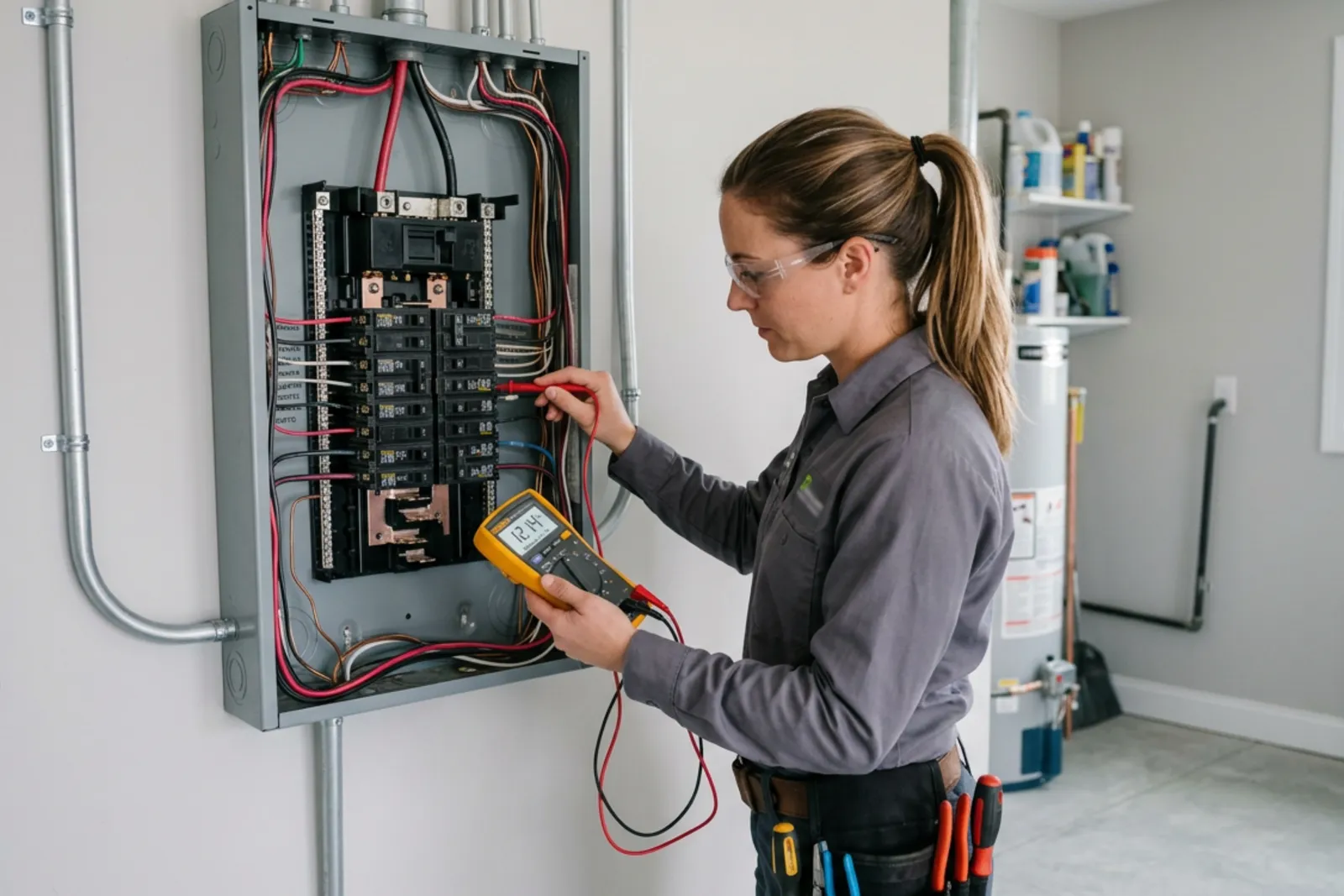
How to Evaluate Electrician Reviews Beyond the Star Rating
Learn how to evaluate electrician reviews beyond star ratings. Look for details about diagnosis, workmanship, permits, and testing before you hire. Read the guide.
October 16, 2026
When a breaker keeps tripping or an outlet stops working, reading electrician reviews can feel like one more task between you and a safe, functioning home. During a renovation or EV charger installation, the pressure is different: you want to make a sensible investment without discovering costly surprises halfway through.
Star ratings help narrow the search. They do not tell the whole story.
A five-star review might reflect friendly service and quick scheduling without saying anything about diagnosis, permits, testing, or workmanship. A less enthusiastic review might describe technically sound work but frustration with an inspection delay outside the contractor’s control.
The better approach is to look for evidence. What problem did the electrician investigate? What work was included? How was the result checked? Detailed reviews help you ask better questions, but they should support your decision rather than replace license verification and a written quote.
Start With the Problem, Not the Praise
“Excellent electrician, highly recommended” tells you that someone was pleased. It does not tell you whether the job resembles yours.
Look for reviews that describe the original concern. Repeated breaker trips, flickering lights, an aging panel, and insufficient capacity for home charging are different problems. The electrician’s experience should match the work you need.
A useful review separates the symptom from the diagnosis. For example, a homeowner might report that a kitchen breaker tripped whenever two appliances ran together. The electrician then identified an overloaded circuit and explained the available solutions.
That detail is more informative than “They replaced my breaker.” A replacement might have been appropriate, but the review does not explain why.
For electrical repairs, the strongest accounts describe some investigation before the recommendation. Did the electrician check the appliance, receptacle, connections, or circuit? Did they distinguish a local device failure from a wider wiring problem?
Homeowners cannot be expected to describe every test accurately. Still, a clear explanation in everyday language suggests that the electrician helped the customer understand the issue.
Look for a Solution That Fits the Findings
A credible recommendation should follow from the diagnosis. This matters most when the proposed work is expensive or disruptive.
Consider an electrician recommending a larger electrical service before installing a Level 2 charger. The useful question is not whether service upgrades are generally worthwhile. It is whether this property needs one.
An assessment of existing loads, proposed charging demand, and applicable requirements should guide the decision. Depending on the installation, suitable load-management equipment may be an alternative. In other cases, an upgrade is justified.
Reviews are stronger when they mention that alternatives were explained rather than presenting major equipment replacement as the automatic answer.
The same principle applies to home rewiring. An older home may have wiring conditions that need attention, but age alone does not establish the scope. Look for descriptions of actual findings, such as damaged wiring, improper modifications, or inadequate circuits.
Be wary of reviews that praise a sweeping recommendation without explaining the reason behind it. Confidence is reassuring. Evidence is better.
Verify Credentials Outside the Review Platform
Reviews cannot establish whether someone is authorized to perform your electrical work. Verify that separately.
For projects in Greater Vancouver, confirm the contractor’s legal name, applicable electrical contractor license, and the authority responsible for permits and inspections at the property. Technical Safety BC and municipal electrical authorities have different responsibilities depending on the location and work involved.
A contractor who works in North Vancouver may also serve Vancouver, Burnaby, Richmond, Coquitlam, or Surrey. That does not mean the permit process is identical everywhere. Ask who will obtain the permit, arrange inspections, and provide completion records.
Trade qualifications, contractor licensing, and field safety representative credentials have different purposes. An FSR credential belongs to a qualified individual and is not, by itself, proof of a contractor’s license. Titles such as “Master Electrician” also need context; ask which organization issued the credential and what it establishes.
When comparing licensed electricians, check the relevant public records where available. For insured electricians, request confirmation of applicable coverage rather than relying on a badge in a profile.
Memberships, awards, and third-party seals may be useful background. They are not substitutes for authorization, insurance, or project-specific evidence.
Understand What Permits and Inspections Actually Show
A review saying “everything was code compliant” sounds reassuring, but it leaves an important question unanswered: how was that established?
Permit requirements depend on the jurisdiction, building, and scope. New circuits, panel upgrades, service changes, and many electrical renovations require regulatory involvement. The contractor should explain the requirements for your particular job.
Useful reviews may mention that a permit was obtained, an inspection occurred, or deficiencies were corrected before final approval. You do not need reviewers to publish private documents or full permit details. You do need enough context to distinguish an actual approval process from a general claim.
An inspection correction is not automatically a reason to reject a contractor. What matters is the nature of the issue, how the contractor responded, and whether it was resolved.
Likewise, inspection approval is not a promise that no future problem can occur. It provides evidence that the work was reviewed against applicable requirements through the relevant process. Keep your own permit and final inspection records when they are provided.
Compare the Scope, Including What Is Left Out
Price-focused reviews can be misleading when they omit what the customer bought.
Two homeowners might both describe an “EV charger installation,” yet one project involved a short, accessible circuit run beside the panel. The other required load management, exterior conduit, and trenching. Their prices are not directly comparable.
A written scope should explain the equipment, installation conditions, and completion work. For panel or service upgrades, it should identify proposed capacity, associated wiring, and any utility coordination. For lighting design or renovation work, it should clarify fixture responsibilities, controls, and the work included at each stage.
Exclusions deserve equal attention. A charger, permit fees, drywall repair, painting, landscaping, or concealed-condition repairs may sit outside the quoted amount.
That is not inherently unfair. The problem is an exclusion that appears only after the customer has committed.
Look for reviews describing how changes were handled. “They found damaged wiring, explained the options, and sent a written change order before proceeding” is useful evidence of a reasonable process. “The price doubled” deserves investigation, but without the original scope and explanation, it is difficult to judge.
Questions to Ask When Comparing Quotes
Use reviews to identify issues worth discussing, then ask each contractor the same questions:
What findings support the proposed work, and what alternatives are appropriate?
Exactly which equipment, materials, installation work, and repairs are included?
Who handles permits, inspections, and coordination with other parties?
What is excluded, and which site conditions could change the price?
What testing, labeling, documentation, warranties, and operating guidance will I receive?
Compare the answers line by line. A lower total may reflect a narrower scope rather than better value.
Look for Evidence of a Properly Finished Job
A project is not fully explained by “the lights came on” or “the charger worked.”
Depending on the work, completion may involve electrical measurements, protection-device checks, functional testing, and verification of grounding and bonding. EV charging equipment may also need startup checks, communication setup, and confirmation that load management operates correctly.
You do not need to become an electrical inspector to evaluate reviews. Look for signs that the contractor checked the installation rather than simply switching it on.
Labels matter, too. An updated panel directory should identify actual circuits clearly enough to be useful. Generic entries such as “plugs” provide little help when someone needs to isolate a particular area.
For systems with operating limits or special settings, the customer should receive appropriate documentation. That can include load-management information, equipment instructions, photographs, or drawings where relevant.
Photos Are Supporting Evidence
Before-and-after images can show equipment locations, conduit routing, labels, and visible changes. They cannot establish concealed wiring quality or prove that an installation is safe.
A tidy panel photograph is helpful context, not a complete assessment.
Good project documentation should also protect privacy. Reviews do not need to expose addresses, account information, or identifying documents. Do not remove electrical covers or approach exposed energized components to obtain your own pictures.
For work inside walls, written descriptions and inspection records may tell you more than finished-room photographs.
A Walkthrough Should Explain Everyday Use
A useful handover explains what changed, how to operate the equipment, and what limitations remain.
For home charging, that might include charging settings and what happens when load management reduces demand. For a repaired circuit, it might include the cause of the fault and signs that warrant another call.
Reviews mentioning clear answers to these questions carry more weight than a generic statement that the job was completed successfully.
Match the Reviews to Your Project
The best review for your decision is usually one about comparable work. A record of successful small repairs does not establish experience managing a large commercial installation.
For residential electrical services, look for diagnosis, proportionate repairs, testing, and explanations of remaining concerns. In older homes, useful reviews may discuss fuse equipment, outdated wiring, or access limitations without assuming every condition requires immediate replacement.
For EV charger installation, prioritize accounts that explain capacity assessment, charger location, circuit routing, permits, equipment exclusions, and operational testing.
For panel upgrades, look for documented load requirements, proposed capacity, utility coordination, inspection results, and updated labeling. A larger panel and a larger electrical service are not always the same project, so wording matters.
For renovations, reviews should describe coordination with the general contractor and other trades, inspection stages, fixture decisions, and change orders. A renovations electrician may do excellent technical work but still create difficulties if scheduling and responsibilities are unclear.
Hot tub wiring and sauna wiring have equipment-specific requirements. Look for experience with the relevant installation, including manufacturer requirements and appropriate protection, rather than assuming all outdoor or high-load work is interchangeable.
Reviews of commercial electrical services or multifamily projects should address shutdown planning, occupant communication, access, commissioning, and maintenance documentation. Property managers often need records that remain useful long after the original installer leaves.
Read Communication Reviews With a Critical Eye
Friendliness matters, especially when work affects your home. But useful communication evidence goes beyond a pleasant conversation.
Look for descriptions of scheduling updates, written explanations, advance approval of extra costs, and coordination with inspectors or other trades. Clear communication is particularly valuable when concealed conditions make a fixed plan difficult.
Recent reviews can help you understand current service, while older reviews may reveal a longer pattern. Read both favorable and critical feedback. A contractor’s response to a complaint can show whether they explain the issue respectfully and address unresolved work.
Repeated generic wording, sudden clusters of vague praise, or reviews disconnected from any recognizable project deserve caution. They do not prove manipulation. Similarly, an anonymous reviewer may have legitimate privacy reasons. Treat unclear reviews as limited evidence rather than making unsupported accusations.
A missing detail is also not proof that the contractor skipped a step. Most customers will not mention panel labels or testing unless asked. Use the omission as a question to investigate.
When You Need Emergency Electrical Service
Urgency changes how much research you can reasonably do. It should not eliminate basic checks.
If you see smoke or fire, move to safety and contact emergency services. Avoid touching damaged equipment or attempting repeated resets of a tripping breaker.
When arranging emergency electrical service, confirm who is coming, their authorization to do the work, and the callout or diagnostic charges. If a contractor advertises 24/7 emergency service, ask about actual availability and expected response time. A review describing a fast visit elsewhere is not a guarantee for your location.
Emergency work may make the immediate situation safe while leaving permanent repairs for a later visit. A useful review distinguishes those stages and explains whether follow-up costs and responsibilities were clear.
Choose Evidence You Can Act On
The strongest electrician reviews connect the original problem to a diagnosis, a defined scope, and a checked result. They describe what the customer understood before work began and what documentation they received afterward.
Use ratings to build a shortlist. Then favor relevant project details, verify credentials independently, and compare written quotes carefully.
You are not looking for a perfect collection of praise. You are looking for enough reliable evidence to understand who will do the work, why it is needed, what it includes, and how completion will be confirmed.
Need a licensed electrician?
Free consultations across Greater Vancouver — and 24/7 emergency service.
Get a Free Quote