
Home Electrical Surges Are Getting Harder to Ignore, Here’s How to Protect Your Home
Learn how home electrical surges damage devices and how surge protection helps protect your home. Read practical safety tips from Eagle Power.
September 23, 2026
Electrical surges used to be the kind of problem many homeowners thought about only after a thunderstorm. That picture is outdated.
Today, even a fairly ordinary home can have dozens of sensitive electronic components running at once. Televisions, Wi-Fi routers, laptops, induction ranges, heat pumps, EV chargers, smart thermostats, security systems, garage door openers, and appliance control boards all depend on stable power. A brief spike in voltage might last only a fraction of a second, but that can be enough to damage or shorten the life of expensive equipment.
What makes surges tricky is that the damage is not always dramatic. Sometimes a device fails immediately. More often, the harm builds slowly. Repeated small surges wear down internal components until something stops working months earlier than it should. Homeowners then replace the appliance and never connect the failure back to power quality.
That is why surge protection is not just a nice extra anymore. It is part of basic home safety.
What an electrical surge actually is
An electrical surge is a short increase in voltage above the level your home wiring and devices are meant to handle. In a North American home, standard branch circuits supply around 120 volts. During a surge, that level rises quickly, then drops back down.
The key word is quickly. Surges happen fast, often too fast for you to notice, but electronics notice.
There are two broad types homeowners should care about. The first is a large, obvious surge, often linked to lightning, utility grid events, or major equipment switching on the electrical system. The second is the much more common small surge. These smaller spikes happen inside the home all the time when large appliances cycle on and off. Air conditioners, refrigerators, dryers, and even some power tools can create them.
That second category gets less attention, but I think it is the one most homeowners underestimate. A giant lightning-related event is dramatic. The small daily hits are quieter and, in many houses, more constant.
Why surges are a growing threat in modern homes
The modern house is more vulnerable than the house of twenty or thirty years ago, and there are a few simple reasons for that.
Homes contain more electronics than ever
Older appliances were often mechanical. Newer ones rely on circuit boards and digital controls. That makes them efficient and convenient, but also more delicate when voltage fluctuates.
A furnace or heat pump now has electronics. So does the fridge. So does the washing machine. If one of those boards fails, the repair bill can be painful.
This is one reason residential electrical services now involve more than just wiring lights and outlets. Homeowners are trying to protect an entire network of devices, not a few standalone appliances.
Smart home systems add more sensitive equipment
Smart homes are convenient, but every smart switch, hub, sensor, and controller adds another point of vulnerability. The irony is hard to miss. The more connected and efficient a home becomes, the more dependent it becomes on clean, stable power.
A surge that once might have damaged only a television can now affect your internet equipment, smart thermostat, cameras, and automation devices all at once.
Utility systems are under more strain
Power grids are handling changing demand patterns, weather stress, electrification, and more distributed energy systems. That does not mean the grid is failing. It means switching events, restoration after outages, and fluctuations are part of real-world power delivery.
When power is restored after an outage, a surge can follow. The same thing can happen when utility equipment switches loads. Homeowners do not control these events, but they do have options for limiting damage inside the house.
Major electrical loads are becoming common at home
EV chargers, hot tubs, saunas, heat pumps, and induction cooking equipment are showing up in more homes. These are good upgrades, but they increase the demands placed on the electrical system. If the panel is older, the grounding is weak, or circuits are not planned well, the overall system may be less resilient.
That is why electrical upgrades should be treated as safety work, not just convenience work.
The hidden costs of electrical surges
Most people think of surges as a device-replacement problem. That is part of it, but the cost can spread further.
A surge can damage appliances, computers, entertainment systems, and charging equipment. It can interrupt home offices. It can disable internet hardware. It can affect heating and cooling controls. In some cases, it can create heat inside wiring or connected devices, which pushes the issue from inconvenience into genuine safety concern.
There is also the frustrating middle ground. A device still works, but not properly. Maybe the microwave display flickers. Maybe the garage opener behaves oddly. Maybe the router needs frequent resets. Those small issues often trace back to power disturbances or compromised internal components.
And then there is the timing problem. Damage may appear weeks later. That makes it easy to miss the cause.
Homes that need extra attention
Any home can have surge issues, but some situations deserve a closer look.
If you are moving into an older home, especially one with an aging electrical panel, two-prong receptacles, ungrounded circuits, or a history of renovations done over many decades, it is worth getting the system inspected.
If you are renovating, this is the ideal time to assess protection. Walls may be open. The panel may already be under review. It is far easier and usually more cost-effective to include surge protection and other home electrical solutions during planned work than after damage occurs.
If you are adding major loads, such as an EV charger, hot tub, suite, workshop equipment, or air conditioning, that is another good moment to look at the whole system.
And if your home has frequent breaker trips, flickering lights, warm outlets, or unexplained equipment failures, you should not assume surges are the only issue. That may point to a need for broader electrical repair or a panel assessment.
The difference between a power bar and real surge protection
This is where many people get tripped up.
A regular power bar is not automatically a surge protector. Some power bars do include surge protection, but many do not. Even among surge-protecting strips, quality varies a lot.
Point-of-use surge protectors can help protect individual electronics, especially computers, televisions, and office equipment. They are useful, but they should not be your only line of defense. They protect only what is plugged into them, and they may not stop larger surges entering through the electrical system.
A better approach is layered protection. That usually means a whole-home surge protective device combined with point-of-use protection for especially sensitive or expensive electronics.
Think of it this way. If you only protect the TV, what about the refrigerator board, the heat pump controls, or the smart lighting system wired directly into the house? Those devices do not plug into a strip.
What whole-home surge protection does
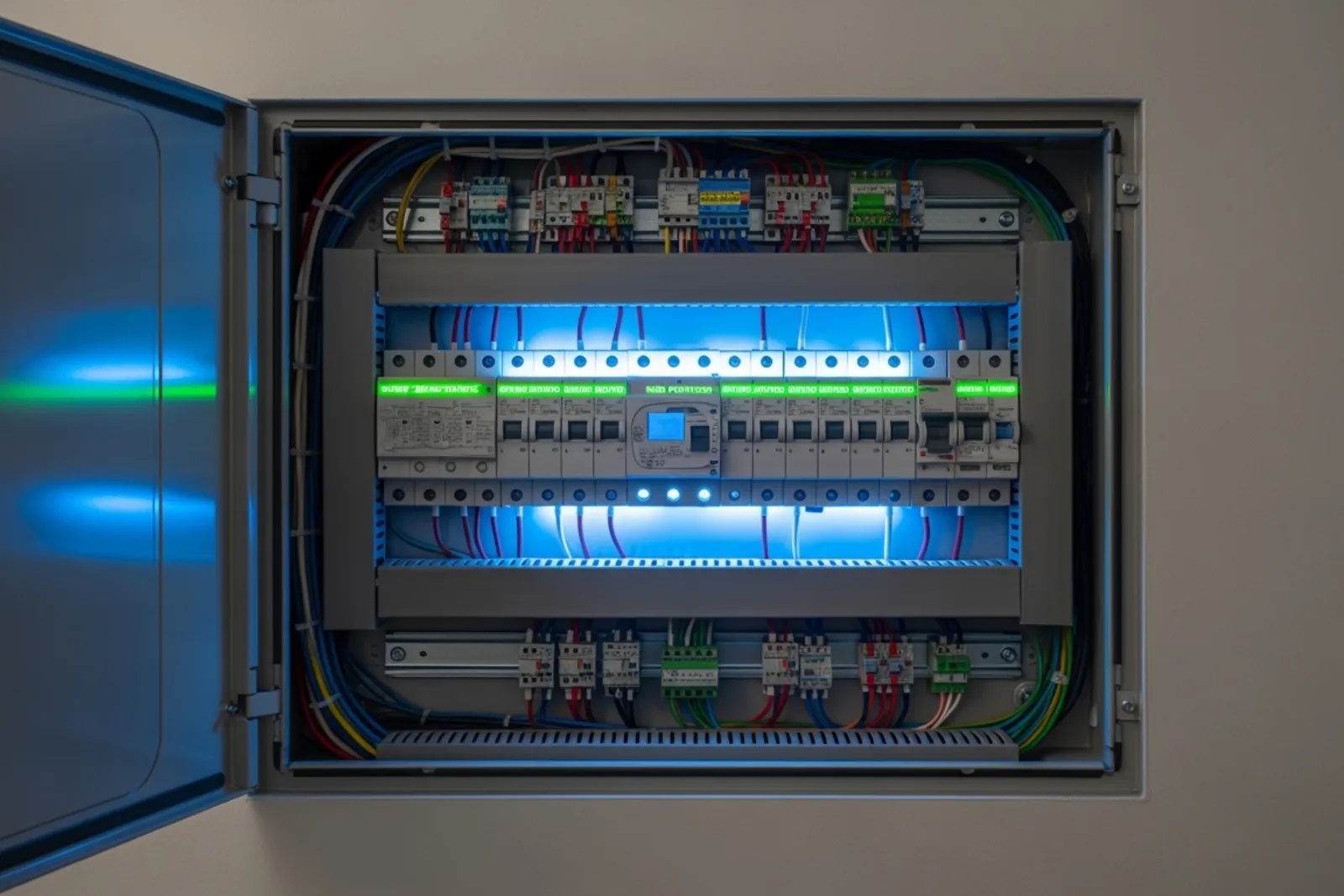
A whole-home surge protector is installed at the electrical panel, or sometimes at the meter depending on the setup and local code requirements. Its job is to divert excess voltage away from your home circuits before it can spread through the system.
This type of protection is especially helpful because it covers hardwired equipment as well as receptacle circuits. It will not make a house invincible, and no device can promise perfect protection against every possible event, especially a direct lightning strike. Still, it can significantly reduce the risk from many common surges.
For homeowners planning electrical upgrades, this is one of the smartest additions to discuss with a licensed electrician. It is practical. It protects a wide range of devices. And compared with the replacement cost of modern appliances, it often makes good sense.
Why grounding and bonding matter more than people think
Surge protection is only part of the story. A protective device works best when the home has proper grounding and bonding.
Grounding gives excess electrical energy a path. Bonding helps keep metal components at the same electrical potential, which reduces shock risk and helps the system behave the way it should during faults and surges.
If grounding is incomplete, outdated, or poorly connected, surge protective equipment may not perform as intended. This is one reason do-it-yourself fixes can be risky. Home electrical safety depends on how the system works together, not just on one product added in isolation.
A professional inspection can check whether the service, panel, grounding electrodes, and bonding connections are in good condition. That kind of review often uncovers issues homeowners did not know were there.
Smart steps homeowners can take now
There is no need to turn this into a giant project all at once. The best approach is usually a few sensible steps taken in the right order.
Start with an electrical inspection if the home is older, newly purchased, or being renovated.
Ask whether the panel has capacity for current and future loads.
Discuss whole-home surge protection at the service panel.
Use quality point-of-use surge protectors for sensitive electronics.
Have grounding, bonding, and receptacle condition checked.
Replace damaged outlets, old devices, or suspect wiring as part of needed electrical repair.
Review planned additions like EV chargers, air conditioning, or workshop circuits before installation.
That list is not glamorous. It is just practical. Usually, that is what safety looks like.
Renovating or moving? This is the right time to act
People often wait until something fails. I get why. Electrical work is mostly invisible when it is working well. But if you are already opening walls, replacing a panel, finishing a basement, or buying a home with unknown electrical history, waiting rarely helps.
During renovation, you can combine surge protection with other electrical upgrades such as panel replacement, dedicated circuits, GFCI and AFCI protection where required, better outlet placement, and updated wiring. That creates a system that is not only safer but also better matched to how people actually live now.
For new homeowners, a pre-purchase or post-purchase electrical assessment can answer some basic questions fast. Is the panel suitable? Are there signs of past amateur work? Is the grounding up to standard? Are there warning signs that call for near-term attention?
If you need a sense of what that kind of work typically includes, this overview of residential electrical services is a useful reference for the range of inspections, repairs, and installation work homeowners often consider.
When to call a qualified electrician
Some warning signs are straightforward. If you smell burning near outlets or the panel, if breakers trip repeatedly, if lights dim sharply when appliances start, or if outlets feel warm, call an electrician soon.
Less dramatic signs matter too. Repeated appliance board failures, electronics that die early, buzzing at the panel, scorched plugs, or recent storm-related issues all deserve attention.
For surge protection, the installation itself should be handled by a licensed professional. This is not just about attaching a device. Proper selection, panel compatibility, breaker requirements, grounding, and code compliance all matter.
Homeowners often look for Red Seal Certified Electricians when planning electrical repair or upgrades, and that is a sensible benchmark when choosing someone qualified to assess safety, install protection properly, and explain what the house actually needs.
A few common misconceptions
One misconception is that lightning is the only real cause of damaging surges. It is not. Many surges start inside the home or through ordinary utility events.
Another is that if nothing has failed yet, there is no issue. That logic breaks down with electronic wear. Damage can accumulate gradually.
A third is that a surge protector lasts forever. It does not. Protective components can wear out over time, especially after repeated events. Some devices include indicators, but not all failures are obvious to a homeowner.
And one more, older homes are not the only homes at risk. In fact, newer homes often contain more electronics and more expensive equipment to protect.
Good protection is part of a bigger safety mindset
Surge protection matters, but it should sit inside a broader view of home electrical safety. A solid system includes a suitable panel, well-planned circuits, proper grounding and bonding, code-compliant protection devices, and repairs done when warning signs appear.
That sounds obvious, yet many homes become a patchwork over time. One owner adds a circuit. Another finishes a room. Someone swaps a fixture. Years later, the electrical system reflects many decisions made at different times, not one coherent plan.
That is why whole-home thinking matters. The safest home electrical solutions are rarely the flashy ones. Usually they are the quiet, behind-the-scenes improvements that reduce risk before trouble starts.
The bottom line
Electrical surges are more common and more expensive than many homeowners realize. The threat has grown because homes now rely on more electronics, more smart devices, and heavier electrical loads than ever before.
The good news is that protection does not have to be complicated. A professional assessment, proper grounding, a whole-home surge protector, and smart point-of-use protection can go a long way. If you are moving, renovating, or planning new electrical projects, this is the right moment to include those decisions in the work.
When electrical systems age well, nobody notices. That is kind of the point. Safe power is supposed to feel uneventful. Quiet. Reliable. And in a house full of expensive electronics and everyday routines, that is worth taking seriously.
Need a licensed electrician?
Free consultations across Greater Vancouver — and 24/7 emergency service.
Get a Free Quote