
How to Respond to Repeated Breaker Trips Safely
Learn how to respond to repeated breaker trips, spot electrical hazards, and know when to leave the circuit off. Read our safety guide before resetting a breaker.
October 21, 2026
A circuit breaker trips while you are making breakfast, running a space heater, or charging equipment. It is tempting to reset it and get on with your day. Sometimes, a temporary overload explains the interruption. But when the breaker trips again, restoring power is no longer the priority. Finding out why it is shutting off is.
A breaker is a protective device. It interrupts electricity when it detects conditions it is designed to respond to, such as excessive current or certain electrical faults. Repeatedly resetting it without correcting the problem can reenergize damaged wiring or faulty equipment and increase the risk of fire.
The safest response depends on what happened before the trip and whether there are warning signs. Here is how to make that distinction, what you can safely check, and when the circuit needs to stay off.
First, Check for Signs of Immediate Danger
Before approaching the panel or unplugging appliances, look and listen for anything unusual. A burning-plastic smell, smoke, scorch marks, melted components, crackling, or sparks changes the situation completely.
If there is active smoke, fire, or immediate danger, leave the building and contact emergency services. Do not delay evacuation to locate the correct breaker. Never use water on an electrical fire.
Keep away from damaged, hot, or sparking equipment. If an outlet has melted around a plug, trying to pull that plug out can expose you to a shock or burn. The same caution applies to a panel that is smoking, making abnormal sounds, or visibly damaged.
Turning off power may be appropriate only if you can do so safely, without approaching hazardous equipment, standing in water, or touching damaged components. Otherwise, leave it alone.
An emergency electrical service can address an urgent electrical fault once immediate dangers are managed, but it is not a substitute for emergency responders during a fire.
When One Cautious Reset May Be Reasonable
A single trip can happen when too many appliances draw power from the same circuit. Consider a portable heater operating while a hair dryer starts in a nearby room. Those outlets may share a circuit even though they are nowhere near each other.
If the overload is apparent and there are no warning signs, turn off or unplug some of the connected equipment before attempting one reset.
Only operate the breaker through its normal handle, with the panel cover intact, dry hands, and a dry floor. If you are unfamiliar with the panel or cannot confidently identify the affected breaker, leave it to a professional. Many breakers must be moved fully to the OFF position before they can be switched back ON. Follow the equipment instructions and never force the handle.
If the breaker stays on, avoid recreating the same load. Monitor the circuit during ordinary use.
That does not mean every first-time trip is harmless. If nothing explains the interruption, arrange an assessment rather than assuming it was random. A single unexplained trip deserves attention, especially when it occurs alongside flickering lights, unusual sounds, or visible damage.
If It Trips Again, Leave It Off
A breaker that trips a second time is telling you the problem remains. It may trip immediately, after several minutes, or only when a particular appliance starts. None of these patterns justifies repeated resets.
Leave the breaker off. Disconnect portable appliances from the affected circuit only when their plugs, cords, and receptacles appear undamaged and are safe to approach. Arrange for a licensed electrician to investigate.
Do not hold the breaker handle in place, tape it on, or substitute a higher-rated breaker. A breaker must be correctly matched to the wiring and circuit design. Increasing its rating without a proper assessment can allow wiring to carry unsafe current.
The loss of power can be frustrating, particularly if the circuit supplies a refrigerator, home office, or heating equipment. Still, restoring power through an unresolved fault is the wrong trade-off. Tell the electrician about essential equipment so they can help determine a safe temporary plan.
What Repeated Trips Can Mean
The timing of a trip can provide useful clues, but it cannot establish a diagnosis by itself. Several different faults can produce similar symptoms.
Too Much Load on One Circuit
An overload occurs when the combined demand exceeds what a circuit can safely supply. Space heaters, kettles, toaster ovens, and other high-wattage appliances are common contributors.
For illustration, a 1,500-watt heater draws about 12.5 amps on a nominal 120-volt supply. That leaves little room on a 15-amp circuit for other equipment, and continuous-load requirements may limit what is appropriate. An electrician should assess whether the circuit suits the intended use.
Plugging one appliance into another outlet does not necessarily solve the problem. Both outlets may be connected to the same breaker.
A Short Circuit or Ground Fault
A short circuit can occur when an energized conductor contacts another conductor in an unintended way, creating a path that allows very high current.
A ground fault involves current taking an unintended path to ground. Damaged insulation, moisture, or defective equipment can contribute to these conditions.
Neither is a homeowner troubleshooting project. Do not open outlets, disconnect internal wiring, or dismantle appliances to look for the fault.
Damaged Appliances and Connections
A crushed cord, damaged plug, failing appliance, or deteriorated connection may be responsible for a trip.
Loose connections deserve particular caution. They can generate localized heat or arcing without necessarily causing a standard breaker to trip. The absence of a trip is therefore not proof that wiring is safe.
A breaker itself can also deteriorate or fail, but that conclusion requires testing. Replacing the breaker without examining the circuit may leave the real hazard untouched.
A Homeowner-Safe Isolation Checklist
Your role is to reduce exposure and collect useful information, not to perform electrical repairs.
Identify which lights, rooms, outlets, and appliances lost power. Note what was operating when the trip occurred.
Turn off connected equipment and unplug portable appliances only where it is safe. Leave hot, damaged, or sparking plugs untouched.
Look for visible damage, discoloration, smoke, or unusual odors without removing covers or touching components to test their temperature.
Check accessible ground-fault or arc-fault devices for a trip indication. Do not repeatedly reset them.
Consider one cautious breaker reset only when there are no warning signs and the cause appears to be a temporary overload.
If the breaker trips again, will not reset, or behaves unusually, leave it off and arrange professional assessment.
Keep children and other occupants away from damaged equipment. Let everyone in the home know which circuit must remain out of use.
Do not remove the panel cover, replace breakers, splice wiring, or bypass a protective device. Even with the main breaker off, parts of a panel can remain energized.
Understand Ground-Fault and Arc-Fault Protection
Some interruptions involve protective devices beyond a standard breaker.
A ground-fault circuit interrupter, commonly called a GFCI, detects an imbalance between outgoing and returning current. It helps reduce shock risk and may protect several downstream outlets. One tripped GFCI can therefore leave multiple receptacles without power.
An arc-fault circuit interrupter, or AFCI, detects electrical arcing patterns associated with certain fire hazards. Some breakers combine arc-fault and ground-fault protection.
A trip indicator or manufacturer’s diagnostic instructions may help an electrician identify what the device detected. You can record that information without opening the equipment.
Do not assume that repeated GFCI or AFCI trips are merely annoying sensitivity. Moisture, damaged cords, wiring defects, and equipment problems may be involved. Bypassing protection removes a safeguard rather than fixing the cause.
When Professional Help Is Required
Contact a licensed electrician when the breaker trips repeatedly, the cause is unclear, or normal household use routinely overloads the circuit. Heat, burning odors, sparking, unusual noise, smoke, or physical damage require prompt action and keeping the affected equipment out of service.
When arranging electrical repairs, provide specific observations. “The breaker trips when the dishwasher starts” is more useful than “the power keeps going out.” Mention recent renovations, new appliances, water leaks, or any work near electrical wiring.
Licensed electricians can assess the connected load, inspect accessible equipment, test for faults, and determine whether the issue lies in an appliance, branch circuit, breaker, or wider electrical system.
For homeowners in Greater Vancouver, verify that the contractor is qualified and licensed for the work involved. Choosing insured electricians is also sensible. Any electrical work should meet applicable local requirements, including permits and inspection where required.
Recurring trips do not automatically mean you need a new panel. The repair might involve one faulty appliance or connection. Diagnosis should come before recommendations for major work.
Older Homes and Growing Electrical Demand
An older home may have a 60-amp or 100-amp service installed for a very different pattern of electricity use. Electric heating, heat pumps, water heating, workshop equipment, and home charging can change that demand substantially.
In North Vancouver, winter use can make existing capacity problems more noticeable. Portable heaters may run alongside cooking appliances and other equipment for long periods.
However, service size alone does not explain a branch-circuit trip. A home can have adequate overall capacity while one circuit is overloaded. Conversely, adding circuits does not necessarily resolve an undersized service.
A load assessment helps distinguish those problems. Depending on the findings, the appropriate solution may be a dedicated circuit, wiring repairs, load management, panel upgrades, or service upgrades.
Major additions deserve planning before installation. EV charger installation, particularly a Level 2 charger, can add a substantial load. Hot tub wiring, sauna wiring, and electrical renovations also require assessment of circuit requirements and available capacity.
An upgrade should follow an evaluation, not a guess based on the age of the house.
Reduce the Chances of Another Trip
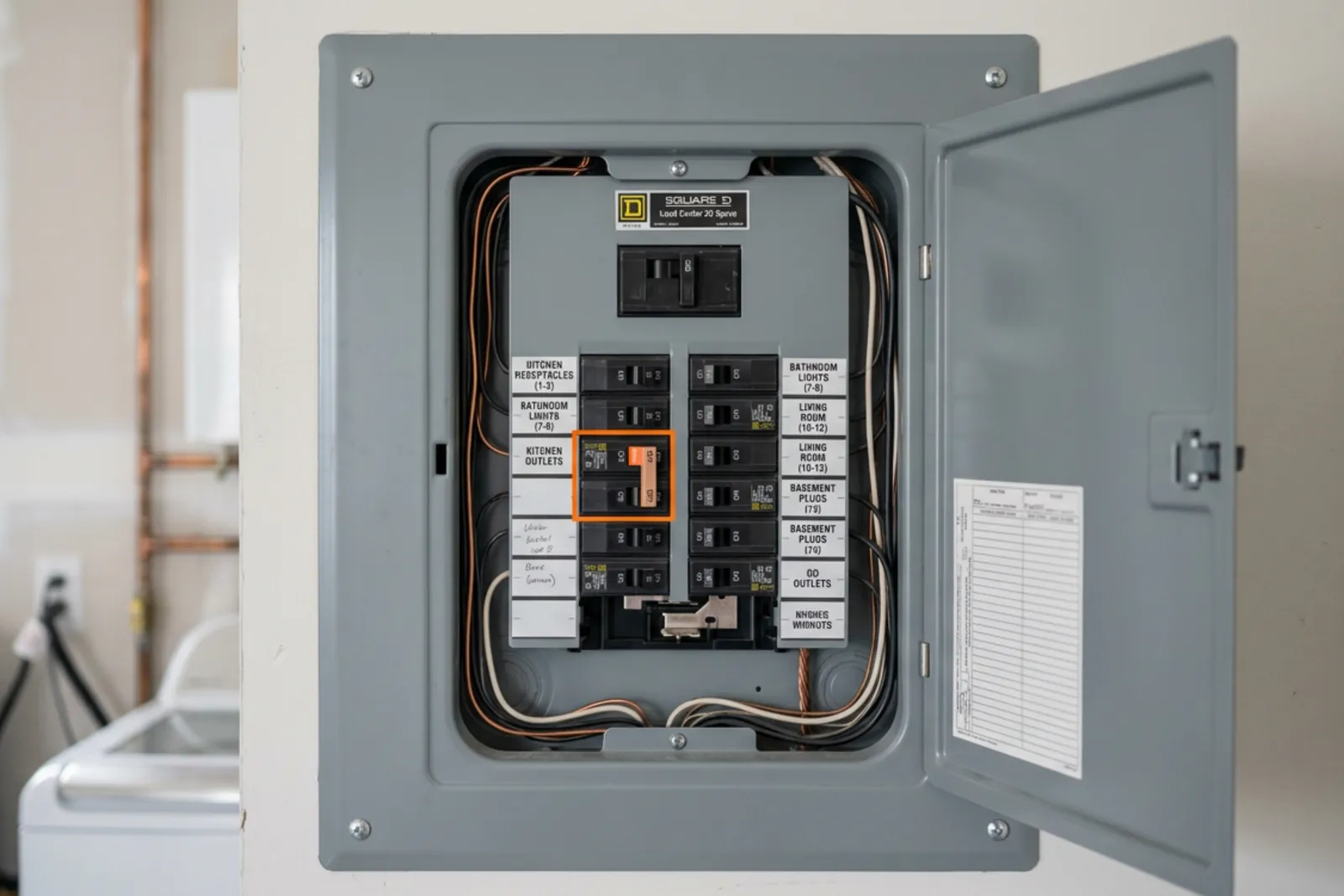
Prevention starts with understanding what shares a circuit. Accurate panel labels make it easier to avoid putting several high-demand appliances on the same branch circuit. Keep access to the panel clear so it can be reached safely.
Use appliances according to their instructions. Equipment that requires a dedicated circuit should not share a general-purpose circuit simply because the plug fits.
Power strips do not increase circuit capacity. Extension cords are not a permanent solution to inadequate wiring, and portable heaters should be connected as directed by their manufacturers, generally directly to an appropriate wall outlet.
Replace damaged cords and power strips rather than continuing to use them. Keep equipment dry unless it is specifically designed for the location.
Before adding major loads or renovating an older property, have the existing electrical system assessed. Address flickering lights, unexplained odors, recurring trips, and unusual sounds promptly. Never bypass breakers, fuses, or other protective devices.
Treat the Trip as Information, Not an Obstacle
One apparent overload, with no warning signs, may be resolved by reducing demand and making one cautious reset. A second trip changes the response: leave the circuit off and get qualified help.
If you notice burning, smoke, sparks, unusual heat, or damage, stop using the affected equipment immediately. Prioritize people’s safety over restoring power.
The breaker has interrupted the supply for a reason. The next step is to understand that reason, not keep asking the circuit to run.
Need a licensed electrician?
Free consultations across Greater Vancouver — and 24/7 emergency service.
Get a Free Quote