
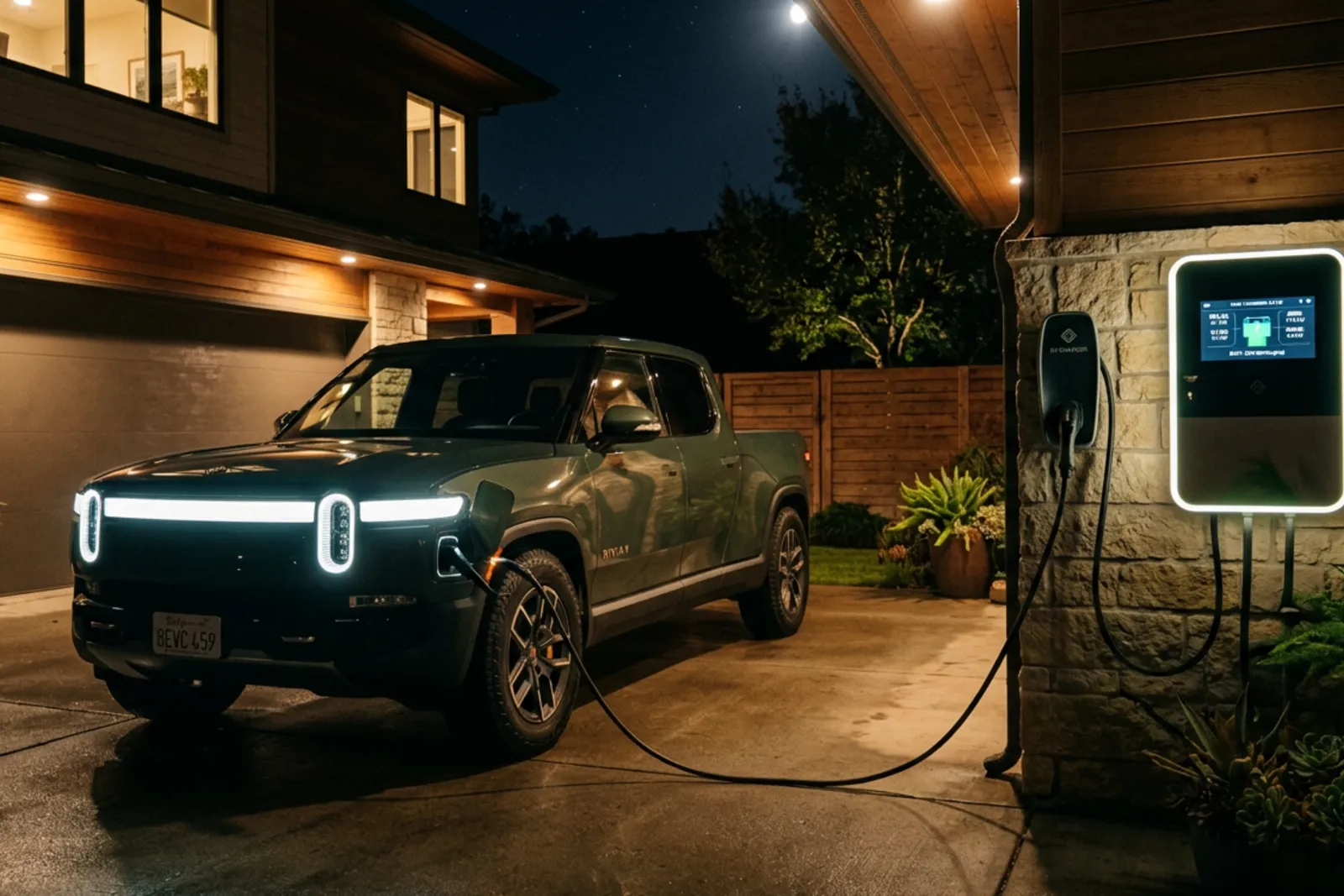
How a North Vancouver Home Added Level 2 EV Charging Without a Service Upgrade
Learn how a North Vancouver home installed a Level 2 charger without a service upgrade using power management. Explore your options today.
September 16, 2026
Buying an electric vehicle changes a household’s energy habits quickly. Instead of filling up at a gas station once a week, most owners prefer to plug in at home and wake up with useful range ready for the day.
That was the goal for one North Vancouver family when they replaced a noisy V8 vehicle with an EV. More driving for school drop-offs and commuting, along with high gasoline costs, made the change feel practical. The plan was simple enough: install a Level 2 charger before the new vehicle arrived.
The electrical side was less simple.
Their home’s existing electrical service was close to its capacity. A conventional approach might have required a larger service and a major panel upgrade, which can involve substantial cost, scheduling delays, utility coordination, and sometimes excavation. Instead, an electrician recommended a power management device, often called a PMD.
The device allowed the family to install a Level 2 charger without immediately upgrading the electrical service. It is a useful example for homeowners in North Vancouver and across Greater Vancouver who assume EV charging automatically means upgrading to 200 amps.
Often, it does not.
Why Level 2 home charging is the practical choice
A Level 1 charger plugs into a standard 120-volt receptacle. It can work for people who drive short distances and have plenty of time between trips, but charging is slow. A Level 1 setup may add only a modest amount of driving range per hour.
A Level 2 charger uses a dedicated 240-volt circuit, similar to the type used for an electric dryer, range, sauna wiring, or certain hot tub wiring installations. It delivers substantially more power, making overnight charging realistic for most EV owners.
For a household that drives frequently, home charging removes a lot of small frustrations. There is no need to make an extra stop for fuel. Public chargers remain helpful for road trips and occasional top-ups, but they do not need to be part of the daily routine.
The North Vancouver household planned to charge overnight, usually every three days, and stop at 80% battery capacity. That charging limit is common among EV owners because it meets day-to-day driving needs while reducing the time spent charging. Vehicle manufacturers differ in their battery guidance, so owners should follow the recommendations for their specific model.
The owner reported that an overnight charge to 80% cost around $5 under an off-peak electricity rate. Actual cost depends on the vehicle’s battery size, charging losses, local electricity pricing, the starting battery level, and how much energy the household uses at the same time.
Still, the larger point holds: charging at home can make EV ownership far more predictable.
The question every homeowner should ask: does the home have enough electrical capacity?
Before approving an EV charger installation, a qualified electrician needs to assess the home’s electrical system. The question is not simply whether there is an empty breaker space in the panel.
A panel can have physical room for another breaker while the electrical service itself is already close to its safe calculated capacity.
This is where an electrical load calculation matters. Licensed electricians review the home’s service rating and estimate expected demand from major loads, such as:
Space heating, electric baseboards, heat pumps, and air handlers
Electric ranges, ovens, and cooktops
Clothes dryers
Hot water heaters
Hot tubs, saunas, and other high-demand amenities
Air conditioning
Existing EV chargers
Planned electrical renovations or home rewiring work
The calculation follows applicable electrical code requirements. It is not based on guessing, nor is it safe to assume that a charger is fine because other equipment does not always run at the same time.
An EV charger is generally treated as a continuous load. That means its circuit and the home’s available capacity need careful consideration. A 40-amp charger, for example, typically requires a larger circuit because continuous loads have specific code rules.
A code compliant installation should include the right conductor size, breaker rating, grounding, equipment mounting, and permit process where required. A permitted inspection is not bureaucratic busywork. It gives the homeowner a documented record that the electrical work was assessed and installed properly.
What a power management device does
A power management device monitors the total electrical demand in a home. When household use approaches the service limit, the PMD temporarily reduces or stops power to the EV charger.
Once demand falls, charging resumes.
In practical terms, imagine a cold winter evening. The heat is running, someone starts cooking dinner, laundry is on, and the hot water system is cycling. If the EV began charging at full power during that period, the combined load might exceed what the existing service can support.
With a properly selected PMD, the charger pauses before that becomes a problem.
This approach does not mean the charger is unreliable. Most EV charging happens over several hours, often overnight, when household loads are lower. A short pause usually has little effect on whether the vehicle is ready by morning.
It does mean owners need to understand the trade-off. A PMD prioritizes the home’s existing electrical demand over EV charging. If a household regularly runs large loads late at night, charging may take longer. For many families, that is still preferable to paying for immediate service upgrades that may not be necessary.
The North Vancouver family installed both the Level 2 charger and a power management device for roughly $4,000, including equipment and installation. Costs vary widely. Panel location, wiring distance, charger output, wall construction, trenching, electrical service condition, permit requirements, and the selected load-management equipment all affect the final price.
When a service upgrade may still be the better answer
Power management is a smart option, but it is not a universal substitute for service upgrades.
A home may need a larger electrical service when its existing system is undersized, aging, damaged, or unable to support present and planned loads even with managed charging. The same is true when a household is planning major electrical renovations, such as converting gas heating to electric, adding air conditioning, building a suite, installing a hot tub, or undertaking extensive home rewiring.
A service upgrade may also make sense when a homeowner wants more capacity for future equipment and does not want EV charging interrupted under high demand.
For example, a household with electric heating, an electric water heater, induction cooking, two EVs, air conditioning, and a hot tub may outgrow a smaller service quickly. In that case, adding a power management device may be a temporary measure rather than the best long-term plan.
The right decision comes from a load calculation, a discussion of current habits, and an honest look at future plans. A renovations electrician should ask questions about the whole property, not merely install a charger and leave.
Questions worth considering include:
What is the home’s service size and current calculated demand?
Will the household add electric heating, a suite, air conditioning, a sauna, or a hot tub?
Is there room in the panel for a new dedicated circuit?
How far is the charger from the electrical panel?
Does the vehicle need to charge at the highest available speed?
Could scheduled charging or a lower-amperage charger meet daily needs?
Is a power management device compatible with the chosen charger and electrical system?
These details affect both cost and safety.
Choosing the right charger and charging speed
Many shoppers focus first on charger brand, Wi-Fi features, cable length, or app controls. Those details matter, but electrical compatibility matters more.
A Level 2 charger should be selected based on the vehicle, the home’s capacity, driving needs, and the installation plan. A larger charger is not always better.
If a vehicle is parked for 10 to 12 hours every night, even a moderate charging rate may easily replace a typical day’s driving. Installing the largest possible circuit can add cost without providing a meaningful daily benefit.
Smart chargers can be especially useful when paired with time-of-day electricity rates. They allow owners to set a charging schedule through an app, track energy use, and in some cases participate in demand-response programs. The North Vancouver homeowner scheduled charging between 11 p.m. and 7 a.m. to use lower off-peak prices.
That schedule also helps the electricity system. Moving flexible loads away from high-demand hours reduces pressure during the evening peak, when many households are cooking, heating, and using appliances at once.
The family also enrolled in an eligible smart-charger program that provided a small $50 incentive. Programs and eligibility requirements change, so homeowners should confirm the current rules before purchasing equipment.
Rebates can reduce the upfront cost, but read the details first
The reported installation included rebates for an eligible Level 2 charger and an eligible power management device. The amounts referenced were $350 for the charger and $200 for the PMD.
Those incentives can make a meaningful difference, particularly when a managed-charging setup prevents a much more expensive service upgrade. But rebate programs tend to have strict conditions. Equipment may need to appear on an approved list, invoices may need to include particular information, and applications may need to be submitted within a set timeframe.
Before purchasing a charger, homeowners should check:
Whether the charger qualifies for the current rebate
Whether a power management device is eligible
Whether pre-approval is needed
Whether installation must be completed by licensed electricians
What documentation is required
Whether a permit and inspection are required for eligibility
Whether a smart-charger program requires enrollment, data sharing, or participation during peak events
It is frustrating to buy equipment first and learn afterward that it does not qualify. A little checking upfront can prevent that problem.
Safe EV charger installation is more than mounting equipment
EV charging equipment handles significant electrical loads for extended periods. This is not a job for a general handyman, a used dryer receptacle, or an overloaded extension cord.
A proper EV charger installation usually includes an electrical assessment, load calculation, dedicated circuit, correctly rated breaker and wiring, secure mounting, testing, permits where required, and inspection. If the charger is installed outdoors, the equipment and location must be suitable for weather exposure and physical protection.
Homeowners should also ask who is actually completing the work. In British Columbia, electrical work should be performed by properly qualified and insured electricians, with the relevant permits and compliance requirements addressed. An FSR Contractor has a certified Field Safety Representative responsible for ensuring electrical work meets regulatory obligations.
This is especially relevant in older homes in North Vancouver and other established Greater Vancouver neighbourhoods. Older panels may have limited capacity, obsolete components, crowded wiring, or undocumented changes from past renovations. A charger installation can expose issues that should be corrected before a high-load circuit is added.
Electrical repairs, panel upgrades, and EV charging work are connected. A careful assessment may find that the safest path is a PMD, a lower-output charger, panel work, or a full service upgrade. The answer should come from the home’s actual electrical conditions.
The real value of overnight home charging
The family’s experience points to a benefit that is easy to underestimate before owning an EV: convenience has value.
The owner did not want to depend on public charging for ordinary commuting. That preference is understandable. Public charging can be useful, but availability, parking rules, station reliability, and wait times vary. Plugging in at home lets the vehicle recharge while the household sleeps.
The financial side can also be substantial. Using a Canadian Automobile Association calculator, the family estimated roughly $4,000 in annual fuel savings at 20,000 kilometres of driving when replacing their gasoline vehicle with an EV. Individual results vary. Electricity rates, gas prices, vehicle efficiency, insurance, maintenance, and driving patterns all matter.
There is also a quieter benefit. EVs are generally smooth and quiet in everyday city driving. For a family doing school runs, errands, and regular commutes, that changes the feel of those routine trips.
Some homeowners believe a charging setup may add appeal or value when they sell. That is possible, especially as EV adoption grows, though no owner should assume a specific return on investment. The more immediate value is simple: the home is set up for the vehicle people actually drive.
A practical path for North Vancouver homeowners
A Level 2 charger does not automatically require a costly electrical service upgrade. The North Vancouver example shows how a power management device can safely manage charging around a home’s existing electrical demand.
For households with limited capacity, this can be the difference between moving ahead with home charging now and postponing it indefinitely.
Start with a proper assessment by licensed electricians. Discuss daily driving, future renovations, heating equipment, hot tub or sauna plans, and whether another EV may be coming later. Then compare the practical options: a standard installation, managed charging with a PMD, a lower-output charger, or panel and service upgrades.
A well-designed system should feel boring once it is installed. You park, plug in, and let the charging schedule do its job. That is exactly the point.
Need a licensed electrician?
Free consultations across Greater Vancouver — and 24/7 emergency service.
Get a Free Quote