
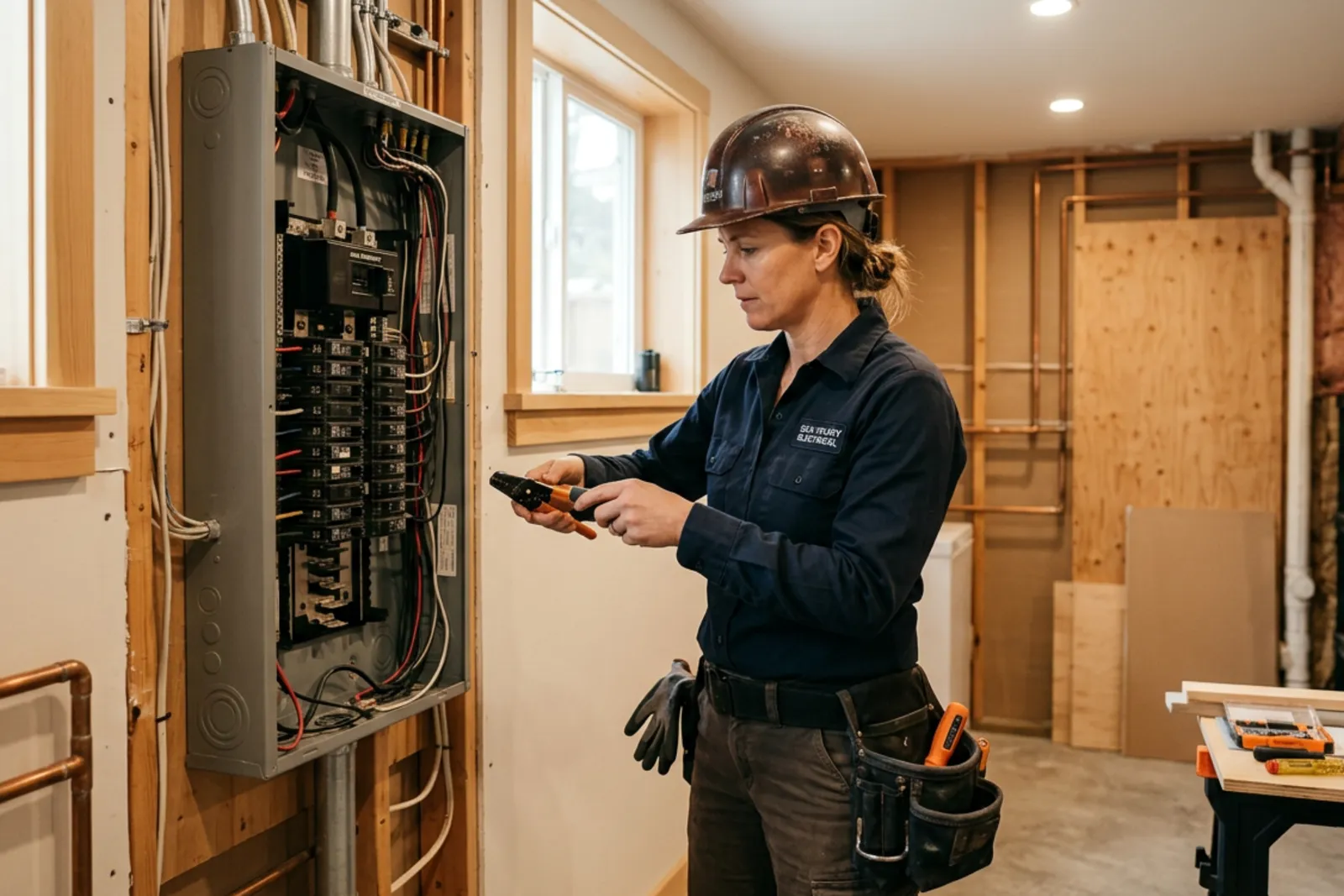
North Shore Electrical Permit Costs Explained for Homeowners
Understand North Shore electrical permit costs, inspections, and local requirements. Plan your project confidently—learn what homeowners need to know.
September 10, 2026
Electrical permit costs are easy to miss when planning a repair or upgrade. A homeowner may focus on the price of a new panel, a Level 2 charger, or rewiring during a renovation, then discover there are separate permit, inspection, and administration charges to consider.
The amount is rarely the largest part of an electrical project. Still, it matters. Permits confirm that regulated work is reviewed against electrical safety requirements, and they can prevent unpleasant issues with insurance claims, home sales, or failed inspections later.
For homeowners in North Vancouver, West Vancouver, and Vancouver, there is no single “Greater Vancouver electrical permit price.” The City of North Vancouver, District of North Vancouver, West Vancouver, City of Vancouver, and Technical Safety BC each have their own roles, processes, and fee schedules. The exact cost depends on the property location, the kind of work involved, its scope, and whether an inspection is required.
Here is how to make sense of it before work begins.
Why electrical permits matter
Electrical work can look deceptively simple. Replacing a fixture may be straightforward. Adding a circuit for a home charging station, upgrading a service, or rewiring a suite is a different category of work altogether. Those projects affect load capacity, grounding, overcurrent protection, fire safety, and the reliability of the whole electrical system.
A permit creates a record that the project was filed properly and, where required, inspected. The goal is a code compliant installation, not paperwork for its own sake.
Permits also matter when a homeowner needs to:
Make an insurance claim after fire, water, or electrical damage
Sell or refinance a property
Document work completed during renovations
Address a complaint or safety order
Verify that a new circuit, panel, or service upgrade was installed correctly
Skipping a permit may seem like a way to save a small amount up front. In reality, it can lead to stop-work orders, re-inspection charges, opening finished walls for verification, or questions from an insurer. That is a frustrating and expensive way to learn the lesson.
For larger jobs, permit costs should be treated as a normal project expense, like materials or labour.
Who administers electrical permits and inspections?
The first source of confusion is jurisdiction. Homeowners often assume the same office handles every permit in every municipality. That is not always true.
In British Columbia, Technical Safety BC regulates electrical safety in much of the province. It oversees electrical licensing, safety rules, registration requirements, and inspection activity in areas under its authority. Depending on the location and project, provincial fees or inspection charges may apply.
Municipalities also have their own building-permit systems. The City of Vancouver has a well-established local permitting and inspection process. On the North Shore, the City of North Vancouver, District of North Vancouver, and West Vancouver each maintain separate municipal processes and fee information for construction, renovation, and related work.
This means a project may involve more than one type of approval or charge. For example, a major renovation may need a municipal building permit while its electrical work is registered and inspected under the applicable electrical safety authority. In other cases, the municipality may collect or coordinate portions of the process.
The practical takeaway is simple: confirm the authority for the property address before assuming what a permit will cost.
A licensed electrician should know which system applies and should explain the expected permit path before work begins. If the answer is vague, ask for clarification. The homeowner deserves to know what is included in the quote.
Permit costs vary by project type
Electrical permits are generally priced according to the size and complexity of the job. A one-room repair does not carry the same administrative burden as a new home or a substantial electrical renovation.
Minor electrical repairs and replacements
Small jobs may include replacing a damaged receptacle, installing a light fixture, repairing a circuit, or changing a switch. The permit treatment for this kind of work depends on the specific task and the authority with jurisdiction.
Where a permit applies, the fee may be a low flat amount. In some situations, a minor repair may fall within a contractor’s broader permit or declaration process rather than requiring a standalone homeowner application.
That does not mean all small work is casual work. A receptacle that overheats, a breaker that trips repeatedly, or a fixture installed in a damp location can point to a safety problem beyond the visible item. Electrical repairs should be assessed by licensed electricians, particularly when there is burning smell, heat, flickering, water exposure, or damaged wiring.
Panel upgrades and service upgrades
Panel upgrades usually involve higher permit costs than minor repairs. The work may include replacing an outdated panel, adding capacity, upgrading service equipment, changing breakers, correcting grounding or bonding, or installing a larger electrical service.
These projects often require more inspection attention because the panel is the control centre of the home’s electrical system. A permit fee may be fixed for the category, based on a schedule, linked to project value, or combined with inspection-related charges.
A service upgrade can also involve coordination with the electrical utility. Utility connection, meter, and service-related work may have its own requirements and charges. Those costs are separate from the electrical contractor’s labour and materials, and they may also be separate from the permit itself.
If you are planning a major appliance purchase, air conditioning, a heat pump, a hot tub, sauna wiring, or an EV charger installation, ask whether the existing panel has enough capacity. The answer may change both the project scope and the permit cost.
Electrical work during renovations
A renovation can start with a modest goal and become a much bigger electrical project once walls are open. Moving a kitchen, adding a bathroom, creating a secondary suite, installing new lighting, or reworking a basement can require new circuits, smoke alarms, GFCI or AFCI protection, ventilation connections, and home rewiring.
For electrical renovations, fees are often higher because the scope is broader. A municipality may use a valuation-based schedule for the wider renovation permit, while electrical work may be registered or charged separately through the applicable electrical authority.
The declared project value can affect fees. Homeowners should be honest and complete when describing the work. Understating the scope to reduce a permit charge is a poor gamble. If the inspector finds unlisted work, the job may be delayed until the permit record is corrected.
New construction and major additions
New homes and substantial additions tend to have the most extensive permit requirements. Electrical work may include complete branch wiring, service equipment, lighting design, heating equipment, smoke and carbon monoxide alarms, exterior circuits, garage wiring, rough-in inspections, and final inspections.
Fees for this category are often based on construction value, an itemized schedule, the number of units, or a combination of methods. The electrical portion may be only one part of a larger building-permit budget, but it should not be ignored when estimating total construction costs.
EV charger installations
A Level 2 charger is one of the most common reasons homeowners now contact a Vancouver electrician. The permit portion of a straightforward home charging installation can be relatively modest compared with the equipment, cable run, and labour. But “straightforward” is doing a lot of work in that sentence.
A charger needs a dedicated circuit and adequate electrical capacity. If the panel is full, the service is undersized, or a load calculation shows the home cannot support the charger as planned, the project may require panel upgrades or service upgrades. That can increase the total cost significantly.
Before choosing a charger or booking installation, have the electrical system assessed. It is better to find capacity issues before buying equipment that may not fit the home’s current infrastructure.
The common ways permit fees are calculated
Permit schedules are not identical, but most use one or more familiar approaches.
A flat-fee model assigns a fixed amount to a defined type of work. This is often easier for homeowners to understand. A dedicated circuit, a small alteration, or a service-related category may have a stated base charge.
A value-based model ties the fee to the declared value of work. It is more common for major renovations, additions, and new construction. Higher-value projects generally require higher fees because they involve more review, administration, or inspections.
Some systems use a per-inspection or per-visit approach. The initial permit may include a standard inspection, while additional site visits are billed separately. This is where a project can become more expensive if the work is not ready when the inspector arrives or if deficiencies require a return trip.
Many fee schedules are hybrids. There may be a base fee, a value-based amount above a certain threshold, and extra charges for special reviews, revisions, after-hours requests, or repeat inspections.
Do not rely on a permit cost quoted by a neighbour two years ago. Fee schedules change, and two homes on adjacent streets may fall under different jurisdictions.
Costs homeowners often overlook
The permit itself is only one line in the budget. Several related charges can catch people off guard.
Re-inspection fees are the most common surprise. An inspection may fail because a required item was missed, access was unavailable, a panel directory was incomplete, a conductor was improperly terminated, or work was covered before it could be inspected. Some corrections are quick. Others require reopening drywall or rescheduling trades.
There can also be application, administrative, online portal, plan review, or processing charges. These vary by municipality and project type.
Work started without the required permit may lead to extra fees or penalties. It can also create scheduling trouble. Inspectors may require parts of the installation to be exposed so they can verify wiring methods and connections that would normally have been inspected before walls and ceilings were closed.
For large projects, utility and development-related costs may enter the picture. A service relocation, meter change, upgraded utility connection, or significant construction application can involve charges outside the electrician’s scope.
This is why a low initial estimate deserves a closer look. It may be accurate, but it may also leave out permit administration, inspection coordination, utility work, or corrective visits.
North Vancouver, West Vancouver, and Vancouver are not interchangeable
The City of North Vancouver and the District of North Vancouver are separate local governments. They have separate websites, permit procedures, and fee schedules. West Vancouver is also separate. A contractor who says they work “on the North Shore” still needs to identify the correct municipality for the specific property.
The City of Vancouver has its own local process as well. A homeowner planning electrical work in Kitsilano, for example, should not use a North Vancouver fee schedule as a budgeting tool. The categories, review process, and collection method may differ.
The differences are not limited to the dollar amount. They can include:
Which office accepts the application
Whether the electrical contractor applies directly
What information is needed before work begins
How inspection requests are booked
Whether a building permit is also required
What happens if plans change after approval
Inspection timing also matters. A renovation electrician may need inspections at rough-in and final stages, and the job must be scheduled around insulation, drywall, cabinetry, and other trades. Missing the right inspection window can slow construction even when the work itself is complete.
How to budget for permit costs before hiring an electrician
The best approach is to treat permits as a defined part of the project rather than an unknown extra. Start by confirming the property’s municipality. “North Vancouver” is not precise enough, since it may mean the City or the District.
Then review the current fee schedule on the relevant municipal website and check Technical Safety BC requirements where applicable. Fee pages can be dry reading, but they are more reliable than broad online estimates.
When requesting quotes for residential electrical services, ask the contractor to separate the major cost categories. You do not need a lengthy accounting spreadsheet, but the quote should make clear whether it includes permit applications, permit fees, inspection coordination, labour, materials, and any allowance for potential changes.
Useful questions include:
Does this project require an electrical permit, a building permit, or both?
Which authority will issue or administer the permit?
Is the permit fee included in the quoted price?
Does the quote include arranging required inspections?
What additional costs might arise if the panel lacks capacity or inspection corrections are needed?
Who is responsible for finalizing the permit after the work is complete?
For a defined job, such as hot tub wiring, sauna electrician work, or a dedicated EV circuit, an experienced contractor can usually provide a reasonably clear estimate. For old homes and major renovations, some uncertainty is normal because hidden conditions may appear after walls are opened.
Choosing the right contractor for permitted work
Permits are one reason to be careful about who performs electrical work. A low price is less meaningful if the contractor is not properly licensed, does not arrange inspections, or leaves the homeowner to sort out unfinished paperwork.
Look for licensed and insured electricians who can explain the scope in plain language. For larger electrical work in Greater Vancouver, it is reasonable to ask about the contractor’s qualifications, licensing status, permit process, and experience with similar projects.
A Master Electrician or FSR Contractor may have specific responsibilities related to permits, declarations, and compliance, depending on the work and jurisdiction. What matters most for the homeowner is that the contractor accepts responsibility for doing the work properly, filing what must be filed, and arranging inspections when needed.
Be wary of anyone who suggests skipping the permit to “keep things simple.” That advice often becomes costly when the project involves a panel, new circuit, home rewiring, bathroom, kitchen, suite, hot tub, sauna, or charger.
A practical final checklist
Electrical permit costs are variable, but the planning process does not need to be confusing. Before approving work, confirm the municipality, identify the permit authority, and ask for permit-related costs in writing.
For a small repair, the fee may be limited. For a Level 2 charger, the permit may be modest unless capacity upgrades are needed. For panel upgrades, major renovations, or new construction, permits and inspections should be built into the overall budget from day one.
The worthwhile goal is not finding the lowest permit cost. It is completing electrical work safely, properly documented, and ready to pass inspection.
Need a licensed electrician?
Free consultations across Greater Vancouver — and 24/7 emergency service.
Get a Free Quote