
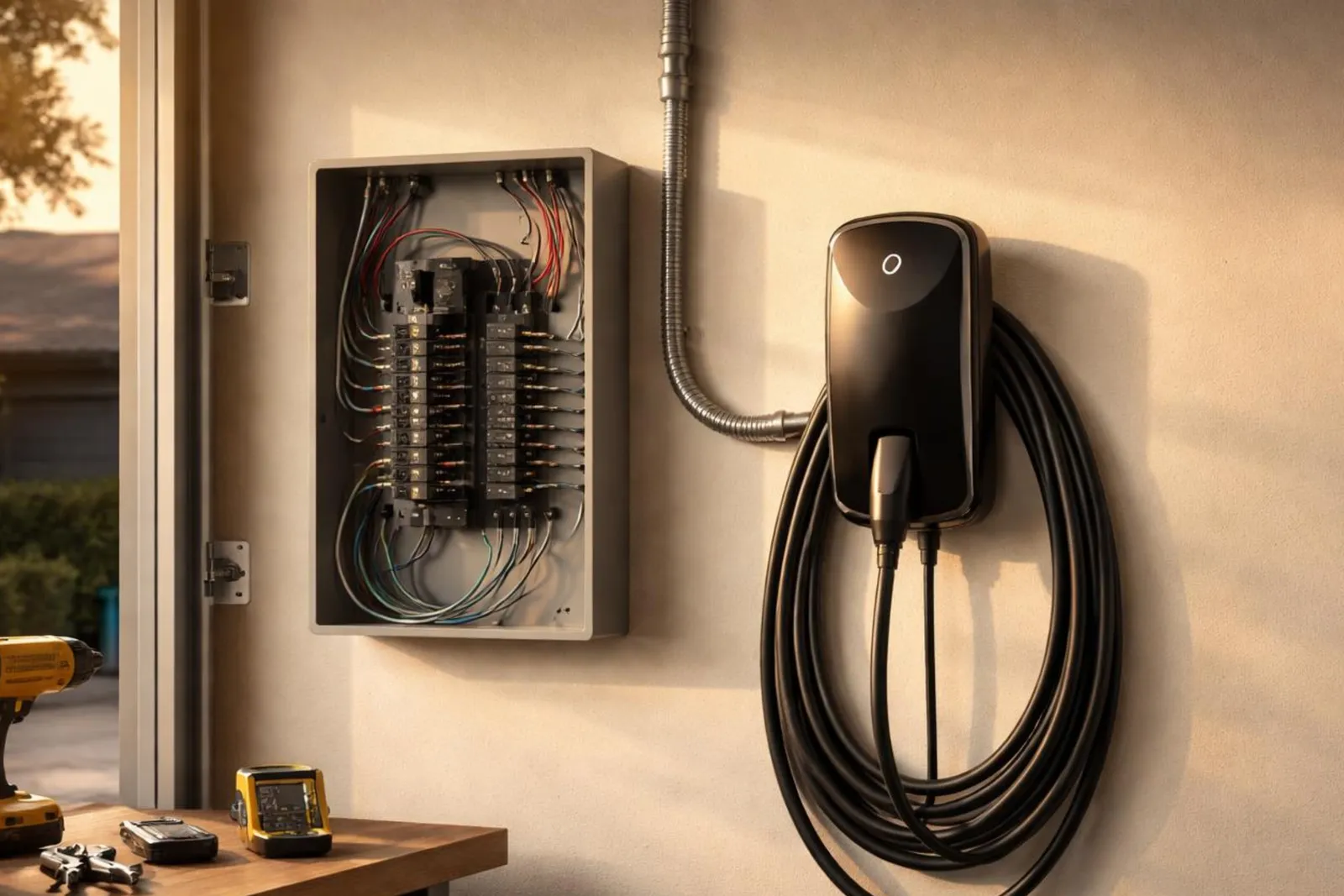
North Vancouver EV Charger Permits: What Homeowners, Contractors, and Strata Councils Need to Know
Learn when North Vancouver EV charger permits are required for home charging and Level 2 installs. Stay code compliant with expert guidance from Eagle Power.
September 2, 2026
If you are planning an EV charger installation in North Vancouver, the permit question comes up fast. Sometimes it comes up after the charger is already mounted on the wall, which is a rough time to discover you skipped a required step.
The short version is simple. If the work involves new wiring, a new circuit, changes to existing wiring, or changes to electrical equipment, an electrical permit is generally required. That comes from provincial safety rules in British Columbia and the City of North Vancouver's permit requirements.
For a lot of people, that feels annoying at first. I get it. A charger can look like one tidy box in a garage, and it is easy to assume the job is minor. But most Level 2 charger projects are not minor from an electrical point of view. They often need a new 240 volt circuit, a new breaker, load calculations, and sometimes panel upgrades or full service upgrades. That is exactly the kind of work permits are meant to catch.
Here is what actually matters, and how to avoid unnecessary delays.
Why EV charger installs usually need an electrical permit
In North Vancouver, electrical permits are required when electrical work is performed. For EV charging, that usually means one or more of these situations:
installing new wiring or a new circuit
rearranging existing wiring or circuitry
installing or rearranging electrical equipment
That list covers most home charging projects.
A plug-in Level 1 charger that uses an existing receptacle may not involve any new work if nothing is being changed. But a proper Level 2 charger installation usually does. Once an electrician is adding a dedicated circuit, modifying your panel, relocating equipment, or increasing service capacity, you are firmly in permit territory.
This is not paperwork for its own sake. EV charging adds a continuous electrical load. That matters because a charger can run for hours at a time. A house that has handled daily life just fine for years can still run short on capacity once you add a charger, especially if the same home also has electric heat, a hot tub, air conditioning, or a recently finished basement.
That is why code-compliant work starts with a real review of the electrical system, not just a product brochure.
Who needs to think about permits
Permits are not only the contractor's problem. Different people need to pay attention for different reasons.
Homeowners
If you own a detached house, duplex unit, or townhouse and want home charging, you should assume a permit may be needed unless a qualified electrician confirms otherwise. If the job creates a new circuit or changes existing wiring, a permit is part of the project.
This matters even if the work seems small. Swapping in a bigger breaker without checking load is not small. Running a new line across the garage ceiling is not small. Adding a receptacle for a future charger is not small either.
Contractors and qualified trades
Licensed electricians doing residential electrical services or commercial electrical services in North Vancouver need to work through the city's permit process when the scope triggers it. That includes charger installs in single-family homes, duplexes, townhouses, and multi-unit strata buildings.
In British Columbia, you will often hear the term FSR Contractor. That certification matters because the city expects electrical work and inspections to be tied to properly authorized contractors. If you are hiring someone, this is one of those moments where checking credentials is not being fussy. It is being sensible.
Strata councils and property managers
Shared garages are where EV charger installation gets complicated fast.
If a strata council or property manager is arranging chargers in common areas or shared parking, permits are still part of the picture when wiring or equipment changes are involved. The city page makes that clear indirectly through its general electrical permit rules, even though it does not spell out every strata scenario.
The municipal materials also do not walk you through strata approval, cost-sharing, billing setup, or EV-ready planning. So if you are in a condo or shared building, do not assume the electrical permit is the only approval you need. It probably is not.
What parts of a charger project tend to trigger permit requirements
A lot of people ask, "What if I'm just adding a charger?" That phrase hides a lot.
Here are the parts of a typical project that often lead to a permit requirement:
A new dedicated circuit
Most Level 2 charger setups need their own circuit. That alone usually means permit-required electrical work.
Changes inside the panel
A new breaker, a breaker relocation, a subpanel addition, or reworking how circuits are arranged all count as electrical modifications.
Panel upgrades
Older homes in North Vancouver are not rare, and older panels can run out of space or capacity. If a charger pushes the system past what it can safely handle, panel upgrades may be needed. Once you get into that scope, the permit process becomes even more important.
Service upgrades
Sometimes the panel itself is not the only issue. The whole service may be too small for the added load. In that case, service upgrades can be required, and the city provides a separate guide for electrical service upgrades to existing buildings.
Equipment relocation or reconfiguration
Moving existing electrical equipment, changing how it is arranged, or reworking related circuitry can still trigger permit rules even if you are not increasing service size.
That is why quick phone quotes can be misleading. A clean-looking charger install may hide a cramped panel, no spare capacity, and a long circuit run back to the service.
The forms and documents that actually matter
North Vancouver's electrical permit page is useful because it pulls the relevant forms and checklists into one place. That sounds boring, but honestly, centralizing forms saves people from a lot of avoidable confusion.
Here are the documents most likely to matter for an EV charger project.
Electrical Permit Application
This is the standard starting point for most charger-related electrical work.
Electrical load calculation forms
These are a big deal. The city provides different load calculation templates for different building types, including:
single family dwellings
duplexes
townhouses and row houses
commercial tenant improvements
That separation is a good sign, because the math is not the same for every building. A single detached home does not get evaluated the same way as a townhouse or a commercial unit.
If your EV charger installation quote does not mention load calculations when the capacity is in question, I would pause there.
Electrical service upgrade guide
If your existing electrical service cannot handle the new charger load, this guide becomes relevant. It helps frame what is needed when the project grows beyond a simple circuit addition.
Electrical Contractor Authorization
This one is easy to overlook, and that is a mistake. The city requires contractor authorization to be completed and submitted for each inspection. That affects scheduling and site compliance. If this document is missing, inspection timing can get messy.
Trade Permit Change of Contractor Application
If a project switches from one electrical contractor to another, there is a formal process for that. Good. There should be. Permit records should match the contractor actually responsible for the work.
Temporary power and event-related forms
The city also has separate forms for film, events, and temporary electrical work. That is not the usual path for home charging, but it matters for temporary installations, construction power, or unusual event setups.
How the permit process usually works
The city's materials point to a fairly straightforward process. In real life, "straightforward" still means paperwork, but at least the steps make sense.
Define the scope of work. Figure out whether the charger needs a new circuit, a panel change, load management equipment, or a service upgrade.
Complete the permit application and gather supporting documents. That can include load calculations, contractor authorization, and drawings if the project calls for them.
Submit the trade permit application to tradepermits@cnv.org.
Book inspections through permitinspections@cnv.org. The contractor authorization needs to accompany inspection requests.
Complete any corrections or follow-up items identified during inspection before final approval.
For general questions, the city also provides phone support at 604-982-9675.
None of this is exotic. It is just process. But process matters when you want work signed off properly.
Why load calculations matter more than people think
If there is one part of this topic people tend to underestimate, it is load calculation.
A charger is not like adding one more lamp. A Level 2 charger can be one of the largest continuous loads in a house. That does not always mean you need a service upgrade, but it does mean someone has to check.
The city provides different forms because the answer depends on the dwelling type and the rest of the electrical demand. Two houses with similar square footage can end up in different situations if one has electric baseboards, a suite, a workshop, and an older service, while the other uses gas heat and has plenty of spare panel capacity.
Load calculations are also where quote transparency gets real. When people compare bids for electrical work in Greater Vancouver, one price sometimes looks suspiciously low because it quietly assumes no permit, no inspection, no calculation, no service issue, and no utility coordination. That is not always a bargain. Sometimes it is just missing scope.
Strata and shared-garage installs need more planning
A charger in a private garage is one thing. A charger in a shared underground parkade is another thing entirely.
The city's page does not give a detailed strata roadmap, and I think it is better to admit that than pretend every condo install follows the same path. In practice, shared-garage projects often involve extra layers such as:
strata approval
common property access
coordination with building management
decisions about who pays for power use
planning for future charger demand, not just one stall
The electrical permit still matters, but it is only one part of the job. If you are a property manager or strata council, it is smart to verify both municipal requirements and strata bylaws before anyone promises timing or pricing.
That is especially true if the work touches common electrical infrastructure. One charger can turn into a bigger building conversation very quickly.
What the city's electrical permit page does not spell out
This is where people get tripped up. The municipal page gives forms, contacts, and the legal basis for permitting, but it does not hand you every answer.
It does not provide a detailed fee schedule for EV charger permits. It also does not lay out inspection fees, exact turnaround times, or a neat step-by-step cost breakdown for every scenario. Those details should be confirmed separately when planning the job.
It also does not give deep guidance on strata EV charging policy, EV-ready building requirements, or local charger incentive strategy. Those may exist elsewhere, but they are not the point of the permit page.
That gap matters because many owners want a clean all-in number before work starts. A realistic quote may need to account for:
permit application fees
inspection-related steps
load calculations
panel upgrades or service upgrades
meter or utility coordination where required
If a project is in a shared garage, there may also be coordination costs that have nothing to do with the charger hardware itself.
How to avoid delays and bad surprises
A few habits make these projects much smoother.
Hire qualified, insured electricians who know North Vancouver permit requirements. Permit rules are not the place to improvise.
Ask early whether the charger will require a new circuit, panel work, or service changes. If yes, talk about the permit right away, not after the installation date is booked.
Use the correct load calculation form for the building type. A detached home, townhouse, and commercial unit do not belong on the same template.
Do not treat inspection paperwork as an afterthought. If contractor authorization is required for each inspection, build that into scheduling.
If your home is already undergoing electrical renovations, home rewiring, or other residential electrical services, coordinate the charger work with the larger scope. Sometimes combining work is cleaner and cheaper than treating the charger like a standalone project.
And if you are in a shared building, get strata questions answered before ordering equipment.
The bottom line
In North Vancouver, EV charger installation is often a permit job because it usually involves real electrical modifications. New circuits, equipment changes, panel upgrades, and service upgrades are exactly the kind of work the permit system is meant to catch.
That is good news, even if it does not feel like it on paperwork day. A permitted inspection process gives you a safer installation, a clearer record of what was done, and a better shot at avoiding overloaded panels, failed inspections, or expensive rework later.
If you are planning home charging, think of the permit as part of the electrical design, not an annoying extra. It belongs in the plan from the start.
Need a licensed electrician?
Free consultations across Greater Vancouver — and 24/7 emergency service.
Get a Free Quote