
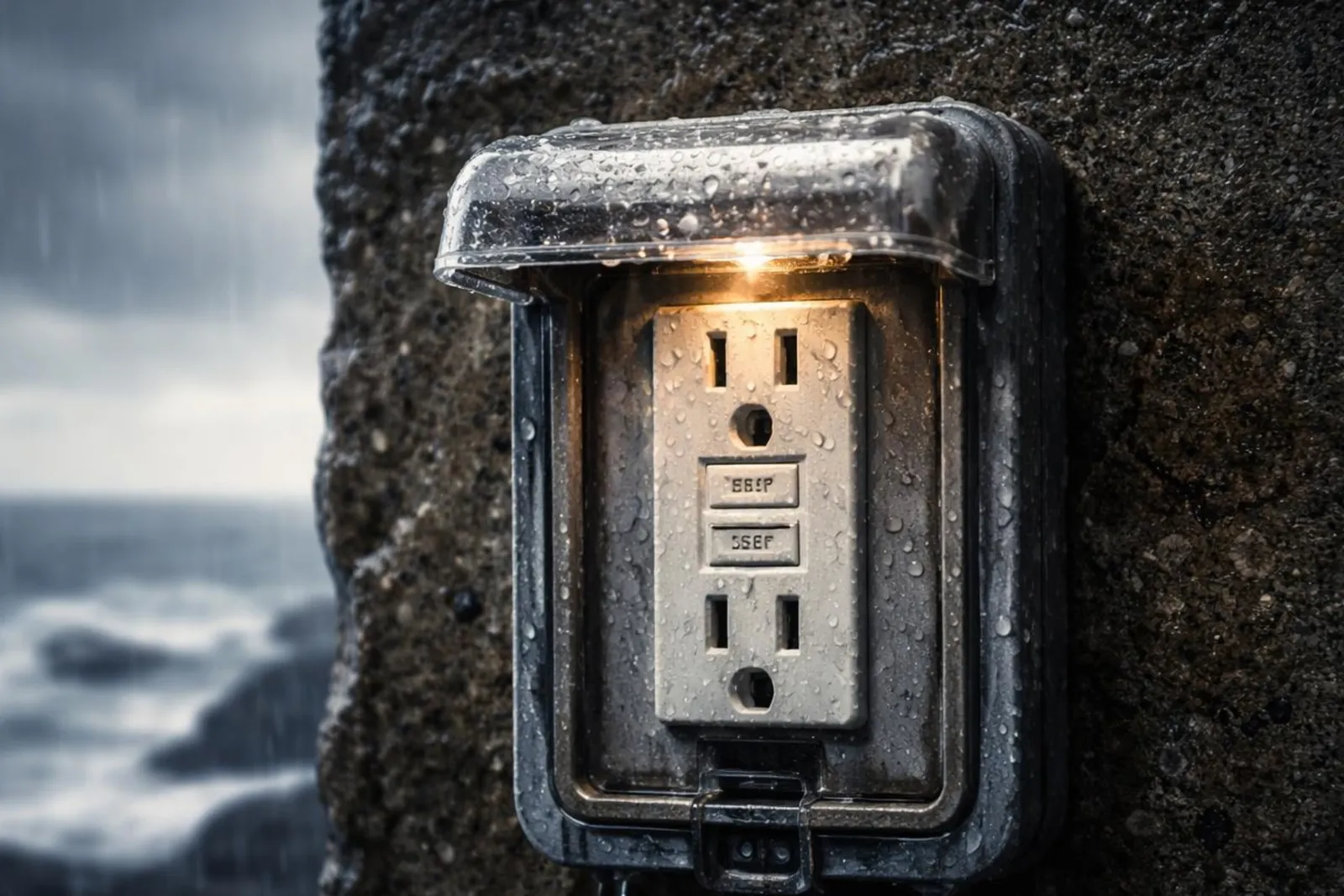
Basic Outdoor Electrical Troubleshooting and Safety in Wet Weather
Learn basic outdoor electrical troubleshooting and wet weather electrical safety. Know safe checks to try and when to call licensed electricians.
September 7, 2026
Outdoor electrical problems have a way of showing up at the worst time. You plug in patio lights, a pressure washer, or holiday decorations, and nothing happens. Or the outlet works for a minute, then trips. In dry weather, that can be annoying. In rainy places, it can be dangerous.
The good news is that there are a few safe, non-invasive checks most homeowners can do. The limits matter, though. Outdoor power problems often involve moisture, corrosion, and damaged weatherproofing. Those are not good conditions for experimenting. If you remember one thing from this article, make it this: basic troubleshooting is fine, but opening enclosures, removing receptacles, or trying to repair outdoor wiring is where you stop and call licensed electricians.
This matters even more in Greater Vancouver, North Vancouver, and other coastal areas where rain, humidity, and long damp seasons put outdoor outlets under steady stress. Deck receptacles, garden circuits, and temporary holiday lighting take a beating.
Why outdoor outlets fail more often than indoor ones
Outdoor electrical devices live a harder life than the ones inside your home. Rain gets driven sideways. Snow melts and seeps into gaps. Humid air lingers. Plastic gets brittle from sun and temperature swings. Metal parts corrode slowly, then all at once it becomes obvious.
Moisture is the main problem. When water gets into a receptacle, fixture, or cord connection, several things can happen. A ground fault interrupter may trip because it senses current going where it should not. Contacts may corrode and stop making a solid connection. In worse cases, electricity arcs across wet or damaged parts and creates heat.
Weatherproof covers help, but they do not last forever. A cracked lid, a missing gasket, or a loose in-use cover can turn a normal rainy week into an electrical fault. I think people often underestimate this because the outlet still looks mostly fine from a few feet away. Up close, you may see mineral staining, rust, or faded plastic that tells a different story.
Temporary outdoor loads add another layer. Extension cords, holiday lights, inflatable decorations, heaters, and yard tools can overload a circuit or put extra strain on an outlet that was already worn.
Start with safety, not troubleshooting
Before checking anything, slow down. Outdoor electrical issues are one of those home problems where caution beats speed every time.
If the outlet, cord, plug, or surrounding area is wet, do not touch it with bare hands. If you need to move through the area, wear rubber-soled shoes. Dry gloves are a good idea if you have them, but dry conditions matter more than the gloves. If there is standing water near the receptacle or device, keep people and pets away until power is isolated.
If you notice a burning smell, buzzing, visible sparking, charring, or melted plastic, skip all troubleshooting. Turn off the circuit at the breaker if you can do that safely, then stop there. That is no longer a simple reset issue.
Also, and this is important, do not remove outlet covers, open junction boxes, or pull a receptacle out of the wall to “have a quick look.” Outdoor electrical repairs often belong in the category of electrical repairs that trained, insured electricians handle for a reason.
A safe step-by-step check you can do
If conditions are dry enough to approach safely, you can work through a short process. Keep it simple.
Unplug everything from the affected outlet or outlets.
Remove extension cords, patio lights, tools, chargers, and anything else connected to that outdoor receptacle. A lot of faults are caused by the load plugged in, not the outlet itself.Inspect cords and plugs without taking anything apart.
Look for cuts, crushed insulation, loose blades, frayed ends, or signs of moisture inside a plug cap. If a cord looks damaged or feels damp where it should not, do not use it. Outdoor-rated cords are safer outdoors, but even they need to be in good shape.Find the GFCI protecting that circuit.
Many people expect the outdoor outlet itself to have “test” and “reset” buttons. Sometimes it does. Sometimes it does not, because an indoor GFCI upstream is protecting it. Check nearby bathrooms, garages, basements, utility rooms, kitchens, and exterior walls near the patio or deck. Homes are not always intuitive here.Reset the GFCI only if the area is dry and the device looks intact.
Press the reset button firmly. If it clicks and stays in, try the outlet with a known-good device, something simple like a lamp or charger that you trust. If the GFCI will not reset, or it trips right away, stop. Repeatedly pressing reset is not troubleshooting, it is just gambling.Check the main electrical panel for a tripped breaker.
A tripped breaker may sit in the middle position or look slightly off compared with the others. To reset it, switch it fully to off first, then back to on. If it trips again immediately, or trips again when you reconnect even one device, leave it off and call for help.Treat GFCI and AFCI breakers the same way.
Some panels use breakers with built-in protection rather than receptacle-style buttons. If a breaker labeled GFCI or Arc Fault trips repeatedly, do not keep resetting it. Repeated tripping usually means the protection is doing its job.Do a visual inspection of the outlet and cover from the outside only.
Look for cracks, missing seals, rust, greenish corrosion, discolored plastic, or water trapped behind a clear bubble cover. Do not take the cover apart. You are just checking what is visible.
That is the safe scope for a homeowner. Past this point, the problem may involve internal corrosion, loose terminations, failed weather seals, or damaged wiring. Those are not DIY checks.
What a GFCI is telling you
GFCIs trip when they detect an imbalance in current. In plain language, they sense that electricity may be leaking somewhere it should not. Outdoors, that often means moisture, damaged cords, or a fault inside a plugged-in device.
This is why a nuisance-looking trip should still get your attention. It may not mean there is dramatic damage, but it does mean something is different enough for the protection device to react.
If the reset works and the outlet powers one small known-good device normally, that suggests the problem may have been a wet or faulty load you unplugged earlier. If the GFCI trips again with nothing plugged in, the outlet or the wiring feeding it needs professional evaluation.
What visible moisture and corrosion really mean
People sometimes see a little rust or staining and assume it is cosmetic. Outdoors, it often is not.
Corrosion on the face of a receptacle, around mounting screws, or inside a clear cover usually means water has been getting where it should not. Mineral deposits can show repeated moisture intrusion. Brittle plastic can mean years of weather exposure. A missing cover or a cover that no longer seals tightly is basically an open invitation to rain.
Here are a few signs that should make you stop using the outlet:
Cracked or missing weatherproof cover
Rust, white mineral buildup, or green corrosion
Discoloration, scorching, or melted plastic
Standing water near the device
Exposed metal or conductors
A GFCI device that is wet, loose, or physically damaged
At that point, the next step is not another reset. It is a proper inspection by a Vancouver electrician or other qualified professional familiar with wet-climate outdoor work.
When to stop and call a licensed electrician
There is a line between checking and repairing. Once you cross into repair territory, the risk jumps.
Call licensed electricians if any of the following happens:
The GFCI or breaker will not reset
The breaker resets, then trips again right away
The outlet works briefly, then trips under load
You see signs of burning, arcing, charring, or melting
The receptacle, cover, or box looks cracked, loose, or corroded
Moisture appears to be inside the device or enclosure
The issue involves the panel, meter base, or wiring inside a box
You are not sure whether it is safe to continue
That last one matters more than people admit. Uncertainty is enough reason to stop.
In some cases, especially if sparking, smoke, or heat is involved, this moves from routine troubleshooting to something closer to emergency electrical service. A repeatedly tripping outdoor circuit in heavy rain is not automatically an emergency, but visible damage or signs of overheating can get there fast.
What to do while you wait for service
If you have decided the outlet is unsafe, there are a few sensible interim steps.
Turn off the breaker to the affected circuit if you can identify it confidently and reach the panel safely. Leave the outlet unused. Keep the area dry as best you can, and do not plug damaged cords or fixtures into another outlet “just to test them.” Faulty cords can trip good outlets too.
If you need temporary power outdoors, use a properly protected indoor source only in a way that keeps cords dry, supported, and away from foot traffic. Be careful here. Temporary setups have a habit of becoming semi-permanent, and that is where trouble starts.
I would avoid treating extension cords as a workaround for a failed outdoor receptacle. It sounds practical, but it often creates a second problem while you are still dealing with the first one.
Prevention matters more in rainy climates
If you live in Greater Vancouver or another wet coastal area, outdoor outlet maintenance is not optional. It is basic home upkeep.
A few things make a big difference. First, make sure every outdoor receptacle has a proper weatherproof cover, and that it still seals. For outlets that stay in use while something is plugged in, an in-use bubble cover is usually the right choice. A flat flip cover helps when nothing is connected, but it does not protect an active plug and cord nearly as well.
Second, replace cracked or corroded receptacles promptly. Waiting until they fail usually means moisture has already had time to work deeper into the assembly. That can lead to a bigger repair.
Third, use outdoor-rated cords, plugs, and fixtures. Indoor-rated strings of lights or adapters do not belong outside for weeks at a time, even if the weather looks calm. Deck outlets and low-mounted receptacles see splashback, damp leaves, and condensation. They need equipment meant for that environment.
Fourth, test GFCIs regularly. Monthly is a common suggestion, and I think that is reasonable, especially for older homes or outlets that see regular use. Press test, confirm power shuts off, then press reset. If the device behaves oddly, or does not restore power properly, stop using it and arrange service.
Finally, consider a professional check if your outdoor electrical setup is older, frequently exposed to wind-driven rain, or already showing signs of wear. That is true whether the property is residential or part of a small commercial electrical services setup. Moisture does not care what the building is used for.
A note on older homes and upgraded outdoor loads
Outdoor electrical systems are doing more now than they used to. Years ago, an exterior outlet might have powered a simple lamp or hedge trimmer. Now it might support landscape lighting, security equipment, seasonal displays, or chargers and controls tied to newer home systems.
If an outdoor circuit trips often, the issue may not be just one bad receptacle. It may be an aging circuit, weak protection, or a setup that no longer matches how the space is used. Sometimes the long-term fix involves service upgrades, panel upgrades, or broader maintenance, especially in homes that have had additions, electrical renovations, or older home rewiring. That is not something to guess at from the outlet face.
The same caution applies near outdoor spas, saunas, and similar installations. If the affected circuit is anywhere near hot tub wiring, sauna wiring, or related equipment, leave it alone and get a qualified electrician involved. Water and electricity is already a bad mix. Specialty outdoor equipment raises the stakes.
The bottom line
Basic outdoor electrical troubleshooting should stay basic. Unplug devices. Check visible cords. Reset a dry, intact GFCI once. Reset a tripped breaker once, correctly. Look for external signs of moisture or damage. Then stop if the problem is not clearly resolved.
That approach is not timid. It is smart.
Outdoor faults often come down to moisture intrusion, failed weatherproofing, or corrosion that you cannot safely assess from the outside. In wet places like Greater Vancouver, those issues are common enough that they should be taken seriously the first time, not the third or fourth trip.
If you see damage, smell burning, find standing water, or get repeated trips, the safest move is to leave the circuit off and have licensed electricians inspect it. Good outdoor electrical work should be code compliant, weather resistant, and boring in the best way. You should not have to wonder whether an outlet is safe every time it rains.
Need a licensed electrician?
Free consultations across Greater Vancouver — and 24/7 emergency service.
Get a Free Quote