
Understanding Vancouver Panel Upgrade Quotes: What You’re Paying For
Compare Vancouver panel upgrade quotes with confidence. Learn what panel replacements, service changes, permits, and EV charging work include before you choose.
October 23, 2026
Two quotes for an electrical panel upgrade can look surprisingly different. One might be around $5,000, while another approaches $11,000. Before assuming the higher estimate is overpriced, check whether the contractors are quoting the same work.
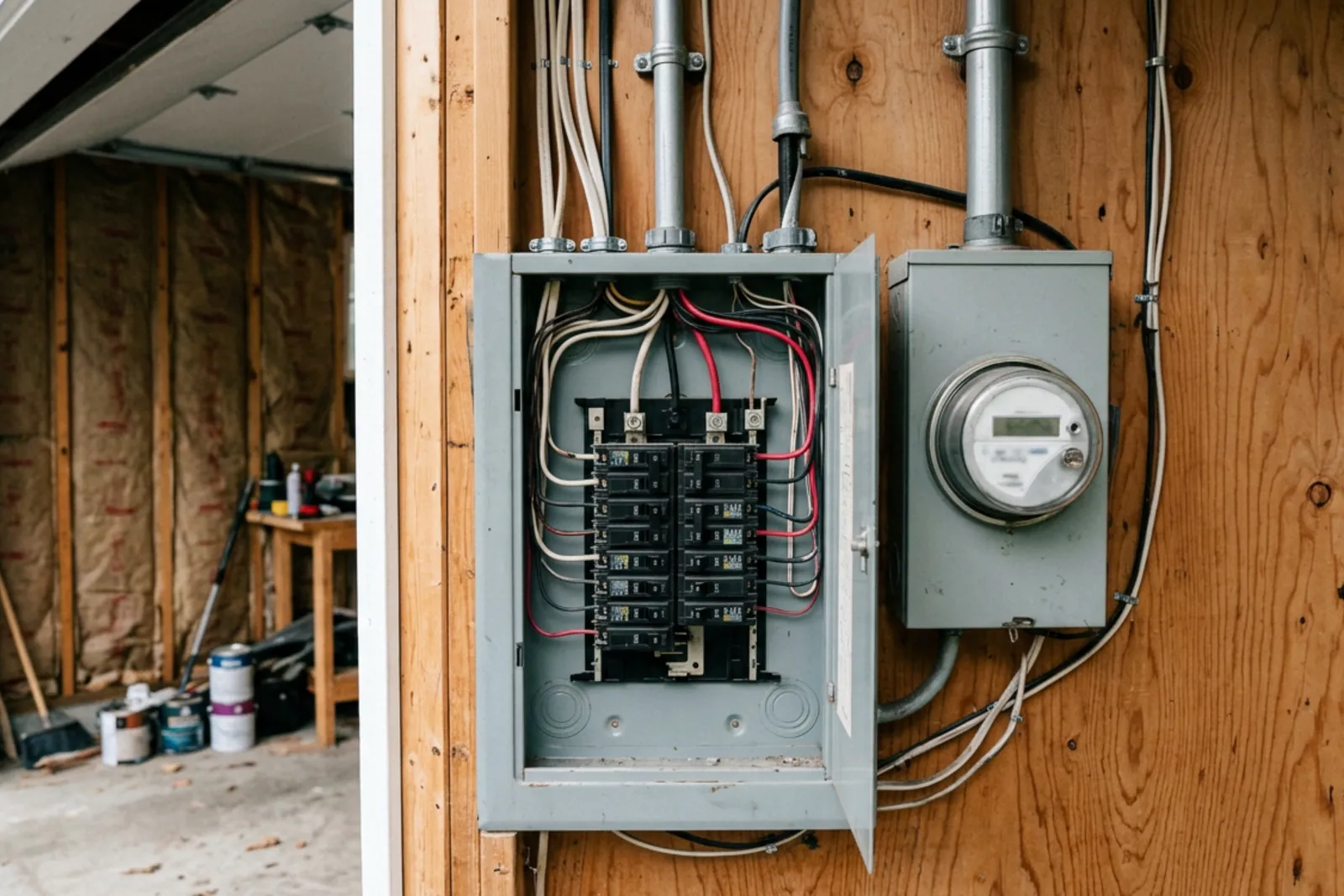
Replacing a distribution panel is different from upgrading an entire electrical service. The panel is one part of the system, and a larger panel does not automatically give your home more usable power.
For homeowners in Vancouver and Greater Vancouver, understanding that distinction makes estimates easier to compare. It also helps you plan for EV charging, a heat pump, or electrical renovations without paying for unnecessary work or overlooking required improvements.
Start With Planning Ranges, Not Fixed Prices
Electrical costs depend on the property, the condition of existing equipment, and the work needed for approval. Still, approximate ranges are useful when setting an initial budget.
Type of workApproximate planning rangeLicensed electrician’s hourly rate$100 to $130Service call with attendance and initial diagnosis$160 to $260200A panel replacement or upgrade with limited service work$4,200 to $6,000Complete 100A-to-200A service change$9,000 to $12,000EV charger installation$1,600 to $2,900
These figures are starting points, not guaranteed prices. Confirm whether an estimate includes equipment, permits, utility-related charges, and taxes. For EV charger installation, also ask whether the charger itself is included.
A service-call charge may cover attendance and initial troubleshooting rather than completed electrical repairs. Ask what happens after the initial diagnosis and how further labor is billed.
Fixed-price projects require a different comparison. Multiplying an hourly rate by an assumed number of hours rarely captures the full cost of service upgrades. Equipment, inspections, coordination, and site conditions all affect the total.
An on-site assessment is generally needed for a reliable quote. Photos can help a contractor prepare, but they may not reveal concealed wiring, access problems, or the condition of the incoming service.
A New Panel Does Not Necessarily Mean More Power
The electrical panel distributes power to the home’s circuits. The electrical service includes the equipment and conductors that bring power into the property.
That difference matters when a quote says “200A panel upgrade.”
A panel rated for 200 amps can sometimes be installed while the home remains on a 100-amp service, provided the installation is designed and approved appropriately. The panel’s rating describes its capacity; it does not override the limits of the upstream service equipment or main protection.
Ask the contractor to identify both the proposed panel rating and the service capacity you will have when the work is finished.
What a Panel-Only Project May Include
A panel-only replacement may be appropriate when the existing service has sufficient capacity and its components remain suitable and code compliant.
The work might include replacing the enclosure and breakers, reconnecting existing circuits, correcting problems within the quoted scope, and labeling the circuits. The meter equipment, service conductors, and utility connection may remain.
This can be a practical option when the panel needs replacement but the home does not need a larger service. Even so, “panel only” should not mean “no assessment.” The contractor still needs to check compatibility, equipment condition, and applicable requirements.
What a Full Service Change May Include
A complete 100A-to-200A service change is broader. Depending on the property, it may require a new meter base, larger service conductors, work on an overhead service mast, and grounding or bonding improvements.
There is also coordination with the utility for disconnection and reconnection, along with permits and inspections. Underground services can involve different access requirements and, in some cases, excavation.
Older homes may need corrective work before the installation can be approved. That does not mean every older house requires rewiring. It means the estimate should explain which existing components can stay and which must change.
What Makes One Home More Expensive Than Another?
Two homes with the same service rating can have very different upgrade costs. The differences often become clear only when someone examines the equipment and traces the likely wiring routes.
Existing Wiring and Electrical Deficiencies
Some older Vancouver homes still have active knob-and-tube wiring. Insurance acceptance varies, and many insurers restrict coverage or require replacement. Homeowners should confirm their own insurer’s requirements rather than assume one rule applies everywhere.
A panel replacement does not remove knob-and-tube wiring elsewhere in the house. If obsolete or unsafe wiring is found, it may require separate corrective work or home rewiring.
Other problems can also affect the scope, including damaged conductors, unsuitable connections, or changes made during earlier renovations. Ask how the contractor will document discoveries and obtain approval before additional work proceeds.
The useful distinction is between known deficiencies included in the price and concealed conditions that cannot reasonably be confirmed before work begins.
Distance and Access
For new circuits, the route between the panel and the equipment can matter more than the equipment’s purchase price.
An EV charger beside a panel in an unfinished garage is usually easier to wire than one at a detached parking area across a finished basement. Longer routes require more material. Finished walls and ceilings can add substantial labor.
The contractor may need to fish wiring through enclosed spaces or make access openings. Exterior routing may be possible, but suitability depends on the building and installation requirements.
Ask who handles patching, painting, and exterior repairs. Electrical work can be complete while the surrounding finishes still need attention.
Available Electrical Capacity
Empty breaker spaces do not prove that a home has enough capacity for another major load. Conversely, a full panel does not always mean the entire service must be enlarged.
The decision should include a load calculation or another accepted assessment method. An EV charger, heat pump, electric cooking equipment, hot tub wiring, or sauna wiring can change the home’s demand.
Equipment selection matters too. A charger configured at a lower current draws less power than one set for a higher output. Some homes may be suitable for approved load management rather than a full service upgrade.
Ask for the reasoning behind the recommendation. “You need 200 amps” should be supported by the home’s existing loads and planned additions.
Permits, Inspections, and Utility Coordination
Most electrical work beyond straightforward fixture replacement requires a permit, although the exact requirements and exemptions depend on the work and jurisdiction.
In Greater Vancouver, the applicable authority may be a municipality or Technical Safety BC. A project in Vancouver may follow a different administrative process from one in North Vancouver or another nearby community.
The quote should identify who obtains the permit, whether the fees are included, and who arranges the required inspections. It should also clarify responsibility for corrections requested by the inspector.
Utility coordination deserves its own explanation. A service change may involve a scheduled outage, and reconnection can depend on required approvals. Ask how long the contractor expects the power to be off and what circumstances could delay restoration.
Unpermitted work can create complications during insurance reviews, future renovations, or a sale. Keeping permit and inspection records with your home documents is a simple precaution.
Why EV Charger Installation Quotes Vary
The same Level 2 charger can cost much more to install at one home than another. The difference usually comes from the electrical infrastructure around it.
The installation may need a dedicated circuit, a long cable route, load-management equipment, or a service upgrade. An attached garage and a detached parking space present different access problems.
Before requesting a quote, think about how you actually use the vehicle. Daily driving distance and overnight parking time can help determine a sensible charging rate. The highest available output is not automatically necessary for effective home charging.
For example, a homeowner who drives modest distances and parks overnight may have different needs from someone who returns late and leaves early after a long commute. The electrician can explain suitable options without assuming maximum charging power is essential.
Eligible provincial utility programs may provide an EV charger rebate of up to $350 for some installations. Programs, amounts, and eligibility can change. Confirm the current requirements directly with the administering utility before relying on a rebate, including equipment eligibility and any application deadlines.
When Is a 200A Service Upgrade Worth Considering?
A 200A service upgrade is worth evaluating when you plan to add substantial electrical loads, especially as part of a larger renovation.
A heat pump, EV charger, secondary suite, or combination of new electric appliances can justify looking beyond the immediate project. Completing suitable service work once may cost less than repeatedly modifying the system as each new load arrives.
But a 200A upgrade is not automatically urgent for every home with a 100A service.
If the existing service is safe and adequate for your needs, replacing it solely because 200 amps sounds more modern may not be worthwhile. A panel replacement, different equipment choice, or approved load-management system may address the actual issue.
Give the electrician a realistic picture of your plans. There is a difference between adding an EV charger next month and vaguely considering several appliances someday. Good planning allows room for likely changes without treating every possibility as a requirement.
Compare Written Estimates Line by Line
The most useful quote comparison starts with scope, not price. Ask each contractor to describe the finished installation in plain language.
Use this checklist when reviewing estimates:
Confirm whether the price covers a panel replacement or a complete service change, and identify the final service capacity.
Check whether mast work, meter equipment, service conductors, grounding, and bonding are included where required.
Identify responsibility for utility coordination, permits, inspections, and inspection-related corrections.
Confirm which known wiring deficiencies are included and how concealed problems will be priced.
Check whether access openings, wall repairs, painting, excavation, and exterior restoration are included or excluded.
Review equipment specifications, taxes, payment terms, and the process for approving changes.
Verify the contractor’s electrical licensing, insurance, and any claimed bonding, and ask who is responsible for supervising the work.
In British Columbia, contractor licensing and Field Safety Representative responsibilities are more useful checks than relying on a marketing title alone. A title such as “Master Electrician” does not, by itself, explain who holds the required authorization for your project.
For uncertain work, request a clearly stated allowance or pricing method. A vague phrase such as “extras may apply” gives you little help with budgeting.
The Lowest Quote May Leave the Most Unanswered Questions
Imagine two hypothetical estimates: $5,200 and $10,400.
The first replaces the panel while keeping the existing service capacity. The second increases the service to 200 amps and includes meter equipment, conductors, grounding work, and utility coordination.
Those are different projects. Comparing only the totals would be misleading.
Even when the basic scope matches, one estimate may exclude permits or repairs that another includes. Ask contractors to clarify those differences before making a decision.
A dependable quote explains what will change, what will remain, and what could affect the final cost. For Vancouver panel upgrades, that clarity is more valuable than a low number with uncertain boundaries. Start with a site assessment, establish the capacity your home needs, and compare written scopes that describe the same finished result.
Need a licensed electrician?
Free consultations across Greater Vancouver — and 24/7 emergency service.
Get a Free Quote