
Warm Outlets: Warning Signs, Possible Causes, and When to Act
Is your electrical outlet warm? Learn which warning signs need urgent action, what may cause overheating, and when to call an electrician. Read our safety guide.
November 20, 2026
A warm electrical outlet can leave you wondering whether something is wrong or whether the appliance is simply working hard. Some plugs and power adapters produce mild warmth during normal use, especially when equipment draws substantial current. But persistent heat, a change in temperature, or warmth at the receptacle itself deserves attention.
The important distinction is between mild warmth without other symptoms and heat accompanied by evidence of damage or electrical failure. A burning smell, discoloration, buzzing, or sparking makes the situation more urgent.
You do not need to identify the exact cause before taking sensible precautions. Knowing when to stop using an outlet, when to seek emergency electrical service, and what to leave to a professional can help prevent a small electrical problem from becoming a dangerous one.
Is a Warm Outlet Ever Normal?
Electricity encounters resistance as it moves through conductors and connections. That resistance produces heat. In properly designed, installed, and functioning equipment, heat should remain within safe limits.
A charger’s power adapter may feel mildly warm while converting electricity for a device. A plug supplying a high-demand appliance may also develop some warmth. However, neither observation proves that the outlet, plug, or appliance is safe.
Pay attention to changes. An outlet that has always stayed cool but now becomes noticeably warm needs a closer look. So does warmth that persists, returns whenever a particular appliance runs, or appears to spread into the faceplate.
There is no reliable household “touch test” that can confirm electrical safety. Do not keep touching an outlet or plug to see how hot it gets, and do not leave equipment running as an experiment.
If you notice mild warmth without any other warning signs, stop using the connected equipment while you assess the situation. If the warmth is unusual, persistent, or unexplained, have the outlet and equipment checked by a qualified electrician.
Warning Signs That Increase the Urgency
Temperature is only part of the picture. The condition of the outlet, the way it holds a plug, and any changes in sound or smell can reveal a developing problem.
Stop using the outlet if you notice any of these signs:
Heat that makes the outlet, plug, or connected equipment hot to the touch
A burning, smoky, or unusual chemical odor
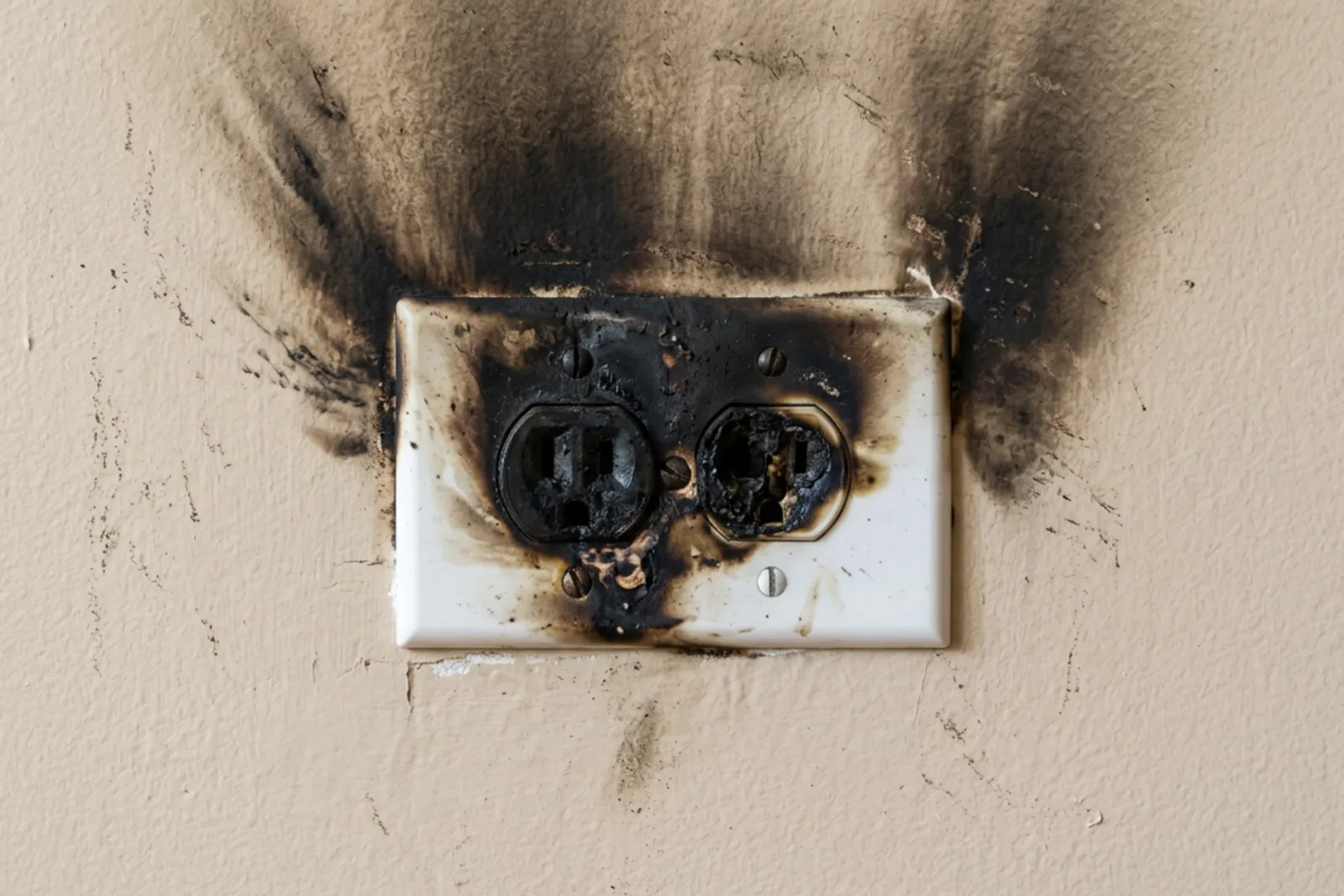
Brown or black discoloration, scorch marks, warping, or melted plastic
Buzzing, crackling, popping, or repeated sparking
A plug that fits loosely, falls out, or loses power when it moves
A cracked or damaged receptacle, loose faceplate, or intermittent power
These signs do not all indicate the same fault, but each deserves attention. A loose faceplate may be a straightforward mechanical problem. A receptacle that cannot hold a plug firmly may have worn internal contacts that create excessive resistance and heat.
A brief spark can sometimes occur when connecting equipment that is switched on. That does not make repeated sparking, large sparks, or sparking accompanied by noise or damage acceptable. Do not keep reconnecting a device to reproduce the symptom.
The combination matters. Mild warmth with no other symptoms calls for caution and assessment. Heat with a burning smell, melting, or crackling calls for urgent action.
What to Do When an Outlet Is Hot
The safest response depends on what you can do without approaching or handling damaged equipment. There is no benefit in risking a burn or shock to unplug something.
If there is smoke, fire, or active danger
Leave the affected area and contact emergency services. Alert others and follow the dispatcher’s instructions. Do not use water on an electrical fire, and do not delay leaving to reach the electrical panel.
Smoke coming from a wall or outlet may indicate a hidden fire. Even if you cannot see flames, treat it seriously.
If there is heat, odor, or damage but no visible fire
Stop using the outlet. Keep people and pets away, and do not touch a hot plug, receptacle, or damaged faceplate.
If you can safely reach the electrical panel, it is dry and undamaged, and you can identify the affected circuit, switch that circuit off. Do not approach a panel that is hot, smoking, buzzing unusually, or visibly damaged.
Arrange urgent help from a qualified electrical contractor. Describe the symptoms clearly, including whether there was a burning smell, visible melting, sparking, or a tripped breaker.
Do not restore power simply because the outlet has cooled. Cooling removes a symptom, not necessarily the fault.
If there is only mild warmth
Turn off the connected equipment. If the plug and receptacle are cool enough to handle safely and show no odor, damage, or sparking, disconnect the equipment by holding the plug body rather than pulling the cord.
When uncertain, leave it alone and seek professional guidance. Avoid trying the same appliance in several outlets to see whether the problem follows it. That can expose another connection to a faulty device.
Why Outlets Overheat
Several problems can produce similar symptoms. The visible receptacle may be responsible, but the fault can also be in the plug, appliance, wiring, or another connection on the circuit.
Loose or worn connections
A loose connection can create localized resistance. As current passes through that point, it generates heat. The result may be an overheated terminal behind the outlet or damaged contacts inside the receptacle.
This helps explain why a breaker does not always trip when an outlet overheats. A poor connection can become dangerously hot while the circuit’s total current remains below the breaker’s rating.
A breaker that stays on is not proof that everything is safe.
Damaged receptacles or wiring
Age, repeated use, physical damage, and improper installation can affect an outlet’s condition. Wiring insulation may also be damaged behind the wall or inside an electrical box.
Past electrical renovations can be relevant. An outlet added during a remodel may have an unsuitable connection or another installation defect that was not obvious when the work was finished. Problems can emerge later as equipment use changes or connections deteriorate.
Excessive electrical demand
Portable heaters, cooking appliances, and other high-demand equipment can place substantial loads on household circuits. Several devices operating together may exceed what the circuit or a particular connection can safely support.
Adding a power bar creates more places to plug things in. It does not increase the circuit’s capacity.
Extension cords, adapters, and power bars can also introduce weak points, particularly when damaged, poorly matched to the load, or used contrary to equipment instructions.
A faulty appliance, cord, or plug
Sometimes the connected equipment is the source of the heat. A damaged cord, failing appliance, or deteriorated plug can overheat even when the building’s wiring is otherwise sound.
The outlet and the equipment may both need inspection. Replacing the receptacle without checking a damaged plug can leave the underlying problem unresolved.
What a Professional Assessment May Include
A useful electrical assessment goes beyond looking at the faceplate. Depending on the symptoms and the installation, an electrician may inspect the receptacle, its connections, accessible wiring, grounding, circuit demand, and protective devices.
They may also investigate other outlets or connections on the same circuit. In some wiring arrangements, a connection at one receptacle supplies equipment farther along the circuit. Trouble at that connection can cause intermittent power elsewhere.
Tell the electrician what was running when you noticed the problem, whether any breakers tripped, and whether the symptoms occur with one appliance or several. Mention recent renovations, electrical repairs, or changes in equipment use. Those details can narrow the investigation without requiring you to perform tests yourself.
The appropriate repair may be a replacement receptacle, a corrected connection, wiring repair, or work on the connected equipment. In other cases, the circuit’s capacity or arrangement needs attention.
Panel upgrades and home rewiring are not automatic answers to one warm outlet. The scope should follow the findings. Licensed electricians should explain what failed, why the proposed repair addresses it, and whether permits or inspection are required.
GFCI Protection and Grounding: Related Safety Concerns
An outlet inspection may uncover missing or malfunctioning ground-fault circuit interrupter protection, commonly called GFCI protection.
A GFCI detects certain imbalances between outgoing and returning current and disconnects power to reduce shock risk. This protection is particularly relevant where moisture may be present, including bathrooms, kitchens, garages, and outdoor areas. Exact requirements depend on the location, installation, and applicable electrical code.
GFCI protection does not replace proper wiring, grounding, or overcurrent protection. An outlet can have GFCI protection and still develop a loose connection or overheating problem.
Likewise, a three-slot receptacle does not, by appearance alone, prove that an effective equipment grounding connection exists.
Follow the manufacturer’s instructions for routine GFCI testing. If a device will not test or reset as instructed, or repeatedly trips, stop using the affected outlet and arrange an assessment. Do not repeatedly reset it to keep equipment running. A qualified electrician can determine whether the cause is the protective device, connected equipment, moisture, or wiring.
Everyday Habits That Reduce Outlet Problems
You cannot prevent every electrical fault, but ordinary maintenance can help you catch problems earlier.
Notice how plugs fit during normal use. A plug should stay securely seated without improvised supports. Stop using receptacles that are cracked, loose, discolored, or unable to hold a plug properly.
Follow appliance instructions about direct wall connections and extension cords. High-demand equipment often has specific requirements. Avoid plugging power bars into other power bars or treating extension cords as permanent wiring.
Keep cords out from under rugs and away from places where furniture can crush them. Make sure plugs are fully inserted, and do not force furniture against them.
For equipment that operates for long periods or draws substantial current, plan the electrical supply before installation. EV home charging, hot tub wiring, and sauna wiring need an assessment suited to the equipment and installation. A convenient nearby outlet is not evidence that a circuit is suitable.
In Greater Vancouver, homeowners and businesses should use appropriately licensed electrical contractors for electrical work and confirm applicable permit and inspection requirements. Choosing insured electricians is sensible, too, but credentials do not replace a clear explanation of the work being proposed.
Take the Symptom Seriously, Without Guessing at the Cause
A warm outlet does not always mean a fire is imminent. It also does not give you enough information to declare the connection safe.
Mild, unexplained warmth warrants stopping and assessing the situation. Persistent heat, loose plugs, and intermittent power need professional attention. Burning odors, scorching, melting, or sparking raise the urgency. Smoke or fire calls for emergency services.
The most useful response is straightforward: stop using the affected outlet, avoid touching hot or damaged equipment, and have the cause checked before returning it to service. You do not need to take off a faceplate or test a live connection to make a safe decision.
Need a licensed electrician?
Free consultations across Greater Vancouver — and 24/7 emergency service.
Get a Free Quote