
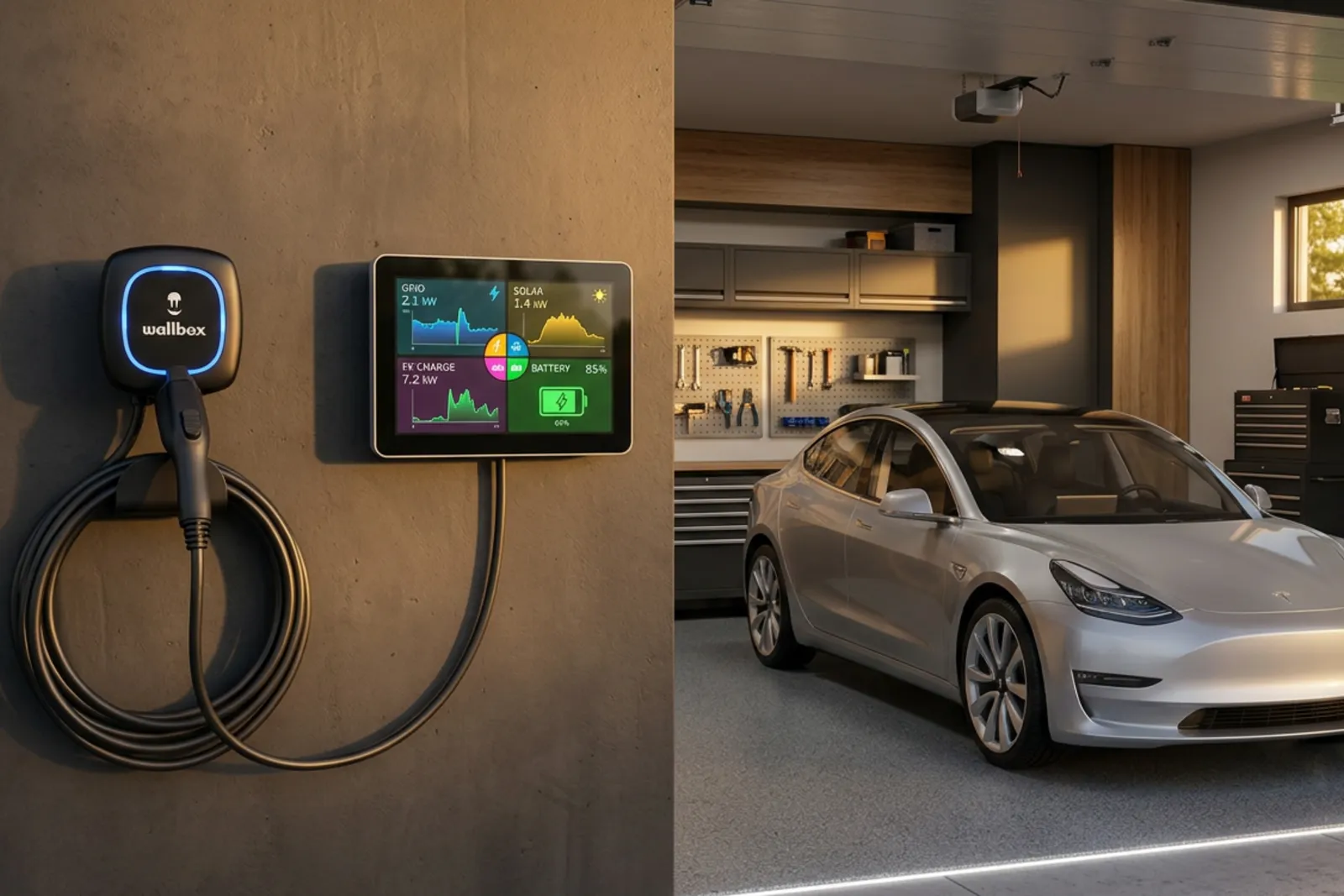
When EVEMS Can Solve Electrical Capacity Issues for EV Charging
Learn when an EVEMS can manage EV charging loads, avoid costly upgrades, and support code-compliant installations. Explore your options today.
September 11, 2026
Adding electric vehicle charging to a home or multi-unit building often raises one uncomfortable question: does the electrical system actually have room for it?
Sometimes the answer is straightforward. A load calculation confirms there is enough capacity, a new circuit is installed, and the project moves ahead. Other times, the existing service, feeder, or panel is already close to its calculated limit. A full electrical service upgrade may be the right answer, but it can be expensive and disruptive, particularly in apartment buildings, condos, and strata properties.
An electric vehicle energy management system, or EVEMS, can help in certain situations. It manages EV charging loads so the electrical system does not exceed safe operating limits. That does not mean an EVEMS is a shortcut around electrical code, permits, or sound engineering. In British Columbia, its use comes with specific load calculation, approval, commissioning, and documentation requirements.
Here is what property owners, strata councils, and project planners need to know before relying on an EVEMS for an EV charger installation.
What is the difference between EVSE and EVEMS?
The terms are easy to mix up, but they describe different parts of an EV charging setup.
EVSE means electric vehicle supply equipment. In plain language, it is the charging equipment that transfers electricity between a building’s electrical system and the vehicle. It includes items such as the charging unit, cable, connector, controls, and related equipment.
A Level 2 charger installed at home is usually EVSE. It may be wall-mounted and hard-wired, or it may connect through a receptacle where permitted.
EVEMS means electric vehicle energy management system. This is the equipment and control method used to manage EVSE loads. Depending on the system, it may use current transformers, communications hardware, controllers, timers, relays, and software. Its job is to reduce, share, vary, or disconnect charging load before the electrical system is overloaded.
The distinction matters because adding a charger is one issue. Relying on controls to make that charger fit within limited electrical capacity is another.
The basic idea: charging when capacity is available
An EVEMS monitors electrical demand at a chosen point, such as a branch circuit, feeder, panelboard, or service. It then controls charging based on the available capacity.
Picture a detached home with a 100 A service. In the evening, the household is using an electric range, dryer, space heaters, and other major loads. The EVEMS sees that demand has risen near its set limit and reduces the EV charging current or pauses charging altogether. When household demand drops, the system can resume or increase charging.
This can be a practical solution because electric vehicles are commonly parked for many hours. A temporary pause in charging may not affect the driver at all. The car can still be ready by morning.
Still, the system has to be designed around actual electrical conditions. An EVEMS cannot simply be installed with the assumption that it will “figure it out.” The load calculation must show how the system will operate, what it monitors, and how it prevents conductors and equipment from being overloaded.
An EVEMS must fail safely
The central safety requirement is the fail-safe state, sometimes called a safe state.
If communication fails, a sensor stops reporting properly, a controller malfunctions, or power is interrupted, the EVEMS must default to a condition where the actual load does not exceed the ampere rating of the affected circuit, feeder, or service. In many systems, that means EV charging turns off or drops to a pre-set limited current.
This point is more important than it may sound. Energy management systems rely on sensors and controls. Those components are useful, but they can fail. The electrical installation must remain safe when they do.
The Registered Professional of Record has a significant role where engineering is required. They must review the design, verify performance values, test operation, and establish that the EVEMS enters a compliant fail-safe state. Commissioning is not a paperwork exercise at the end of a project. It is how the installation proves it does what the design says it will do.
EV chargers without EVEMS: the load is generally counted at 100%
Without a qualifying energy management approach, EVSE is generally treated as a 100% demand load in British Columbia Electrical Code calculations.
That can surprise homeowners who assume a vehicle charger will run only at night and should receive a reduced demand factor. Electrical code calculations do not work that way. The question is whether the electrical system can safely supply the connected loads under the applicable calculation rules.
For a new or existing single dwelling, the EVSE load must be included in the service load calculation. The same basic principle applies to multi-unit residential buildings. EV charging demand cannot be ignored because charging may occur during periods of high building demand.
For buildings with dwelling unit panelboards, there has been an acknowledged issue in the wording of a recent Canadian Electrical Code update. Technical Safety BC’s direction remains clear: EVSE supplied from dwelling unit panelboards must be included in the calculated load. The practical concern is obvious. Omitting these loads could lead to consumer service equipment that is too small for the real installation.
A qualified person may need to calculate more than the main service. Depending on the project, calculations may also be needed for:
The dwelling unit panel or feeder
The building’s overall service
Meter centres and sub-distribution equipment
Interconnecting feeders between electrical equipment
A charger may fit on one branch circuit while still creating a capacity problem upstream.
When historical utility demand can help, and when it cannot
For an existing service, BCEC Rule 8-106(8) can allow the use of measured maximum demand data from the utility over a period of at least 12 months. This may help show that a building has unused electrical capacity even if a standard calculated load appears high.
There is an important catch. Energy consumption data in kilowatt-hours is not the same as maximum demand data in kilowatts.
A monthly utility bill may show how much electricity a household used over a billing period. It usually does not show the highest demand reached at a particular time. A home can use modest total energy over a month while still reaching a high peak when several major appliances operate together.
For that reason, kWh information generally cannot replace verified maximum demand data. There are limited pathways and specific guidance for detached single dwellings, but the person preparing the calculation must follow the applicable requirements and account for gaps in the record.
In multi-unit buildings, historical data also needs careful review. Were units vacant during the measurement period? Did the building have unusually low occupancy? Were major electrical loads out of service? A low historical peak is only useful if it accurately reflects normal conditions.
Where Rule 8-106(8) is used, the service must be labelled with the new kW load calculation, the fact that historical demand data was used, and the calculation date. Further additions may require a fresh 12-month period of historical information. It is a measured method, not an unlimited capacity credit.
Three common ways EVEMS manages charging
EVEMS systems do not all behave the same way. The load calculation depends on the control scheme, so it is worth understanding the common approaches.
Load switching
Load switching systems disconnect EV charging when another load operates or when total demand passes a selected threshold.
A familiar example is a device associated with a dryer circuit. If the dryer is running, the EVSE is disconnected. If the dryer is off, the charger can operate. In this arrangement, the two loads are controlled so they cannot run at the same time.
Even plug-in switching devices require attention. They change the characteristics and use of the branch circuit, which means permits and load calculations may be required. A device that looks simple on a product page can have significant code implications once it is connected to a home’s wiring.
Where an EVEMS is added to rely on Rule 8-106(10), calculations are generally needed both with and without the EVSE load. The final demand is based on the greatest possible simultaneous load, plus the current used by monitoring and control equipment.
Load sharing
Load sharing is common where several charging stations are connected to one branch circuit or feeder. The chargers communicate with each other and divide available power among connected vehicles.
For example, two vehicles may share a circuit that cannot support both chargers at full output. If only one vehicle is connected, it may receive the full available charging current. When both vehicles are connected, each charger reduces its output so the circuit limit is not exceeded.
This approach can work well for households with two EVs, workplaces, and shared parking areas. The trade-off is charging speed. During busy periods, each vehicle may receive less power. That is usually acceptable when vehicles remain parked for long stretches, but it should be discussed honestly during project planning.
Dynamic load management
Dynamic load management takes a broader view of available capacity. It monitors demand at a panel, feeder, switchboard, or service and allocates whatever capacity remains to EV charging.
This method can be useful in multi-unit residential buildings where the number of charging vehicles may grow gradually. Instead of giving every parking stall a dedicated full-capacity charger, the system manages the total charging load across many users.
It can reduce the need for immediate service upgrades. But the design, communications, maintenance, and failure response become more complex as the system expands. A poor commissioning process here is not a minor issue.
EVEMS does not erase all load calculation requirements
A common misunderstanding is that an EVEMS automatically removes EVSE from the calculation. It does not.
EVSE supplied from a dwelling unit panelboard must generally be added at a 100% demand factor unless the installation qualifies for the specific allowances in BCEC Rules 8-106(10) and 8-106(11).
The availability of a relaxation depends on what the system actually monitors and controls. If an EVEMS does not monitor the consumer’s service, feeders, and branch circuits as required by Rule 8-500, it may not qualify for the broader treatment some projects expect.
For multi-unit residential buildings, EVSE loads covered by applicable Section 8 rules and managed under Rule 8-106(10) are also generally added at 100% demand unless Rule 8-106(11) applies.
That language can feel technical, because it is technical. The takeaway is simpler: a load calculation must match the exact EVEMS design. The electrician or designer cannot assume that a charger’s advertised load-management feature meets every code condition.
Approval, permits, engineering, and commissioning
Electrical equipment installed in British Columbia must be approved under BCEC Rule 2-024. EVEMS equipment deserves extra scrutiny because the system’s safety depends on its control logic and its response to failure.
Some standalone components may be certified to standards for industrial control equipment or other applicable equipment categories. That may be acceptable when the equipment is installed according to manufacturer instructions and within its approved conditions of use.
Field-assembled EVEMS installations are more difficult. Individual components may have approvals, but the assembled system may not have an overall approval. In those cases, a variance may be required, along with field evaluation or special inspection by a certification agency.
For EVEMS installations, sealed engineering drawings are generally required with the electrical permit application. The main exception is a single dwelling calculated under Rule 8-200(1). Even then, a qualified person must prepare the load calculation and verify that the EVEMS operates safely.
Before final inspection, commissioning and testing reports must be submitted. These records should confirm settings, control operation, monitored locations, fail-safe performance, and relevant equipment details.
Buildings that require electrical operating permits must also retain the original installation and maintenance information, drawings, specifications, and commissioning records in the permit holder’s log. Later repairs, changes, and maintenance work need to be documented. That might feel administrative, but an EVEMS is a maintained electrical control system, not a set-and-forget accessory.
EVSE installation details still matter
Load management does not remove ordinary EVSE installation requirements.
When EVSE falls within permit scope, permit applications require plans, specifications, and load calculations prepared by a qualified person. The equipment must be protected against mechanical damage under BCEC Rule 2-200. In garages and parking areas, this may mean placing the charger outside the vehicle path, mounting it at a suitable height, providing guards or bollards, or setting it back from parking stops.
Adjustable charging equipment needs special care as well. Some EVSE has a field-adjustable maximum output current. The adjusted setting may be used for conductor sizing and load calculations only when the manufacturer’s instructions are followed, users cannot access the setting, and the equipment has a conspicuous permanent label.
That label must state the maximum charging current, the overcurrent device rating, and the installed conductor size. It must also warn against adjustment because changing the setting can create a fire hazard.
Receptacle rules are another frequent sticking point. A 14-50R or 6-50R receptacle configuration requires a 50 A overcurrent device. If a manufacturer requires 40 A overcurrent protection, a hard-wired installation may be necessary because there is no standard 40 A receptacle configuration.
Special considerations for condos, stratas, and shared parking
In a strata building, electrical code compliance is only one part of the process.
A unit owner may need written strata approval before altering common property or making changes that affect building electrical systems. Parking stalls, parkade wiring, meter rooms, and service equipment often involve common property even when the charger is intended for one resident.
Electrical Planning Reports and other strata planning tools can be helpful. They do not replace BCEC load calculations, permits, engineering review, or inspections.
Shared parking projects also require a clear answer to practical questions. Who pays for the electricity? Who owns the charging equipment? How will access be managed? What happens when more residents request chargers? A system that works for four vehicles may need a different design for forty.
Utilities should be notified and consulted when EVSE or EVEMS installations are being considered. Utility equipment is outside BCEC jurisdiction, but the utility may still need to assess impacts on its infrastructure.
A sensible path before installing an EVEMS
An EVEMS can be an effective option when electrical capacity is limited, especially where a service upgrade would be costly or impractical in the short term. But it should be treated as an engineered electrical solution.
Start with a proper site assessment and load calculation by qualified professionals. Confirm where capacity is constrained, whether the proposed system monitors the right electrical equipment, and what happens if the controls fail. Review certification status, permit requirements, engineering needs, and the long-term maintenance plan before equipment is ordered.
For homes, this can mean making home charging possible without immediate panel upgrades. For multi-unit buildings, it can create a fairer way to share limited capacity among residents. The benefit is real. So is the responsibility to install, test, document, and maintain the system correctly.
A code compliant EVEMS does not make an undersized electrical system safe by wishful thinking. It manages charging within verified limits, and that distinction is the whole point.
Need a licensed electrician?
Free consultations across Greater Vancouver — and 24/7 emergency service.
Get a Free Quote