
Why Installing EV Chargers Makes Sense for Homes and Businesses
Learn why EV charger installation makes sense for homes and businesses. Improve convenience, control costs, and support daily charging needs today.
September 23, 2026
Electric vehicle ownership changes one everyday habit more than any other: where you "fill up."
With a gas car, the trip to refuel is built into the routine. With an EV, the best routine is usually the opposite. You park, plug in, and wake up or return later with the battery ready. Once people get used to that, public charging starts to feel like the backup plan rather than the main event.
That shift is why EV charger installation has become a practical upgrade for both residential and commercial properties. For homeowners, it cuts hassle and gives more control over daily charging. For businesses and property owners, it can make a site more useful to tenants, employees, customers, and fleets.
There is also a bigger point here. Electric vehicle charging is no longer a niche amenity. In many areas, including Greater Vancouver, it is quickly becoming part of normal property planning, right alongside internet access, good lighting, and enough outlets where people actually need them.
Why charging access matters more than people expect
A lot of new EV owners start out assuming public chargers will cover most of their needs. Sometimes that works. Often, it gets old fast.
Public stations can be busy. Some are out of service. Some are in the wrong place for your schedule. If you have a long commute, limited time in the evening, or no interest in sitting in a parking lot waiting for range, convenient charging at home or at work starts to look less like a luxury and more like basic infrastructure.
That is the real value of private charging. It saves time, but it also removes friction. You stop planning your week around battery top-ups. You stop wondering whether a station will be available. For a lot of drivers, that reduction in mental load is the part they appreciate most.
There is a financial side too. Home and workplace charging can be easier to manage than relying on public fast chargers, which often cost more per kilowatt-hour. Exact savings vary, of course, but charging where you live or work usually gives you more predictable energy costs.
What homeowners gain from installing an EV charger
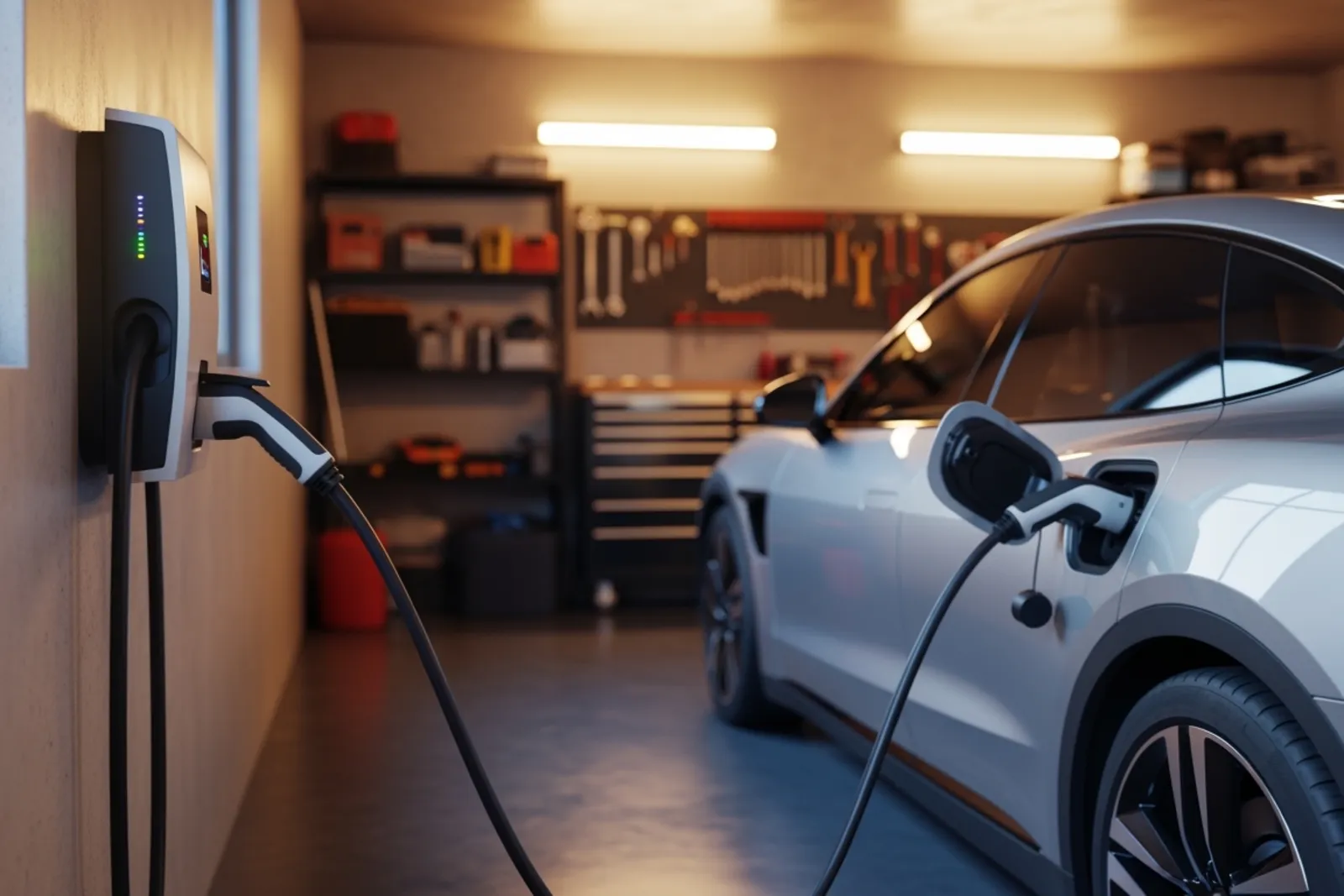
For residential properties, the case is pretty straightforward. A dedicated charger makes EV ownership easier, safer, and more reliable.
Daily convenience is the biggest win
Most drivers do not need a full battery every day. They need enough range to cover commuting, errands, school drop-offs, and the occasional detour. Charging overnight at home fits that pattern well. Plug in at the end of the day, unplug in the morning, done.
This is especially useful for people with longer commutes or inconsistent schedules. If you leave early, come back late, or do not live near dependable public stations, home charging removes a lot of guesswork.
A Level 2 charger is usually the practical choice
Standard wall outlets can charge an EV, but slowly. That method, often called Level 1 charging, can work for low-mileage drivers. For many households, though, it is not enough.
A Level 2 charger uses a 240-volt circuit and charges much faster. The exact speed depends on the vehicle and charger, but the difference is significant enough that many homeowners see it as the point where charging becomes truly convenient rather than merely possible.
If someone commutes daily, drives an SUV or truck with a larger battery, or shares charging between two EVs, a Level 2 charger usually makes much more sense.
Home charging can support better battery habits
People sometimes assume faster always means better. It depends. Regular home charging with a properly installed charger is often gentler and more routine than frequent dependence on rapid public charging. Many EVs also let owners schedule charging times or limit charge percentages, which can help fit battery care into daily use without much effort.
It can make the property more appealing
An EV charger will not matter to every buyer or renter today. But for the people it does matter to, it matters a lot.
If EV ownership keeps growing, charging infrastructure will feel less like a bonus and more like a practical feature. For detached homes, townhouses, and some rental properties, having dedicated electric vehicle charging already installed can remove one major objection for future occupants.
That does not mean every property needs the most advanced system available. It means a thoughtful installation can make a home more functional for the way people actually live now.
Why commercial properties are paying attention
Commercial charging has a different logic, but the value is just as real.
A business, office building, retail site, strata, or mixed-use property is not just installing hardware. It is deciding how parking space should work over the next several years. That sounds dry, but it matters.
Employees notice it
Workplace charging is one of those amenities people tend to appreciate quietly until they have it, and then they really do not want to lose it. For employees with long commutes, limited home charging access, or shared household vehicles, being able to charge during the workday can be a genuine quality-of-life improvement.
It also gives employers a practical way to support lower-emission transportation without making grand statements about it.
Customers stay longer when charging is available
This varies by business type, but in some settings the effect is obvious. If a customer can plug in while shopping, dining, working out, or attending an appointment, the stop becomes more useful. Charging does not need to be the only reason they came, but it can remove one reason to leave early.
Tenants and property managers are dealing with rising expectations
Multi-unit residential buildings and commercial leases are already feeling pressure around EV readiness. Tenants ask about charging before they sign. Existing residents ask whether they can add it after the fact. Property managers end up weighing electrical capacity, parking assignments, metering, and future demand.
None of that is glamorous. It is just the next version of infrastructure planning.
Fleets need dependable charging, not guesswork
For companies using EVs for deliveries, service calls, or staff transportation, charging access is not an amenity. It is operations. Vehicles that are not ready when the day starts are a problem. Installing chargers on-site gives businesses more control over scheduling, uptime, and energy use.
Why Level 2 charging is the sweet spot for most properties
It helps to keep the charger types simple.
Level 1 uses a standard household outlet. It is the slowest option and works best for light daily driving or occasional top-ups.
Level 2 uses 240 volts and is what most homeowners and many commercial properties choose. It is much faster and far more practical for regular use.
DC fast charging is what you usually see at public rapid charging stations. It is powerful, expensive, and not what most homes or ordinary commercial parking lots need.
That is why Level 2 charger installations tend to be the sweet spot. They are fast enough for real life, manageable for many electrical systems, and suitable for places where vehicles stay parked for a while anyway.
What a proper EV charger installation actually involves
People sometimes picture EV charger installation as a simple wall-mount job. Sometimes it is straightforward. Sometimes it is not.
A proper installation starts with the electrical system, not the charger itself.
An electrician needs to look at panel capacity, available circuit space, wiring routes, the charging location, and whether the property can support the added load. In older homes, the existing panel may be full or undersized. In commercial properties, there may be questions about shared service, demand management, or how multiple chargers will affect usage patterns.
Then there is the practical side. Where will the charger go? Will the cable comfortably reach the vehicle port? Is the unit indoors or exposed to weather? Does the parking layout make daily use easy, or annoying enough that people stop using it properly?
Good planning matters because the best charging setup is not the one with the most features. It is the one people use without thinking.
If you are comparing providers, it helps to review the basics of a professional EV charger installation service in North Vancouver and West Vancouver so you know what the assessment process should include.
Safety is where professional installation really matters
This is the part I would not treat casually.
An EV charger pulls sustained electrical load for hours at a time. That is different from plugging in a lamp or even many kitchen appliances. The wiring, breaker sizing, grounding, mounting, and overall circuit design all need to be right.
A poor installation can lead to nuisance breaker trips, overheating, equipment damage, or worse. Even when nothing dramatic happens, sloppy work creates problems that are expensive and irritating later.
That is why certified electricians matter here. They know how to evaluate the panel, size the circuit properly, follow code requirements, and handle permits and inspections where needed. For homeowners, that brings peace of mind. For commercial properties, it also reduces liability and avoids cutting corners on infrastructure that may see daily use for years.
There is a temptation to think, "It is just one charger." Sometimes one charger is exactly how a bigger electrical issue gets discovered. Better to find that out during a proper assessment than after the breaker starts tripping every night.
Common questions before installing a charger
A few questions come up again and again.
Does every home need a panel upgrade?
No. Some homes can support a charger with no major changes. Others need load calculations, a new circuit, or an upgraded panel. The only honest answer comes after someone looks at the existing service.
Is one charger enough for two EVs?
Sometimes, yes. Many households can share one charger by rotating overnight charging or using smart scheduling. In other homes, especially where both vehicles are driven heavily, a second charger may make sense.
What about condos and shared parking?
This is often more complicated than a detached home because there may be strata rules, common electrical infrastructure, assigned parking considerations, and cost-sharing questions. Still, it is increasingly common territory. The important thing is to approach it as a building systems issue, not just a resident request.
Are smart chargers worth it?
Often they are. Features like scheduling, energy monitoring, access control, and load management can be useful, especially in commercial or shared settings. But it depends on the property. Some people need a simple plug-and-charge experience. Others want reporting and control.
Eco-friendly charging works best when it is also practical
People often talk about EVs in broad environmental terms. That is fair, but the day-to-day story is more grounded.
Eco-friendly charging only becomes normal behavior when it is easy enough to repeat. If charging is inconvenient, people delay it, depend heavily on less ideal options, or feel constant range anxiety. If charging is built into the property, the behavior becomes automatic.
That matters for adoption. It also matters for confidence. A lot of hesitation around EV ownership is really hesitation about charging logistics. Once those logistics are solved at home or on-site, the whole ownership experience feels more stable.
I think that is part of why charger installation has moved from a specialty project into a mainstream electrical one. The environmental argument matters, yes. But for most people, convenience is what gets the project approved.
How to decide if now is the right time
If you own a home, ask yourself a few plain questions. Do you rely on public chargers more than you want to? Is your current charging setup too slow for your routine? Are you planning to keep your EV for a while, or add another one to the household? If the answer to any of those is yes, the value of a dedicated charger is probably already there.
For commercial properties, the questions are slightly different. Are tenants or employees asking about charging? Are nearby properties already adding it? Do you expect more EV drivers in the next few years? Would charging improve the usefulness of your parking area? If so, waiting too long can turn a manageable upgrade into a reactive one.
There is also a practical advantage to planning ahead. Installing one charger today with future expansion in mind is often smarter than improvising several separate installations later.
The bottom line
Installing EV chargers for residential and commercial properties is not about chasing a trend. It is about matching buildings to how people actually move.
For homeowners, that means easier mornings, less dependence on public charging, and a setup that fits daily life. For businesses and property owners, it means parking that does more, tenant expectations that are easier to meet, and infrastructure that is ready for increasing EV use.
The details matter. Panel capacity matters. Charger type matters. Installation quality really matters. But the core idea is simple. If a vehicle depends on electricity, the place where it spends the most time parked is usually the smartest place to charge it.
That is the value in one sentence: less hassle, more control, and charging that finally feels built into the property instead of bolted on as an afterthought.
Need a licensed electrician?
Free consultations across Greater Vancouver — and 24/7 emergency service.
Get a Free Quote