
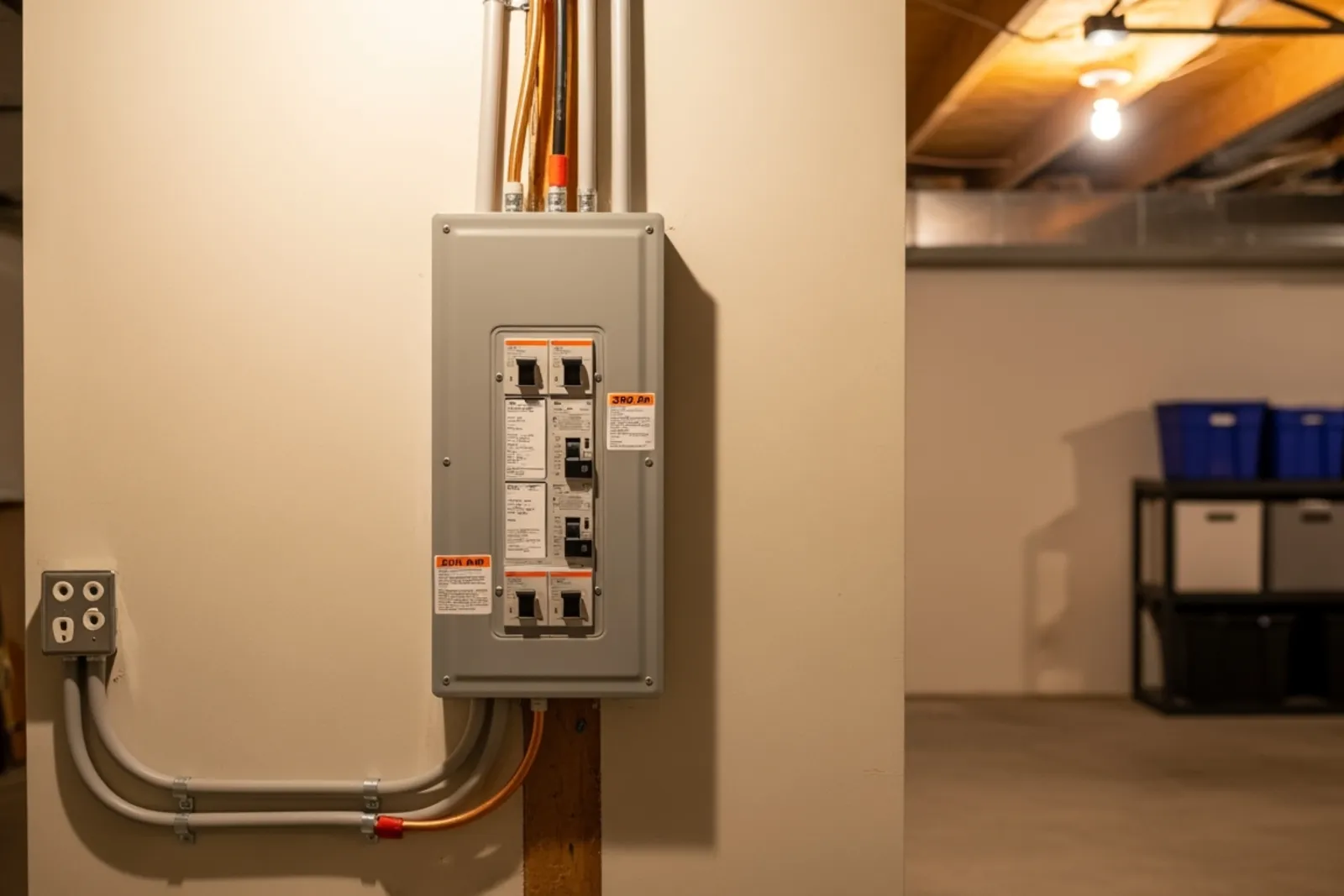
Why Metro Vancouver Homeowners Are Upgrading to a 200 Amp Panel in 2025
Learn why Metro Vancouver homeowners are choosing a 200 amp panel upgrade in 2025 for safer, future-ready power. Read more with Eagle Power.
September 23, 2026
A 200 amp panel upgrade is not the kind of home project anyone brags about at a dinner party. You do not stand in the basement with guests and admire the breaker box.
But it matters. A lot.
For many Metro Vancouver homeowners, the old 100 amp setup that worked fine for years is now starting to feel tight. The reason is simple: homes use electricity differently than they did even a decade ago. Electric vehicles, heat pumps, induction ranges, larger kitchens, home offices, basement suites, hot tubs, and smart home gear all add up. One by one, none of these changes sounds dramatic. Together, they can push an older electrical service close to its limit.
That is why more people are treating a 200 amp service upgrade as one of the more practical Home Electrical Solutions available in 2025. It is not flashy, but it gives a home room to function safely and adapt to what comes next.
What a 200 amp panel upgrade actually means
When people say they are “upgrading the panel,” they are often talking about more than the metal box with breakers inside it. In many cases, a real 100 amp to 200 amp upgrade includes the panel, the service entrance equipment, the meter connection, grounding, and sometimes the mast or wiring that connects the house to the utility.
The core idea is straightforward. A 100 amp service limits how much electrical current your home can draw at one time. A 200 amp service doubles that available capacity.
That does not mean your power bill automatically doubles. It will not. You pay for the electricity you use, not for the size of the panel sitting on the wall. The upgrade simply gives your home more electrical headroom.
That headroom matters because modern houses often run several heavy loads at once. Think about a normal evening: the car is charging, the dryer is on, dinner is in the oven, the heat pump is running, and someone is showering while the water heater kicks in. On paper, that looks manageable until you add the numbers and realize how close the service can get to its limit.
Why 100 amps used to feel like enough
Older homes were built for a different daily routine. A typical setup might have included:
a basic electric range
a dryer
a refrigerator
a few lighting circuits
maybe baseboard heat, maybe gas heat
very few dedicated appliance loads
There were fewer devices, fewer convenience features, and almost no expectation that a home would also function as a charging station, office, entertainment hub, and workshop at the same time.
A 100 amp service was often a reasonable standard. In many smaller homes, it still can be.
Why it feels different now
The modern electrical load is heavier and more layered. It is not just “more stuff.” It is more stuff that pulls real power.
A Level 2 EV charger alone can add a substantial continuous load. Heat pumps and air conditioning change the demand profile. Induction cooking is efficient, but it still needs serious power. Finished basements and legal suites bring new circuits, appliances, and sometimes separate laundry. Add a hot tub or sauna and the math gets even tighter.
This is why Electrical Upgrades are increasingly tied to lifestyle changes, not just repairs.
Why this trend is especially strong in Metro Vancouver
Metro Vancouver has a mix that practically invites service upgrades.
First, there is the housing stock. Many detached homes were built when electrical expectations were modest. Some have had bits and pieces added over the years, but the original service size never changed. A renovated kitchen might be sitting on the same overall service capacity that once fed a much simpler house.
Second, homeowners here are constantly adapting their properties. Basement suites, laneway houses, home additions, garage conversions, and major renovations are common. Every one of those projects can increase demand.
Third, electrification is no longer an abstract policy discussion. It shows up in normal homeowner decisions. A furnace ages out, and a heat pump becomes an option. A gas range gets replaced with induction. A new vehicle is electric. These are ordinary decisions, but the panel has to support them.
I think this is the part people miss: the panel is rarely the exciting purchase. It is the thing that makes all the other purchases possible.
Signs your home may be outgrowing a 100 amp panel
A 100 amp service is not automatically a problem. Plenty of homes still run fine on one. But there are some clear warning signs that your house is asking for more capacity, or at least a professional load assessment.
Watch for things like:
breakers tripping when multiple major appliances run at once
lights dimming when a large load starts
a panel that is physically full, with no room for new circuits
plans for an EV charger, hot tub, suite, or major renovation
reliance on workarounds like splitting loads awkwardly across existing circuits
an older fuse box or obsolete panel equipment
warmth, corrosion, buzzing, or any other signs that call for Electrical Repair
Sometimes the issue is not total service capacity. Sometimes it is poor circuit layout, aging equipment, or a specific faulty component. That is why a proper inspection matters. Good Residential Electrical Services should start with the question, “What is actually happening here?” not “How fast can we sell a bigger panel?”
The biggest drivers behind 200 amp upgrades in 2025
EV chargers change the conversation fast
If you own an electric vehicle, or think you will within the next few years, your panel size matters more than it used to.
A Level 1 charger on a regular outlet is slow. For many households, it is too slow. A Level 2 charger is the practical choice, but it adds meaningful load to your electrical system. Depending on the charger and the vehicle, that demand can be significant, especially because EV charging is treated as a continuous load.
In some 100 amp homes, an electrician can make it work with careful load calculations, energy management devices, or by limiting charging speed. That is real, and sometimes it is the smartest option. But if the house already has other big electrical demands, a 200 amp service often makes the whole setup simpler and less restrictive.
Heat pumps and electric heating need room
Heating and cooling upgrades are a major reason homeowners start looking at service size. A heat pump can be efficient and comfortable, but it still needs electrical capacity. If backup heat strips are involved, the demand can rise further.
This is one reason the old 100 amp standard is under pressure. You are no longer powering just lights and plug loads. You are powering climate control in a different way than the house may have been designed for.
Renovations rarely shrink electrical demand
A kitchen renovation usually adds circuits, not subtracts them. Same with a bathroom remodel, a home office, a workshop, or a finished basement.
Modern code also requires protection and dedicated circuits in places older homes never had them. That is good for Safety, but it means the electrical system often needs to do more than it did before.
And if you are adding a rental suite or converting part of the house for family use, the demand can increase quickly. Extra cooking appliances, laundry, heating, and general plug loads all count.
Lifestyle loads are not small anymore
Hot tubs, home saunas, powerful garage tools, larger entertainment systems, and air conditioning used to feel like luxury extras. In a lot of homes now, they are just part of the plan.
None of these automatically means you must upgrade to 200 amps. But together they often push the decision from “nice to have” to “probably time.”
Safety is a real reason, not just a sales line
I am skeptical when every home project gets sold as a dramatic safety emergency. Sometimes that language is exaggerated.
But with electrical service, safety is a genuine part of the conversation.
A panel that is maxed out, outdated, poorly maintained, or stuffed beyond its practical design can create problems. Breakers that trip repeatedly are not just annoying. They are telling you something. Corrosion, heat damage, loose connections, and aging components deserve attention.
A service upgrade can also be the moment when other issues get corrected, grounding improvements, cleaner circuit organization, proper labeling, replacement of worn equipment, and code-compliant protection where required.
That does not mean every 100 amp panel is unsafe. It means older systems deserve an honest look before you keep stacking new loads onto them.
What the upgrade process usually looks like
A 200 amp upgrade is not a casual swap. It involves planning, permits, coordination, and inspection. In Metro Vancouver, the process often includes these steps:
A licensed electrician inspects the existing panel and performs a load calculation based on the home’s actual and planned electrical use.
The electrician confirms whether the panel alone needs replacement or whether the service entrance, meter base, mast, grounding, or other components also need work.
Permit applications and utility coordination are arranged. This part matters. Service upgrades are not a DIY weekend project.
On installation day, power is disconnected, the old equipment is removed, and the new 200 amp service equipment is installed.
Circuits are transferred, labeled, tested, and inspected.
Power is restored after approval and coordination with the utility.
The homeowner experience is usually a scheduled power outage for part of the day, sometimes longer if the job is complex. If the house has old wiring, poor panel location, or additional repair needs, the scope can grow. That is normal.
What affects the cost
People usually want a number right away. Fair enough. But with panel upgrades, the price depends heavily on the house.
A straightforward service change in a detached home may cost several thousand dollars. More involved projects can go higher if they require meter relocation, service mast work, underground service changes, drywall repair, added circuits, or correction of older deficiencies.
The main cost factors tend to be:
whether the service is overhead or underground
panel location and accessibility
condition of existing wiring
utility and permit requirements
need for new grounding or bonding work
whether you are adding circuits at the same time
whether other Electrical Repair issues are uncovered
The cheapest quote is not always the bargain it seems. A good quote should clearly describe the scope, permit handling, and what is included if the utility or inspection requires related upgrades.
Does every home need 200 amps?
No. And that is worth saying plainly.
Some condos, townhomes, and smaller detached houses can function perfectly well on 100 amps, especially if the electrical load is modest and there are no big additions planned. In some cases, smart load management devices can solve a specific problem without a full service upgrade.
But for many detached homes in Metro Vancouver, 200 amps has become the more practical long-term standard. It gives breathing room for an EV charger, heat pump, renovation, suite, or future appliance changes without forcing constant compromises.
A panel upgrade is easiest when it happens before the house is stressed, not after.
Who should do this work
This is not the place to cut corners.
Look for licensed, insured electricians who regularly handle service upgrades and permits. Ask whether they perform formal load calculations, whether inspections are included, and whether the quote covers utility coordination. If your project is tied to a renovation, EV charger, hot tub, or suite, that should be part of the planning from the start.
If you are comparing contractors, experience matters. So does training. Homeowners often look for Red Seal Certified Electricians because that credential signals recognized trade qualification. Just as important is whether the contractor has real experience with Residential Electrical Services in older homes, where surprises behind the panel are common.
Good Home Electrical Solutions are rarely about selling the biggest possible system. They come from matching the service to how the house actually works.
The practical case for upgrading
A 200 amp panel upgrade is not glamorous. It is not the feature that makes a listing photo look better. But in a lot of Metro Vancouver homes, it is the project that unlocks the next ten years of normal living.
You can charge the car without juggling the dryer. You can renovate without running out of breaker space. You can add modern equipment without wondering if the panel is one appliance away from becoming a problem.
That is the real reason homeowners are making the switch in 2025. The way homes use electricity has changed. The panel has to keep up.
If your home still has 100 amp service, this does not mean panic. It means take a serious look at how you live now, what you plan to add next, and whether your current system still fits. When it does not, a 200 amp upgrade is often one of the smartest Electrical Upgrades you can make.
Need a licensed electrician?
Free consultations across Greater Vancouver — and 24/7 emergency service.
Get a Free Quote