
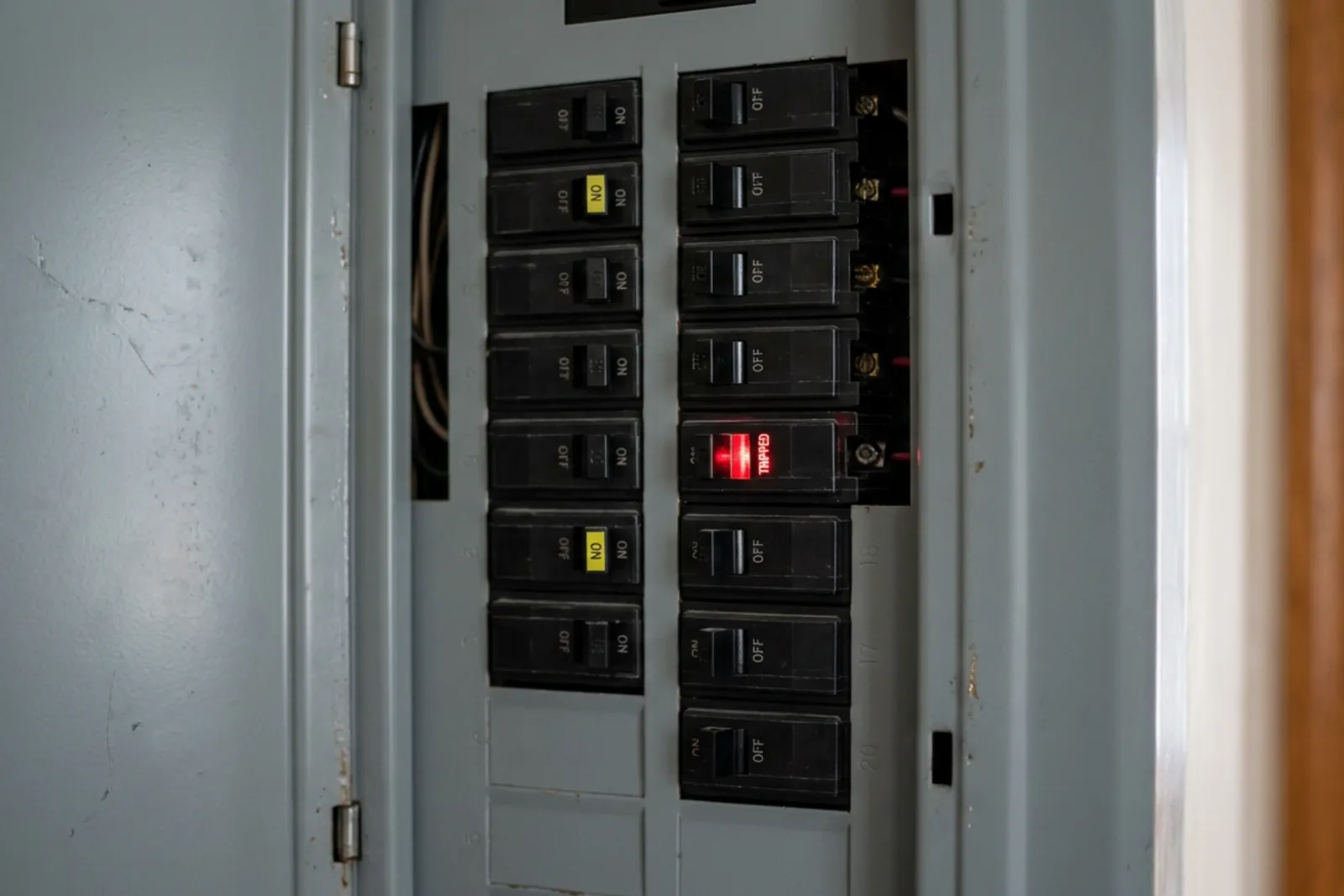
Why Upsizing a Breaker Is Unsafe and What to Do Instead
Upsizing a breaker can hide a dangerous electrical fault. Learn why breakers trip, what to do safely, and when to call a licensed electrician for an assessment.
November 3, 2026
A circuit breaker that keeps tripping can be frustrating, especially when it interrupts cooking, heating, or work. It may seem logical to replace it with a larger breaker so the circuit can handle more electricity.
That shortcut can create a fire hazard.
A breaker’s rating is tied to the circuit it protects. Installing a higher-rated breaker without verifying the wiring, equipment, and circuit design can allow more current than parts of the circuit can safely carry. The interruptions may stop while the danger gets worse.
The right response is to find out why the breaker is tripping. Sometimes the cause is an overloaded circuit. Other times, it is damaged wiring, moisture, a failed appliance, or a loose connection. Each problem calls for a different repair.
What a Circuit Breaker Actually Protects
A circuit breaker interrupts power when it detects certain unsafe electrical conditions. A standard breaker responds to overcurrent, including sustained overloads and the much higher currents associated with short circuits.
An overload happens when connected equipment draws more current than the circuit is designed to supply. A short circuit involves an unintended electrical path that can allow a very large amount of current to flow.
In either case, excessive current can generate dangerous heat. The breaker helps protect the circuit by disconnecting power before that condition causes further damage.
The breaker does not simply determine how much power an outlet can provide. Its rating must be suitable for the conductors and other parts of the circuit, subject to applicable electrical code requirements.
That distinction matters. Changing the breaker does not increase the capacity of the wiring inside the walls.
GFCIs and AFCIs provide different protection
Some trips involve more than ordinary overload protection.
A ground-fault circuit interrupter, or GFCI, detects an imbalance between outgoing and returning current. That imbalance can indicate current is taking an unintended path, potentially through a person.
An arc-fault circuit interrupter, or AFCI, detects certain electrical arcing patterns associated with fire hazards. These protective functions may be built into a breaker, while GFCI protection can also be provided at a receptacle.
Repeated GFCI or AFCI trips need investigation, too. Installing a larger breaker or removing required protection does not correct the cause.
Why a Larger Breaker Can Make the Problem Worse
Consider a circuit that trips when several high-demand appliances run together. If a higher-rated breaker is installed without any other changes, the appliances may continue operating without interruption.
But the wires have not changed. Neither have the connections or devices.
The new breaker may allow excessive current to continue long enough for those components to overheat. Wiring concealed inside a wall can become dangerous without an obvious warning in the room.
Breaker selection involves more than matching a number to an appliance. An electrician must consider conductor size and material, installation conditions, equipment ratings, load characteristics, and applicable code rules. Some equipment also has specific protection requirements.
There are legitimate situations where a circuit is redesigned and its breaker rating changes. That is an electrical alteration supported by an assessment, not a troubleshooting shortcut.
Could the breaker itself be defective?
Yes. Breakers can fail, and an unsuitable or damaged breaker may need replacement.
However, replacing a breaker without checking the circuit can leave the actual problem untouched. A replacement must also be approved for the particular panel and appropriate for the circuit. Physical fit alone does not establish compatibility.
The useful question is not, “Which breaker will stop tripping?” It is, “What condition is causing this breaker to trip?”
Common Reasons a Breaker Keeps Tripping
The timing of a trip can provide useful clues, but it does not establish a diagnosis.
Too much equipment on one circuit
Portable heaters, kettles, hair dryers, and other high-demand appliances can place substantial loads on household circuits. Several operating together may exceed a shared circuit’s capacity.
For example, a space heater in an office may share a circuit with outlets in an adjoining room. The person using those outlets may have no idea that both rooms depend on the same breaker.
Reducing simultaneous use can help address an overload. Where a recurring load exceeds the available capacity, an electrician may recommend a dedicated circuit.
A damaged appliance or electrical device
A trip that occurs whenever one appliance starts may point to a problem with that appliance, its cord, or the connection supplying it.
A damaged receptacle, switch, or other device can also be involved. Replacing the breaker does not repair failed insulation or a damaged internal component.
An appliance that repeatedly trips protection should be taken out of use until the cause is assessed.
Damaged wiring or loose connections
Wiring can be damaged by fasteners, pests, deterioration, or previous alterations. Connections may also become loose or develop faults that appear only occasionally.
These problems can be particularly misleading because the circuit may work normally between incidents. An intermittent fault is still a fault.
Some loose connections generate dangerous localized heat without drawing enough current to trip a standard breaker promptly. A breaker that stays on is not proof that everything downstream is safe.
Moisture intrusion
Water entering an outdoor receptacle, light fixture, junction box, or appliance can cause electrical faults and protective-device trips.
Repeatedly resetting the protection does not remove the moisture or repair damaged components. The source of the water also needs attention.
Warning Signs That Need Prompt Attention
A tripping breaker is one warning. Burning smells, arcing sounds, visible damage, and scorch marks raise the urgency.
If you notice a burning electrical odor, stop using the affected equipment. Turn off the affected circuit only if you can reach and operate the panel safely. Do not approach a panel that is wet, smoking, visibly damaged, or making arcing sounds.
If there is smoke, fire, or an immediate threat, leave the area and call emergency services. Do not use water on an electrical fire or remain inside to investigate.
Seek prompt help from qualified electrical professionals for warning signs such as:
Burning odors, scorch marks, melted plastic, or visible arcing.
Crackling or buzzing at a receptacle, switch, or panel.
Unusually hot or discolored devices, cover plates, or panel components.
Repeated trips, flickering lights, or intermittent power that cannot be explained by normal operation.
Some devices produce a small amount of heat during normal use. Still, unusual warmth, a change in behavior, or discoloration deserves investigation. You do not need to wait for a breaker to trip before requesting electrical repairs.
An emergency electrical service is appropriate when an unsafe condition needs urgent assessment. When arranging help, describe the actual symptoms rather than simply reporting that the power is out.
Safe Steps to Take Before an Electrician Arrives
You can gather useful information without opening electrical equipment.
First, stop using the affected circuit or appliance. If accessible plugs and receptacles are dry, cool, and undamaged, unplug connected portable equipment. Do not touch anything that appears burned, wet, or otherwise unsafe.
Write down what happened before the trip. Was a heater switched on? Did the problem begin during rain? Did several rooms lose power together? Did the breaker trip immediately or after equipment had been running for a while?
Those details can help narrow the investigation.
Avoid repeated reset attempts. If the cause is unknown, a trip happens again, or any warning signs are present, leave the circuit off pending assessment. Do not hold a breaker in the on position, tape it in place, bypass a protective device, or substitute a larger breaker.
Do not remove the panel cover or attempt internal testing. Parts inside a panel may remain energized even when the main breaker is off.
What if several outlets stop working?
A group of dead outlets does not automatically mean the panel breaker has failed.
A tripped upstream GFCI may interrupt power to several downstream outlets. The GFCI might be in a bathroom, garage, utility area, or another location away from the affected receptacles.
If there are no signs of damage or moisture, checking accessible GFCI reset buttons according to the device instructions may help explain the outage. A GFCI that will not reset or trips again needs investigation.
A failed device or loose connection can produce similar symptoms. Do not assume the circuit is safe simply because some outlets still work.
What Professional Electrical Diagnosis May Involve
Good troubleshooting starts with the symptoms and works toward the cause.
An electrician may ask about recent renovations, new appliances, weather conditions, and the equipment operating when the problem occurs. They can then isolate the affected circuit and use appropriate test equipment to investigate.
Depending on the symptoms, the assessment may include checking connected loads, inspecting accessible wiring and devices, measuring current, and testing protective devices. The electrician may also examine breaker compatibility, conductor suitability, and signs of overheating or moisture.
This is why an immediate promise to “just replace the breaker” can be premature. Similar symptoms can require very different repairs.
A repeatedly overloaded circuit may need a dedicated circuit. A failed receptacle needs suitable replacement and an assessment of its connections. Damaged wiring requires repair or replacement. Moisture-related faults require both electrical repairs and correction of the water entry problem.
The diagnosis should explain what failed, why the proposed work addresses it, and whether further assessment is needed.
When Added Electrical Capacity Is the Right Answer
Sometimes a home or business genuinely needs more electrical capacity. That decision should follow an assessment of demand and existing infrastructure.
EV charger installation is a useful example. A Level 2 charger can add a substantial, sustained load. Safe home charging requires a suitable circuit and an assessment of the building’s available capacity. Depending on the installation, load management or service upgrades may be appropriate.
Hot tub wiring, sauna wiring, electric heating, and renovation projects also need careful planning. An unused space in a panel does not prove that the electrical service can support another large load.
Panel upgrades and service upgrades address different needs. A panel replacement may resolve equipment condition or distribution limitations, but it does not automatically increase the capacity of the incoming service.
Likewise, repeated trips on one branch circuit do not automatically justify home rewiring or a service upgrade. The repair should match the evidence.
Permits and Electrical Alterations in North Vancouver
Electrical alterations must follow the requirements that apply to the property and the proposed work.
For projects in North Vancouver, confirm the responsible permitting authority and whether an electrical permit and inspection are required before work begins. The requirements can depend on the property's jurisdiction and the scope of the alteration.
Changing a breaker rating should never be treated as a DIY workaround. A qualified electrical contractor should assess whether the proposed change is appropriate and what related work is necessary.
Across Greater Vancouver, look for licensed electricians with suitable qualifications for the work. Verify contractor licensing and insurance rather than relying only on an advertisement or job title. Ask who is responsible for permits, what inspections are required, and how the completed work will be documented.
A clear explanation of the fault and repair is worth more than a promise to stop the interruptions.
Treat the Trip as Information, Not an Inconvenience
A breaker that trips is telling you something about the circuit. The cause might be a manageable overload, but it could also be damaged wiring, a failing device, or moisture where it does not belong.
A larger breaker can silence that warning while allowing an unsafe condition to continue.
Stop using equipment associated with repeated trips, leave suspect circuits off when appropriate, and arrange a proper diagnosis. If there are burning smells, arcing sounds, or scorch marks, treat the situation as urgent. The goal is safe power, not simply power that stays on.
Need a licensed electrician?
Free consultations across Greater Vancouver — and 24/7 emergency service.
Get a Free Quote