
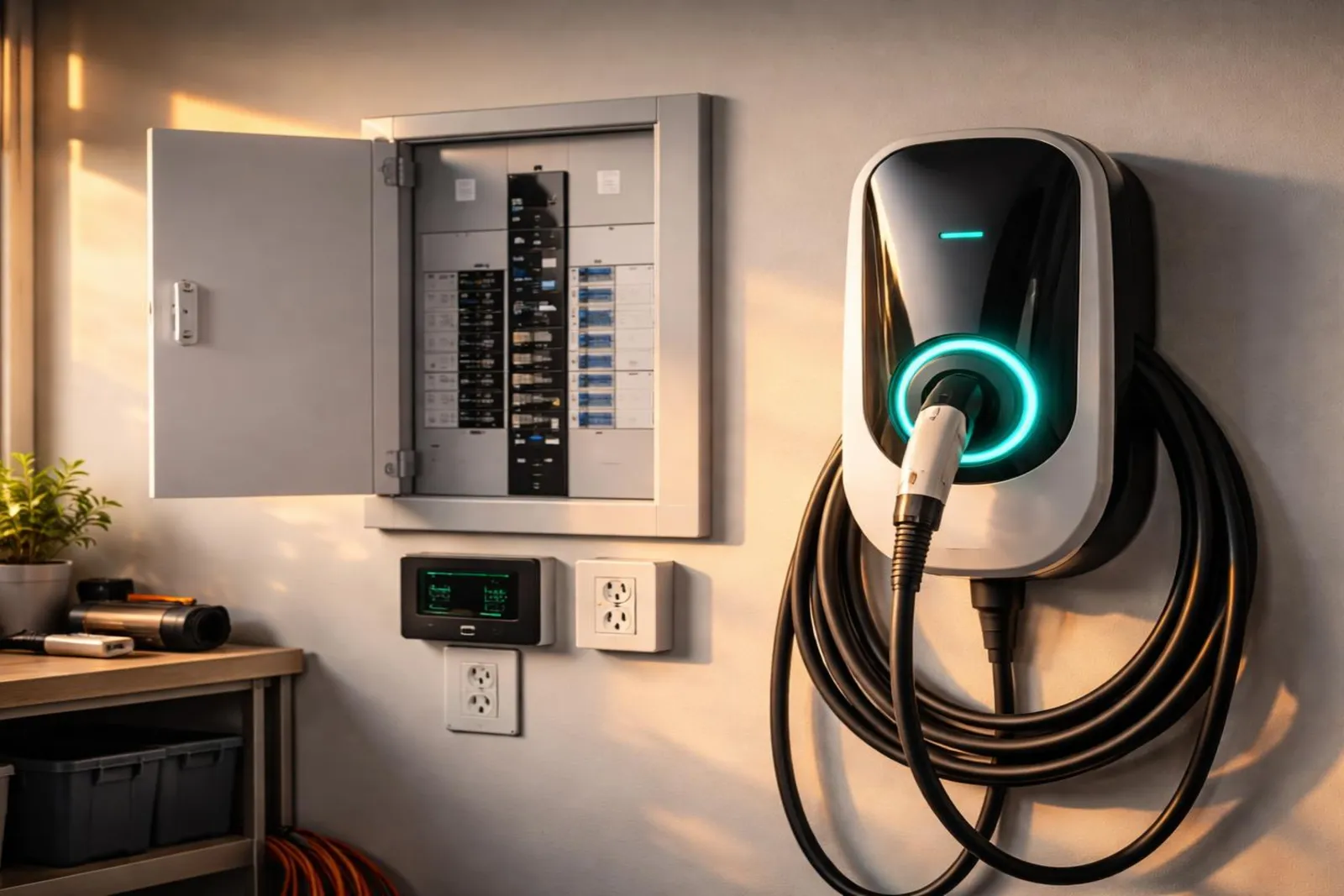
You May Not Need a Panel Upgrade for Your EV Charger
You may not need a panel upgrade for EV charger installation. Learn how load assessments help Vancouver homeowners save. Contact Eagle Power.
September 23, 2026
If you’ve started looking into EV charger installation, you’ve probably heard some version of this: “You’ll need a full service upgrade first.”
Sometimes that’s true. A lot of the time, it isn’t.
We’ve seen homeowners brace for a $2,000 to $5,000 panel upgrade before anyone has even done a proper load calculation. That’s frustrating, and honestly, a bit lazy. A charger adds demand to your electrical system, yes. But that does not automatically mean your current service can’t handle it.
In many homes, a detailed load assessment shows there’s another option: smart load management. It’s a practical solution that can make EV charging possible without the mess, cost, and delay of upgrading the whole service.
If you’re in need of Vancouver electrical services and you’re trying to add home charging, this matters more than most people realize.
Why panel upgrades get recommended so quickly
There’s a simple reason this happens. A panel upgrade is familiar. It’s easy to explain. It also solves the problem in a broad, brute-force way.
If your home has a 100-amp service and you want to add a Level 2 charger, someone might look at the age of the panel, the existing breakers, the appliances in the house, and decide the safest route is to increase capacity. That can be valid. Older homes, electric baseboard heat, large air conditioning loads, secondary suites, hot tubs, and workshops can push a system close to its limit.
But here’s the issue: a quick glance is not the same as an assessment.
A proper evaluation looks at your real electrical demand, not just a rough guess based on what’s installed. Many homes have circuits that exist on paper but don’t all run at full load at the same time. That difference matters.
When someone skips that step and jumps straight to “upgrade the service,” you may end up paying for work you don’t actually need.
What a real load assessment tells you
A detailed load assessment is where the decision should start.
An electrician reviews the home’s service size, major electrical loads, panel capacity, and expected charger demand. They look at how the house is actually used. Electric range? Dryer? Heat pump? Baseboard heating? Hot tub electrical? Sauna electrical? A detached workshop? These all affect the calculation.
The goal is simple: determine whether the charger can be added safely within the capacity you already have, or whether load management is the better move.
This part is important because EV charging is usually a long-duration load. It’s not like switching on a kettle for three minutes. The charger may run for hours overnight. That means the installation has to be designed with real electrical demand in mind, not wishful thinking.
A licensed electrician should be doing this work. An insured electrician should be standing behind it. That’s not a marketing line. It’s basic risk management for your home.
The smarter option: load-management technology
Smart load-management technology gives homeowners a middle path.
Instead of upgrading the whole electrical service, a load-management system monitors the amount of power your home is using in real time. If the house is drawing a lot of electricity, say the oven is on, the dryer is running, and the hot tub is heating, the system reduces or pauses the charger’s output to keep the total demand within safe limits.
When demand drops, charging ramps back up.
That means your EV charger installation can work with your existing service in many cases, without overloading the panel and without forcing you into a larger utility upgrade.
It’s a cleaner solution for a few reasons:
Less invasive work
Lower cost
Faster installation
Less disruption to the home
No unnecessary replacement of equipment that still has life left in it
And the big question homeowners ask is fair: Is it safe?
Yes, when it’s properly designed and installed, it is. The whole point of load management is to keep your electrical system operating within its limits. It’s not a shortcut. It’s a control strategy.
A common example from real homes
Picture a typical Vancouver-area house with a 100-amp service. The homeowner buys an EV and wants a Level 2 charger in the garage. They call around and hear the same thing twice: “You’ll need to upgrade to 200 amps.”
That can mean permit work, utility coordination, new equipment, more labour, and a bigger bill than expected.
Then a proper assessment is done.
The electrician reviews the home’s actual demand, the main loads, and the charger requirements. Instead of replacing the service, they install a charger with load-management capability or pair it with a controller that monitors the panel. The system charges the vehicle when capacity is available and scales back when the rest of the house needs the power.
The homeowner gets home charging. The system stays code-compliant. The extra thousands of dollars stay in the homeowner’s bank account.
That’s not a rare edge case. It happens often enough that it should be part of the first conversation, not the last.
When a service upgrade really is the right call
This isn’t an argument against service upgrades. Some homes truly need them.
If your electrical system is already maxed out, if the panel is outdated or unsafe, or if you’re planning several major additions at once, a service upgrade may be the right long-term move. The same goes for properties that are adding significant new demand through renovations, secondary suites, or heavy equipment.
A good renovation electrician will tell you that context matters. If you’re already opening walls, replacing the panel, adding a heat pump, finishing a basement, and planning future loads, then doing the upgrade now might make sense.
The problem is not the upgrade itself. The problem is treating it like the only answer.
EV charging is part of a bigger electrical picture
One reason this issue keeps coming up is that EV chargers don’t exist in isolation. Home electrical systems change over time.
A house might have started with basic lighting and small appliances. Then came the induction range, the dryer, the heat pump, the hot tub, maybe sauna electrical work, and now an EV charger. That gradual build-up is exactly why homeowners benefit from working with electricians who understand the full picture of residential electrical services, not just one product install.
It matters in commercial settings too. Businesses adding fleet charging, staff chargers, or customer parking chargers need planning that fits the building’s existing electrical demand. In that case, commercial electrical services often include the same kind of capacity review, load balancing, and staged recommendations rather than defaulting to the most expensive path first.
That broader mindset usually leads to better decisions.
What homeowners should ask before approving an upgrade
If someone tells you that you need a service upgrade for EV charger installation, ask a few direct questions:
Was a formal load calculation done?
Not a quick opinion. An actual assessment.
Is load-management technology an option here?
If the answer is no, ask why. There may be a valid reason. There should be a clear one.
What is driving the recommendation?
Is the issue panel capacity, service size, equipment condition, future expansion, or code compliance? Those are different problems with different solutions.
What will this cost now versus later?
Sometimes the cheaper path now creates a limitation later. Sometimes the expensive path solves nothing you currently need. You want both sides explained clearly.
Is the work being handled by a licensed electrician and insured electrician?
You want accountability, permits where required, and an installation that’s done properly the first time.
These questions are simple, but they change the conversation fast.
The value of a practical electrician
People usually don’t call electricians because they want a long lecture on load diversity. They call because they want a safe answer, a fair price, and work that makes sense.
That’s why practicality matters.
A good electrician doesn’t sell the biggest possible job. They figure out what the property actually needs. Sometimes that means a panel upgrade. Sometimes it means a smarter charger setup and a shorter invoice.
For homeowners in Vancouver and surrounding areas, that difference can be significant. Labour, permits, and service changes add up quickly. If a detailed assessment shows there’s a cleaner option, it’s worth knowing before you commit to a large project.
The better first step
If you’re planning an EV charger installation, the best first step is not approving a panel upgrade on the spot. It’s booking a proper assessment.
You want someone to look at the real electrical load in your home, the kind of charger you need, and whether smart load management can do the job safely. That approach often saves money, cuts down on disruption, and gets the charger installed sooner.
And if it turns out your home really does need a service upgrade, at least you’ll know the recommendation came from evidence, not habit.
That’s the difference between being sold a solution and being given the right one.
Need a licensed electrician?
Free consultations across Greater Vancouver — and 24/7 emergency service.
Get a Free Quote